The watchers were always going to watch. The platforms didn't produce them—they just gave the rest of us a way of finally noticing they were there
The cultural register has, in recent years, developed a particular kind of mild concern about people who use social media but do not actively participate in it. The concern shows up in various forms. The friend who never likes anyone's posts. The colleague who has not, in three years, updated their profile picture. The relative who, when asked, admits to spending a great deal of time on a particular platform without ever, in any visible sense, leaving a trace of having been there. The wider culture's reading of this configuration tends to classify it as either anxious, withdrawn, or in some other way deficient. The reading suggests that the silent consumer of social media is missing something the active participants have figured out.
The reading is, on close examination, almost exactly wrong. The people who consume social media without participating in it are not, in most cases, displaying some new pathology produced by the digital age. They are, much more often, displaying a personality type that has existed in every era of human social life, and that has only, in the last twenty years, become legible as a category because the platforms have introduced metrics that make participation visible in a way that earlier forms of social life did not.
The personality type is the careful observer. The watcher. The rememberer. The one who, in any room they have ever been in, has been doing the same low-grade ongoing work of noticing what was happening between the other people in the room without, themselves, contributing much to the visible center of the gathering. The digital version of this disposition is not a deviation from a more participatory norm. It is, more accurately, the same disposition operating in a new medium that happens to make its operation more measurable than it used to be.
What the watchers were doing before the platforms
It is worth describing what the careful observers were doing in pre-digital settings, because the description makes the continuity clear in a way that the contemporary framing tends to obscure.
In any social environment of more than a few people, there has always been a particular subset of the people present who are doing more receiving than transmitting. They sit slightly to the side of the main conversational center. They listen. They watch the small interactions between the more visible participants. They notice the moment one person glanced at another and the small reaction that followed. They register, in some real way, the architecture of the room as it unfolds. They do not, generally, produce remarks at the rate the more visible participants produce them. When they do produce remarks, the remarks tend to have been considered for slightly longer than the average remark in the room.
These people, in earlier eras, were not classified as failing at the social event. They were, in many cases, the most useful people in the room over the long term. They were the ones who, three days later, could tell you with some precision who had said what to whom, which alliances had formed across the evening, which guests had left early and in what mood. They had been, in some real way, doing the ambient social anthropology that the more visible participants had been too busy being visible to do. The information they accumulated, across years of such evenings, was often considerable. They were the people other people went to when they needed to understand a complicated social situation, because they had been watching when nobody else had been.
This disposition is not, in any clinical sense, pathological. A literature review on extraversion and social media use has documented that introverted personality traits are partially genetic and associated with measurable neurobiological differences, not with deficiency. The watchers were always going to be watchers, in whatever environment they happened to find themselves in. The platforms did not produce them. The platforms have, more modestly, given the cultural register a new way of identifying them, by introducing engagement metrics that make their characteristic restraint visible in numerical form.
How the digital version operates
What the careful observer of the in-person era did, structurally, is more or less identical to what the silent social media user does now. The medium is different. The function is the same.
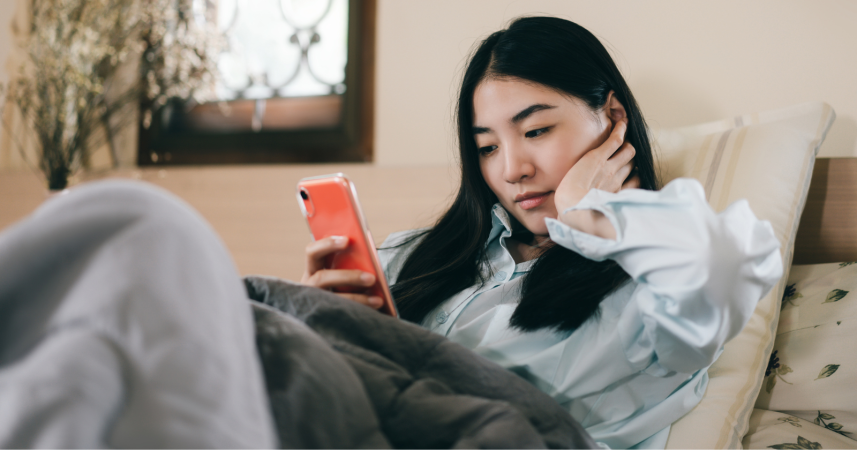
The silent user opens the platform. They look at what the various people in their network have posted. They register, in some quiet ongoing way, the small data points. The colleague has changed jobs. The cousin had a baby. The friend from the previous city has, by the configuration of her recent photographs, gone through a difficult year. The acquaintance from the old industry has, by the texture of his recent posts, become someone the silent user no longer particularly wants to be in touch with. The information accumulates. The information is not, in any visible sense, being acted on. It is, however, being absorbed.
The absorbing is what the watchers in earlier eras were doing at dinner parties and family gatherings and office holiday events. The medium has changed. The data is now arriving via screen rather than via observation of a physical room. The function the watcher is performing has not, in any structural sense, shifted. They are doing the ambient social tracking that they have always done, in the medium that is currently available to them. The fact that the medium happens to be a platform that produces engagement metrics is, to the watcher, somewhat beside the point. They are not, in any meaningful sense, on the platform to engage. They are on the platform to track. The tracking is what their nervous system has been calibrated to do, for as long as they can remember, regardless of which environment they happen to be tracking in.
It is worth noting, on the available evidence, that the silent users are, on most estimates, the overwhelming majority of social media users. The visible participants, who produce most of the content the rest of us scroll through, are a small minority. The cultural register has tended to treat the visible participants as the norm and the silent users as the deviation. The numbers, on close examination, suggest the reverse. The silent users are the default condition of social media use. The visible participants are the deviation. The cultural framing has, in some real way, miscategorized which population is which.
Why this is not a deficit
The cultural framing of the silent user tends to imply that they are missing out on something the visible participants are getting. The implication is that the platforms offer a particular kind of social connection that requires active participation in order to be received, and that the silent users are, by their non-participation, declining the benefit.
This implication misses what the silent users are actually doing. They are not, in most cases, declining a benefit. They are, more accurately, receiving a different benefit than the visible participants are receiving. The visible participants are receiving the dopamine and validation associated with broadcast and response. The silent users are receiving the information and pattern-recognition associated with observation. Neither of these benefits is, in any meaningful sense, superior to the other. They are calibrated to different temperamental dispositions, and the platforms, in their structure, happen to be able to provide both.
The watchers, in any era, have been receiving the same benefit they are now receiving on the platforms. They have been receiving the satisfaction of having a working internal map of the social world they are operating in. The map is useful. The map is, in some real way, what allows them to navigate that world with the precision that the visible participants, who are too busy being visible to update their own maps, often lack. The silent users are doing the cartography. The visible users are doing the broadcasting. The cartography is, on the available evidence, just as valuable as the broadcasting, and possibly more so over the long term, because the maps the cartographers build do not, in most cases, depreciate the way the broadcasts do.
What this means for how the wider culture should read this
The cultural framing of the silent social media user as someone who is doing the platforms wrong is, on examination, a category error. The silent users are not doing the platforms wrong. They are, more accurately, using the platforms in the way their pre-existing temperament has prepared them to use any social environment they encounter. The platforms are simply the latest of these environments. The temperament has been operating in it the way the temperament operates in all such environments.
If you have a friend or family member who consumes social media without participating in it, the most useful framing is, on the available evidence, that they have a particular kind of attention they are bringing to the medium, and that the attention is calibrated for receiving rather than broadcasting. The receiving is not, in any clinical sense, a failure of the broadcasting. It is, more accurately, the operation of a temperamental disposition that pre-existed the platform by several thousand years of human social life.
The person in question is not, on close examination, missing out. They are, much more probably, the one in your wider network who, if you asked them, could tell you with considerable accuracy what the rest of the network has been doing for the past several years. They know who has been promoted. They know who has been divorced. They know who has been quietly struggling. They have been doing the work the rest of the network has not been doing, because the rest of the network has been too busy producing the content the silent users have been quietly absorbing.
The watchers were always going to watch. The platforms did not produce them. The platforms have, more modestly, given the rest of us a way of noticing, for the first time, that the watchers have always been there. They have, in every room and at every dinner party and in every office across the entire history of human social organization, been doing the same low-grade ongoing work of paying attention to the rest of us. The fact that the work is now numerically visible, in the form of a low engagement score, does not change what the work is or has always been. The work is, on close examination, one of the more useful things any member of a social network can be quietly doing.
The silent users are fine. The cultural register can stop worrying about them. They have been doing exactly this for as long as there have been people to watch and rooms in which to watch them. The platforms are just the most recent of those rooms. The watchers are, as they have always been, paying attention.