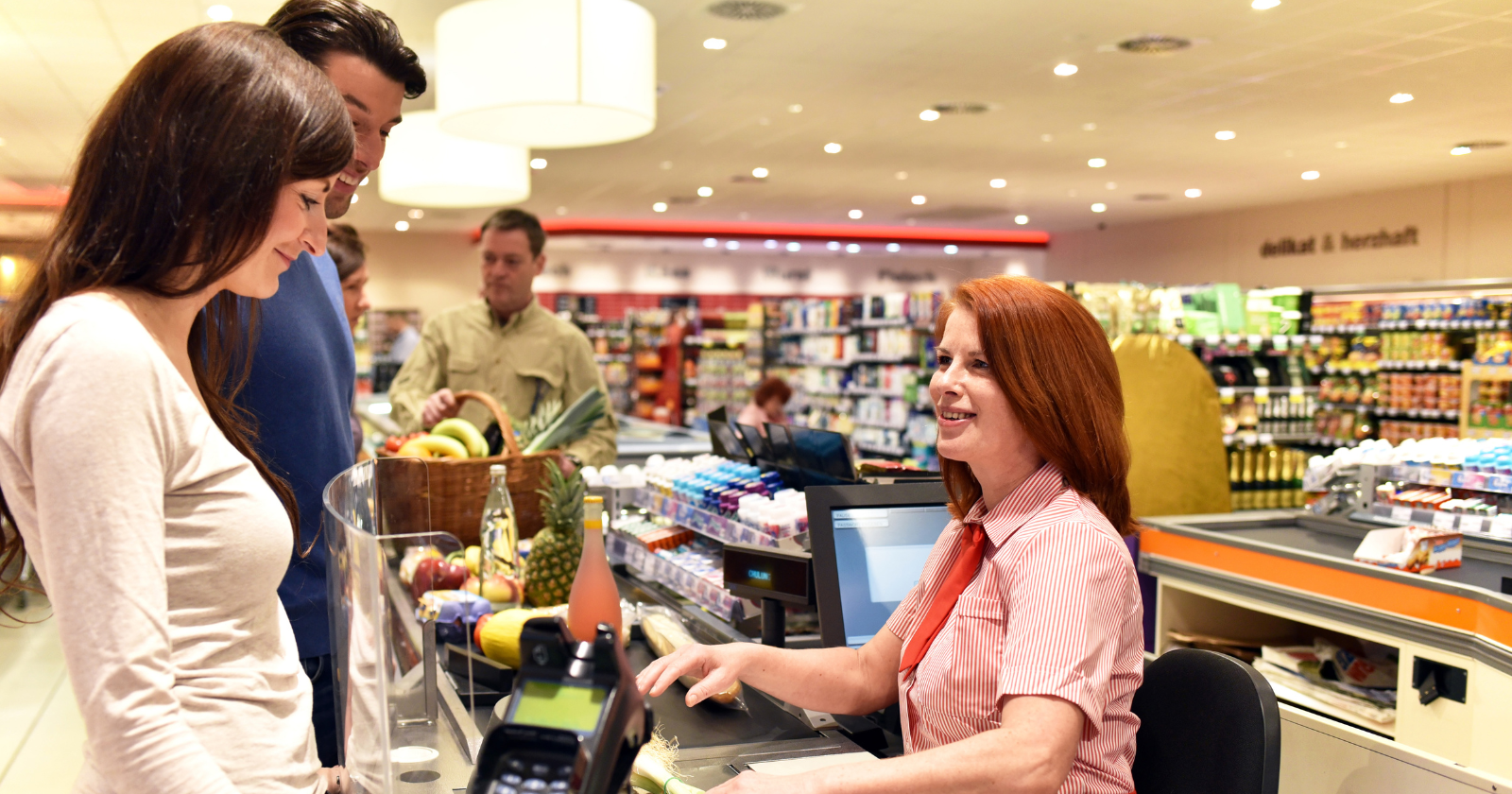
There is a woman at our local supermarket who walks past four empty self-checkout machines every Tuesday afternoon to wait in the longest line at register six. She is not confused by the technology. She is not carrying anything unscannable. She simply wants to say hello to Linda, the cashier, ask about her grandson, and hear someone say her name out loud before she goes home.
From a productivity standpoint, this looks irrational. From a psychological standpoint, it might be the most rational thing she does all week.
For years, the assumption has been that anyone who avoids self-checkout is a little behind the times, a little inefficient, a little resistant to progress. But a growing body of research suggests something different is happening. These shoppers are not failing to optimize their afternoon. They are quietly protecting a category of human contact that researchers have been studying for half a century, and that the rest of us are losing without noticing.
The strangers who keep us afloat
In 1973, sociologist Mark Granovetter published a now-famous paper called The Strength of Weak Ties, arguing that the acquaintances on the edges of our lives often matter more than we give them credit for. The barista who knows your order. The neighbour you nod to but rarely speak with. The cashier who recognises you on Tuesdays. These are not deep relationships, but they are not nothing either.
Decades later, psychologist Gillian Sandstrom picked up the thread and asked a more specific question. Do these tiny interactions actually affect our wellbeing day to day? She and Elizabeth Dunn ran a series of studies at the University of British Columbia, and their 2014 paper in Personality and Social Psychology Bulletin found that people experienced more happiness and a stronger sense of belonging on days they interacted with more weak ties than usual. The effect held even when researchers controlled for time spent with close friends and family.
In a follow-up experiment, Sandstrom and Dunn recruited people outside a Vancouver Starbucks and gave them a gift card. Half were asked to be as efficient as possible with their order, no small talk. The other half were asked to smile, make eye contact, and have a brief friendly exchange with the barista. The shoppers who lingered for thirty seconds of human warmth left feeling measurably happier than those who got their coffee faster.
Thirty seconds. That is the entire mechanism. A brief, ordinary, unremarkable exchange with a stranger, and a person walks out into the rest of their day a little more anchored than they walked in.
The mistake of mistakenly seeking solitude
The other major figure in this research is Nicholas Epley at the University of Chicago. In a study he ran with Juliana Schroeder, published in the Journal of Experimental Psychology: General, commuters on Chicago trains were randomly assigned to either talk with the stranger next to them, sit in silence, or do whatever they normally did. The ones who talked to strangers reported the most positive commute of all three groups.
The most interesting finding was not that connection felt good. The interesting finding was that almost no one predicted it would. A separate group of commuters, asked to imagine each scenario in advance, guessed that talking to a stranger would be the worst option by a wide margin. We systematically underestimate how much we will enjoy these encounters, which is why we so reliably avoid them.
Epley later replicated the study on London-area commuter trains with the same result. Different city, different culture, same human pattern. We benefit from these small contacts. We also flinch away from them.
This is the puzzle the woman at register six is solving without thinking about it. She is not anti-technology. She has just figured out, somewhere below conscious calculation, that her week feels different when Linda asks how her grandson is doing.
What the machine was built to eliminate
Self-checkout was not designed with malice. It was designed for efficiency. It reduces labour costs for retailers, shortens queues for shoppers in a hurry, and gives customers a feeling of control over a process that used to involve waiting.
But efficiency has a quiet cost. The thing being made more efficient is, very specifically, the brief human exchange that Sandstrom and Epley spent their careers showing matters more than we realise. The self-checkout machine does not just speed up the transaction. It removes the transaction's social layer entirely, and replaces it with a touchscreen that says "unexpected item in bagging area."
For someone whose week is full of close conversation already, this loss is probably negligible. For someone who lives alone, who works remotely, who has lost a partner, or who is simply at a phase of life when their social circle has thinned, the loss is not negligible. It is one of the only spontaneous human contacts on the calendar.
The U.S. Surgeon General declared loneliness a public health crisis in 2023, comparing its mortality impact to smoking fifteen cigarettes a day. Around the same time, the share of supermarket lanes converted to self-checkout in the U.S. crossed forty percent. These two trends do not perfectly explain each other, but they do live in the same neighbourhood.
The Dutch saw it first
In 2019, the Dutch supermarket chain Jumbo introduced a concept called Kletskassa, which translates roughly to "chat checkout." It is a designated lane for shoppers who specifically do not want to be processed quickly. The cashier is trained to take their time, ask questions, and treat the transaction as a conversation rather than a task. The chain rolled it out after recognising, as researchers documented in The Conversation, that for many of their customers, particularly older ones, a trip to the supermarket might be the only social contact of the day.
The reaction was striking. Customers loved it. Staff loved it. Other Dutch stores copied it. Tesco in Scotland had piloted a similar "relaxed checkout" concept a few years earlier for shoppers with dementia. There is now a small but real international movement of retailers admitting that the most efficient design is not always the most humane one.
What the avoiders are actually doing
Once you understand the research, the behaviour at register six stops looking eccentric. It starts looking like a quiet form of self-care that the person doing it might not even recognise as such.
The shopper who skips the self-checkout is doing several things at once. They are choosing to be recognised by name, even briefly. They are inserting a sliver of mutual acknowledgement into a day that might otherwise contain none. They are practising, in low-stakes form, the social muscles that get rusty in isolation. And they are giving someone else, the cashier, the same gift in return.
This is not nostalgia. It is not technophobia. It is a person responding to a real, measurable psychological need with a strategy that happens to work.
The unremarkable thing worth protecting
None of this is an argument against self-checkout. The machines are useful. People in a hurry should use them. People with social anxiety sometimes prefer them, and there is nothing wrong with that.
The argument is smaller and more interesting. It is that the people who choose otherwise are not being slow. They are meeting a need so quiet that we built an entire technology to make it disappear, and only noticed something was missing once it was already gone.
If you watch the next time you go shopping, you will see them. The older woman at register six. The young man who always picks Sarah's line. The dad with three kids who could absolutely manage the self-scan but waits for a person anyway. They are not inefficient. They are doing something the rest of us, in our rush, may need to remember how to do too.