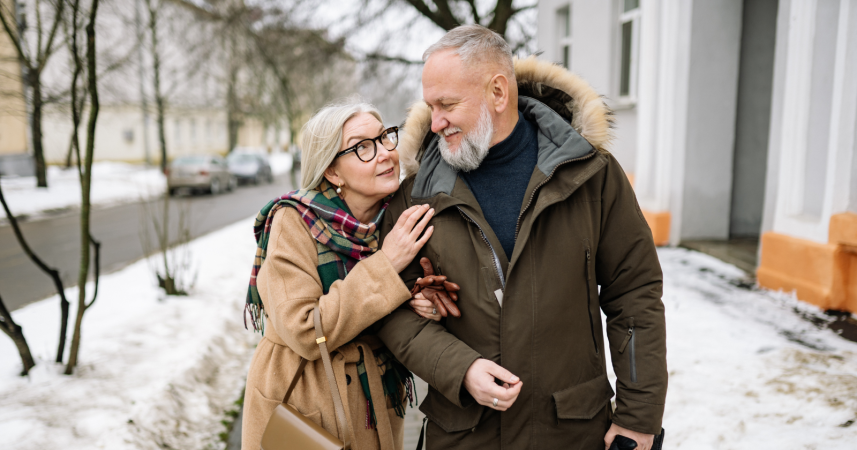
My generation learned one language and it was a good one. It was steady and reliable and built to last. But it wasn't enough on its own. It was never enough on its own. And the bravest thing a man from the 60s and 70s can do is learn a second language late in life and speak it badly and keep speaking it anyway, because the people he loves have been waiting to hear it longer than he knows.
Here's a counterintuitive reading of the men who raised us: when a father of that generation fixed your bike chain instead of asking how school was going, he wasn't failing at emotional presence. He was performing it in the only register he'd ever been taught. The mistake isn't his. The mistake is ours, for assuming silence means absence.
I've been turning this over for a while now, because the standard narrative about emotionally unavailable fathers misses something important about the economic and historical conditions that produced them. And I have a specific case study in mind.
My father never said "I love you." Not once. Not to me, not to my brother, not to my mother in front of us. If you'd asked him, he probably would have looked at you like you'd asked him to recite poetry in public.
But here's what my father did do. He worked double shifts at the pipe fitting plant so my mother could stay home with us when we were small. He drove forty minutes each way in a truck with no heat because the good schools were in the next town over. He rebuilt the front porch one August weekend in ninety-degree heat because my mother mentioned the railing was wobbly and he didn't want anyone getting hurt. He handed me his coat without a word in a parking lot in December because I'd left mine at school and it was twenty degrees and he walked to the car in his flannel shirt like it was nothing.
He never said the words. He said everything else.
The only language they knew
I've been thinking a lot lately about how the generation that grew up in the 60s and 70s learned to love. Not the romantic kind - although that too - but the everyday kind. The kind between parents and children. Between neighbors. Between men who'd known each other forty years and still called each other by their last names.
We learned it through action. Through what Gary Chapman would later call "acts of service" in his 1992 book The Five Love Languages. Chapman identified five distinct ways people express and receive love - words of affirmation, quality time, gifts, physical touch, and acts of service. The book has sold millions of copies and the framework has become part of the cultural vocabulary. What strikes me now, reading it at 66, is that Chapman treated acts of service as one option among five. In the world I grew up in, it wasn't one option. It was the only option. The other four might as well have not existed.
My mother showed love by making sure there was a hot dinner on the table every night at five-thirty sharp, even when money was so tight she was stretching one chicken across three meals. My father showed it by keeping the house warm and the car running and the bills paid, even when that meant working Saturdays and coming home with hands so beat up he could barely hold his fork. The neighbors showed it by shoveling each other's walks without being asked. The women on our street showed it by dropping off casseroles when someone was sick and watching each other's kids without making it into a favor. Nobody talked about feelings. Everyone showed them. An entire generation grew up believing that love is what you do, not what you say.
Where this came from
This wasn't an accident. It was a product of economics, history, and a particular kind of survival that shaped everything about how these households ran. My grandparents on both sides were Irish immigrants. They came to this country with almost nothing and they built lives through physical labor - factory work, service jobs, construction. In that world, words were cheap. Anyone could say anything. What mattered was whether you showed up, whether you did the work, whether, when things fell apart, you were the person who grabbed a hammer or the person who stood around talking about it. That ethic got passed down like the good china, except we used it every day. By the time my generation came along in the 60s, the template was set. Men worked. Women held the house together. Love was demonstrated through reliability, endurance, and the quiet sacrifice of personal comfort for the good of the family. It was never named. It was never discussed. It was just done.
And it produced a generation of adults who are extraordinarily competent at showing up for the people they love and almost completely incapable of telling them why.
The mowed lawn and what it really means
Consider the lawn, because it explains something specific about how my generation operates.
When I mow the lawn, I'm not mowing the lawn. The grass gets cut, yes, but that's not what's happening. What's happening is I'm telling Donna I love her. I'm saying the house looks nice because of me. I'm saying I'm still useful, still contributing, still the guy who takes care of things. If you didn't grow up in a house where love looked like that, you'd never recognize it.
The same logic applies to the oil change, the leaky faucet fixed before anyone asks, the four-hour drive to pick up your son's furniture because he mentioned the move once on the phone three weeks ago and you wrote it down.
Research published in the journal Emotion has examined the distinction between instrumental support - practical help, tangible assistance - and emotional support, the kind that involves listening, validating, and verbally expressing care. The findings consistently show that these are distinct dimensions. You can be excellent at one and almost nonexistent at the other. The research also suggests men are significantly more likely to provide and seek instrumental support while being significantly less likely to engage in emotional support.
That tracks. I could fix anything in my sons' lives except the part where they needed to hear me say I was proud of them.
What we got right
I want to push back on the idea that this generation was emotionally deficient, because I don't think that's accurate, and I think it's a conclusion reached too easily by people who benefited from the stability the model produced.
We showed up. Reliably, consistently, without fanfare. My father didn't miss a day of work in thirty-eight years. That's not a small thing. That's a man who got up every morning for four decades and did something hard because people depended on him. The overtime shift wasn't glamorous. The second job wasn't heroic in any way that makes a good story. But it kept the lights on and the kids fed and the roof from leaking, and there's a kind of love in that consistency that gets dismissed too quickly by people who didn't grow up needing it.
We also taught our kids something about resilience that's hard to teach on purpose. When love is demonstrated through action, you learn that love isn't a feeling that comes and goes. It's a decision you make every morning. You get up. You do the work. You come home. You do it again. There's a steadiness to that model I wouldn't trade, and I'll go further: I think my father's silence protected something that my generation's verbal fluency has started to erode. The words, handed out too freely, become currency subject to inflation. The coat in the cold parking lot was never going to depreciate.
What we got wrong
But here's what we missed. I'm 66 and if I'm not honest now then when.
We confused the method with the message. We assumed that because we were showing love through action, the words didn't need to follow. They do. I know this because I've watched my own sons struggle with the same doubt I struggled with - does my father actually love me, or does he just feel obligated to provide for me? When you never say it, you leave that question open. An open question like that can eat a person alive for decades.
We also let acts of service become a way to avoid intimacy rather than express it. It's possible - I know because I did it - to stay so busy fixing things, maintaining things, providing things, that you never have to sit still long enough for an actual conversation. The busyness becomes a shield. The usefulness becomes an identity. The people who love you get the labor but not the person doing it.
My wife Donna said something to me once that I've never forgotten. She said, "Tommy, I don't need you to fix the kitchen faucet. I need you to sit down and tell me what's bothering you." She'd been saying versions of that for thirty years. It took me until my sixties to actually hear it.
What the coat actually said
I think about my father's coat a lot. I think about standing in that parking lot at maybe ten years old, shivering, and watching him take it off and hand it to me without a word. Without hesitation. Without making it into a lesson or a sacrifice. Just a quiet transfer of warmth from him to me because that's what fathers do.
If he'd also said "I love you, kid" while handing me that coat, I'd have had everything. The action and the words. The proof and the naming of it. But he couldn't. The road between his heart and his mouth ended somewhere in the middle, same as it did for his father, same as it almost did for me.
I'm 66 now. I still mow the lawn. I still change Donna's oil. I still drive four hours when my sons need furniture moved. Last Thanksgiving, after dinner, I stood up and I told my family I was grateful for them. I didn't do it well. My voice cracked and I think I stared at the tablecloth for most of it. But I said it, out loud, in words.
I don't know yet whether that speech changed anything for my sons, or whether it only changed something for me. Those aren't the same thing, and I'd be lying if I said I could tell them apart. It's possible the words were overdue and landed exactly where they were supposed to. It's also possible I'm a man late in life learning a second language badly, and the people I'm speaking it to are being kind about the accent. What I notice is that since I started using words, I've been mowing the lawn a little less carefully. The old fluency is fading as the new one arrives. Whether that's a fair trade, I genuinely don't know.
What’s Your Plant-Powered Archetype?
Ever wonder what your everyday habits say about your deeper purpose—and how they ripple out to impact the planet?
This 90-second quiz reveals the plant-powered role you’re here to play, and the tiny shift that makes it even more powerful.
12 fun questions. Instant results. Surprisingly accurate.