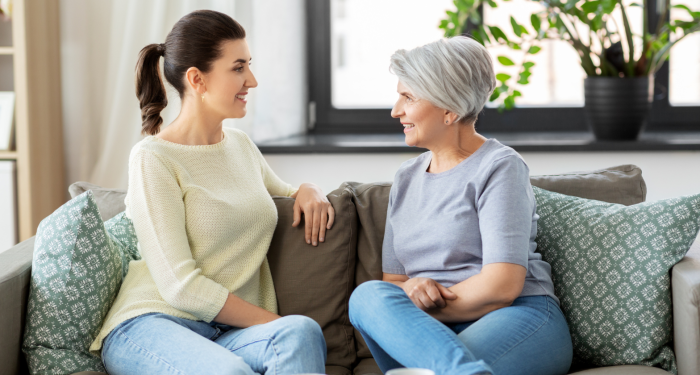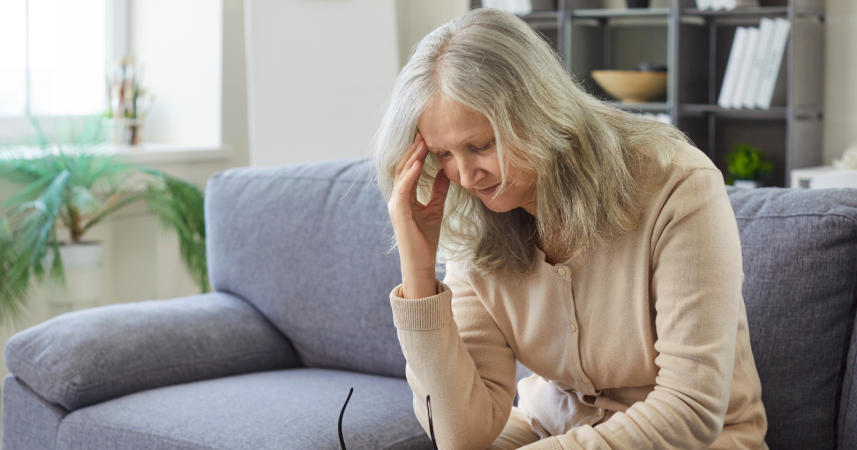
After seven decades of living, I've discovered that being deeply loved by your children and being genuinely needed by them are two heartbreakingly different things.
When love becomes optional
My son calls every Sunday at 4 PM. You could set your watch by it. The conversation follows a script we've both memorized: How's your health? Good. How's work? Busy. How are the kids? Growing fast. After exactly fifteen minutes, he finds a reason to go. I've started timing it. Last week, I tried to tell him about the mockingbird that's been visiting my garden, how it imitates my neighbor's car alarm perfectly. "That's nice, Mom," he said, already distracted. I could hear his real life happening in the background, the life where I'm a box to check, not a person to know.
What breaks my heart isn't the brevity of these calls. It's that he thinks they're enough. He believes he's being a good son, and by modern standards, perhaps he is. He calls, he visits on holidays, he ensures I have what I need. But needing and wanting are different things, and what I want, he can't imagine I still desire: to be relevant, to contribute, to matter in ways that go beyond merely existing.
After thirty-two years teaching high school English, I understand narrative structure. I know that every story needs conflict, resolution, growth. But what do you do when you've been written out of the story? When you've become the background character, mentioned occasionally but never essential to the plot?
The museum of unwanted wisdom
My kitchen tells the story of my obsolescence. Three drawers full of handwritten recipe cards, each one a small history. My mother's banana bread that got us through the lean years. The soup recipe from my Italian neighbor who taught me that love could be ladled into bowls. The birthday cake I perfected over forty years of celebrations, adjusted and noted in the margins like a scientist's lab book.
I offered to teach my daughter these recipes last month. She laughed, not unkindly, and showed me an app on her phone. "Everything I need is right here, Mom. With videos and nutritional information and user reviews." She meant it as reassurance. She didn't understand she was showing me my own irrelevance, digitized and rated by strangers.
Do you know what it's like to realize your life's accumulated knowledge has been replaced by YouTube tutorials? That the skills you spent decades perfecting can be downloaded in seconds by someone who will never understand what it cost to learn them the hard way?
The gentle violence of being protected
"Don't worry about it, Mom" has become my children's refrain. They protect me from their real lives like I'm made of spun glass. My daughter didn't tell me about her miscarriage until months after it happened. "I didn't want to upset you," she said, not understanding that being excluded from her pain was worse than sharing it would have been.
They've created a sanitized version of their lives for my consumption. I get the highlight reel: promotions, vacations, school achievements. The struggles, the fears, the 2 AM doubts? Those are reserved for their therapists, their spouses, their friends. Anyone but the woman who once held their fears in her hands like broken birds, who knew how to heal what hurt without being asked.
When did I become too fragile for the truth? When did my children decide that seventy years of living through loss, divorce, cancer scares, and widowhood hadn't prepared me for their contemporary troubles? They treat me like I've never known suffering, as if my life began the day they were born and will end the day I die, with nothing meaningful happening outside the borders of their existence.
The surprising ache of competence
Here's what nobody tells you about raising capable children: success feels like abandonment. I spent decades teaching them to be independent, to think for themselves, to build lives that could stand without me. I succeeded. They are brilliant, self-sufficient adults who navigate their worlds with confidence and grace. So why does their competence feel like a betrayal?
My friend Patricia, who's seventy-five, says it perfectly: "We raised them to leave us, then we're surprised when they do." But it's more than leaving, isn't it? It's the complete absence of need. They don't need my approval anymore, don't need my guidance, don't even need my recipes. They've found better ways, easier ways, more efficient ways to do everything I taught them.
I watch my son parent his children with techniques he learned from books written by people half my age. He quotes studies about child development, uses words like "attachment parenting" and "positive discipline." When I mentioned that he turned out fine with simpler methods, he gave me that look. The one that says I'm sweet but outdated, like a rotary phone or a handwritten letter.
Finding meaning in the margins
So where does that leave me? In the margins of their lives, I suppose. The footnotes. The dedication page they skip to get to the real story.
I've started building a life in those margins. I volunteer at the literacy center, teaching adults to read. These students want what I have to offer. They lean forward when I explain something, their faces lighting up when understanding dawns. They don't have YouTube tutorials for what I teach them. They need my patience, my experience, my ability to explain the same concept seventeen different ways until it clicks.
I write essays now, trying to capture not just what happened but why it mattered. This morning at 5:30, I wrote about the year my first husband left, how I learned to fix a leaking faucet from a library book because I couldn't afford a plumber and refused to ask for help. My children don't want these stories, but maybe someday their children will. Maybe someday someone will wonder who I was before I became a grandmother, a mother, a footnote.
I'm learning Italian through an online program. My daughter seemed puzzled when I told her. "Why?" she asked, as if learning at seventy was an eccentric hobby rather than a declaration that I'm still becoming. I didn't tell her about my dream of walking through Rome alone, ordering my coffee in perfect Italian, being someone other than somebody's mother for just a few weeks.
The long echo of love
Perhaps this is simply the natural order of things. I think about my own mother, gone now for sixteen years. How many times did she try to tell me something important while I half-listened, already planning my exit? How many of her stories did I dismiss as repetitive, not understanding that she was trying to hand me pieces of herself before it was too late?
I was a good daughter, I thought. But I was a good daughter the way my children are good children: dutiful, consistent, but ultimately absent from the deeper conversation. I loved my mother but I didn't know her. I knew the mother parts, the grandmother parts, but not the woman who existed before and beyond those roles.
Now I understand the particular loneliness she must have felt, being loved but not known, needed but not wanted, remembered but not really seen. It's a grief without a funeral, a loss without an ending.
Final thoughts
Tomorrow I'll wake at 5:30 and write in my journal. I'll tend my garden where the mockingbird now knows to expect me. I'll text my children good morning and accept whatever crumbs of connection they offer. Not because it's enough, but because love doesn't come with conditions, even when it comes with distance.
The hardest thing I've ever had to accept is that teaching them to walk meant teaching them to walk away. But maybe that was always the point. Maybe love's greatest success is making yourself unnecessary. And maybe, just maybe, learning to live with that truth is the last lesson I needed to learn, not for them, but for myself.
If You Were a Healing Herb, Which Would You Be?
Each herb holds a unique kind of magic — soothing, awakening, grounding, or clarifying.
This 9-question quiz reveals the healing plant that mirrors your energy right now and what it says about your natural rhythm.
✨ Instant results. Deeply insightful.
Marlene Martin
Marlene Martin is a retired high school English teacher who spent 38 years in the classroom before discovering plant-based eating in her late sixties. When her daughter first introduced her to the idea of removing animal products from her diet, Marlene was skeptical. But curiosity won out over habit, and what started as a reluctant experiment became a genuine transformation in how she thinks about food, health, and aging.
At VegOut, Marlene writes about nutrition, wellness, and the experience of embracing new ways of eating later in life. She brings a teacher’s instinct for clarity and patience to topics that can feel overwhelming, especially for readers who are just beginning to explore plant-based living. Her writing is informed by personal experience, careful research, and a belief that it is never too late to change.
Marlene lives in Portland, Oregon, where she spends her mornings reading research papers, her afternoons tending a modest vegetable garden, and her evenings knitting while listening to audiobooks. She has three adult children and two grandchildren who keep her honest about staying current.
More Articles by Marlene