The year I discovered that decades of exhausting myself hosting family gatherings had trained everyone to be consumers of my love rather than participants in it, the silence that followed my absence revealed which relationships were built on genuine connection versus those that were merely transactions waiting to expire.
Research on domestic labor distribution consistently shows that one person — almost always a woman — ends up holding the entire architecture of a family's social life. Sociologists call it "kinkeeping," and studies out of the University of Massachusetts have estimated that roughly two-thirds of holiday planning, meal preparation, and extended-family coordination still falls to a single household member. What those studies tend not to measure is what happens when that person stops.
I know what happens. The traditions don't transfer. They evaporate.
Twenty-seven years ago, I ironed cloth napkins at 5 AM on Easter morning while sobbing into my coffee. My back was screaming, my feet were swollen, and I still had a ham to glaze and forty-three deviled eggs to finish. When my second husband found me crying over perfectly creased linens, I told him they were happy tears. That was the first time I lied to myself about what I was really doing.
The weight of being everyone's anchor
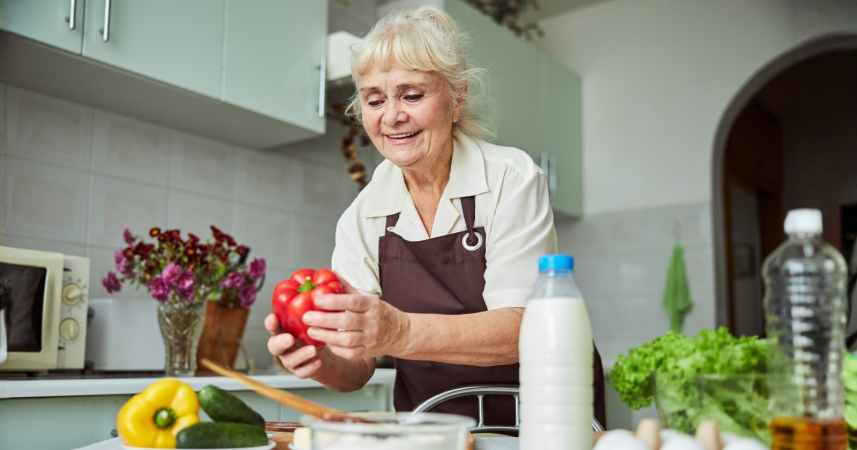
For decades, my home was the gravitational center of our family universe. Every holiday, birthday, and Sunday dinner happened at my dining table that seats twelve. I knew everyone's food allergies, favorite desserts, and seating preferences. My freezer held emergency birthday cakes. My pantry stayed stocked for impromptu gatherings. If someone needed feeding, comforting, or celebrating, my kitchen was where it happened.
I wore this role like a badge of honor. While other women my age complained about their families never visiting, mine couldn't stay away. My refrigerator door disappeared behind grandchildren's artwork, my guest room sheets never fully cooled between visitors, and the coffee pot ran on a schedule that rivaled a diner's.
Looking back, I can see how I confused being needed with being loved. After thirty-two years of teaching high school English, nurturing was my default setting. I thought love looked like exhaustion, that family meant never saying "I can't," that my worth was measured in how many people I could gather and feed.
Then my knees gave out. Two replacements at 65 and 67, and suddenly the woman who could stand for six class periods then cook for twelve couldn't manage stairs without gripping the rail. My surgeon was blunt: "Stop being on your feet for hours at a time, or you'll need a wheelchair before seventy."
When the music stopped
The first holiday I couldn't host was Thanksgiving after my second knee replacement. I called each of my children, explained about the surgery, the doctor's orders, the impossibility of cooking a feast. "No problem, Mom," they said. "You rest. We'll figure it out."
They figured it out by going to my son's in-laws.
Christmas came and went. Easter passed without a single phone call about plans. Mother's Day arrived with a card in the mail and a brief phone call, but no visit. The Sunday dinners that had been as reliable as church bells for three decades simply vanished, as if they'd never existed. The phone that used to ring constantly with "What can I bring?" and "What time should we come?" fell silent. Not one person asked if we could modify our traditions. Not one offered to host. Not one suggested ordering pizza if it meant keeping our gatherings alive.
Have you ever noticed how quickly essential becomes optional when you stop being the one providing it?
I spent that first year waiting, certain someone would notice the absence of our traditions. I kept Sundays free, bought a turkey at Thanksgiving thinking they might surprise me. It sat in my freezer until February, when I finally donated it to the food bank. The dining table gathered dust for the first time since we'd bought it twenty years ago.
The brutal gift of clarity
My friend from my widow's support group said something that cracked me wide open: "Honey, you trained them to consume what you offered, not to reciprocate it."
She was right, and I want to be careful here, because the easy version of this story blames the children and the harder version blames the mother, and neither one is accurate. For decades I had been the eternal giver, never teaching anyone else how to give back. I was so busy proving my worth through service that I never asked anyone to serve me. The pattern was mine to set and mine to break, but the people who benefited from it also had eyes. They saw a woman in her sixties standing at a stove for ten hours and decided, without comment, that this was simply the arrangement. That was a choice, too.
The silence taught me to examine every relationship through a new lens. My cousin who only called when she needed money? I stopped answering. The neighbor who expected me to watch her cat but was always busy when I needed a ride to physical therapy? I let that friendship fade. The church committee that expected me to bake for every fundraiser but never invited me to planning meetings? I resigned. Virginia Woolf once wrote, "The eyes of others our prisons; their thoughts our cages." I had imprisoned myself in others' expectations, caging my worth in their approval. The year of silence freed me from that prison, though freedom felt lonelier than I'd expected.
Learning the language of reciprocal love
As I stopped providing services without reciprocation, space opened for something else. My Thursday coffee with my neighbor became sacred because we both show up. My book club friends started taking turns driving me to meetings when my knee acted up. My oldest granddaughter began calling just to chat, not because she needed something.
The surprise was my daughter-in-law. She started bringing her children for cookie-baking sessions, saying, "They need their grandma time." She never asked me to cook a feast, but she'd sit at my kitchen table, sharing tea while the kids played. She saw me, not my services.
My relationship with my children had to be rebuilt from scratch. The first honest conversation happened eighteen months into the silence, when my daughter asked why I seemed distant. I told her about the empty table, the silent phone, the way disappearing from their lives had been as easy as stopping a service.
"But Mom," she said, "you never asked us to take over. You just stopped."
"And you never asked why," I replied.
That conversation led to others, painful excavations of years of assumptions. I had assumed love meant never having to ask. They had assumed I preferred doing everything myself. Whether those assumptions were equivalent is something I still turn over in my mind.
The smaller table holds more
Slowly, we began building something new. Not the old traditions where I exhausted myself while everyone showed up to be served, but collaborative gatherings where everyone contributed. My son learned to make my mother's cornbread dressing. My daughter took over the birthday calendar. The grandchildren started setting and clearing tables.
The dining table still seats twelve, but now it regularly holds four or five. These smaller gatherings have taught me that intimacy trumps volume. My granddaughter helping me knead bread dough on a random Saturday holds more meaning than a dozen distracted relatives showing up for free food on Sunday.
I still cook, but only when joy drives me to the kitchen, not obligation. I still host, but only people who also invite me into their homes. I still give, but not to prove my worth.
Final thoughts
At seventy, I'm finally learning what I should have known at thirty: being loved for what you do isn't the same as being loved for who you are. The first disappears the moment you stop performing. The second, I'm told, deepens when you're too tired to perform at all. I am still testing whether that second part is true.
Last Sunday, my son brought soup he'd made from my recipe, my daughter-in-law brought bread from the bakery, and my grandchildren brought their watercolors to paint with me after lunch. Nobody asked what happened to the old traditions. I didn't raise it either. I'm not sure whether that's progress, or whether we've all quietly agreed to skip a conversation none of us want to have.
The year the phone stopped ringing taught me something I can't quite unlearn. What I had called love for forty years turned out to be a service contract, and the service contract expired exactly when you'd expect it to. Whether what sits at the smaller table now is something better, or simply something quieter, is a question I haven't finished answering.
If You Were a Healing Herb, Which Would You Be?
Each herb holds a unique kind of magic — soothing, awakening, grounding, or clarifying.
This 9-question quiz reveals the healing plant that mirrors your energy right now and what it says about your natural rhythm.
✨ Instant results. Deeply insightful.
Marlene Martin
Marlene Martin is a retired high school English teacher who spent 38 years in the classroom before discovering plant-based eating in her late sixties. When her daughter first introduced her to the idea of removing animal products from her diet, Marlene was skeptical. But curiosity won out over habit, and what started as a reluctant experiment became a genuine transformation in how she thinks about food, health, and aging.
At VegOut, Marlene writes about nutrition, wellness, and the experience of embracing new ways of eating later in life. She brings a teacher’s instinct for clarity and patience to topics that can feel overwhelming, especially for readers who are just beginning to explore plant-based living. Her writing is informed by personal experience, careful research, and a belief that it is never too late to change.
Marlene lives in Portland, Oregon, where she spends her mornings reading research papers, her afternoons tending a modest vegetable garden, and her evenings knitting while listening to audiobooks. She has three adult children and two grandchildren who keep her honest about staying current.
More Articles by Marlene