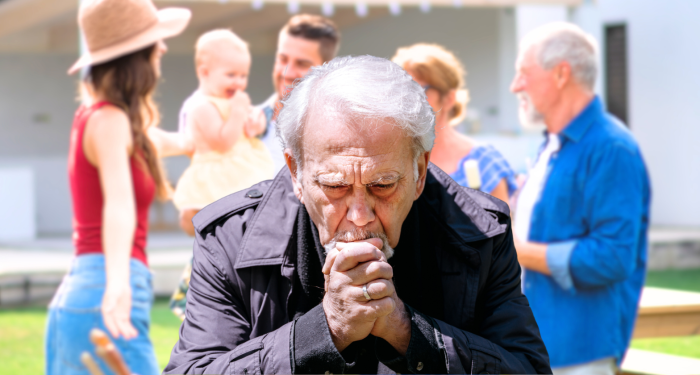


A generation raised to believe that keeping things to yourself was a form of strength now faces a culture that treats their composure as a symptom.
Margaret is seventy-three. She lives in the same two-bedroom house she's owned since 1981, drinks her coffee black, and reads the newspaper in print because she likes the feel of it. Last Tuesday her daughter called at 9 a.m. and asked, in that particular voice that has crept into the conversation over the past few years, whether she was "doing okay, really okay." Margaret said she was fine. Her daughter pressed. Margaret said she was fine again, more firmly this time, and got off the phone. Her daughter then called her brother to say their mother sounded withdrawn.
Margaret was not withdrawn. Margaret had been in the middle of a crossword and did not feel like narrating her emotional weather to someone who had already decided what it should be. For people born between 1945 and 1965, keeping your business to yourself was an act of self-respect, a quiet assertion that your inner life belonged to you and no one else. The boundary between what you felt and what you shared was not a wall built from fear. It was architecture. Deliberate, load-bearing, and dignified. Now that architecture is being condemned as unsafe by people who never lived inside it.
Most people under forty look at that silence and see something broken. The prevailing cultural wisdom says that openness equals health, that vulnerability is strength, that if you're not sharing your emotional state with someone, you're probably suffering alone. Wellness campaigns, mental health awareness programs, and even well-meaning adult children operate under this assumption. Silence, in the current framework, is a red flag. But that framework misses something fundamental about how an entire generation was formed. The people now in their sixties, seventies, and early eighties didn't arrive at reticence by accident. They were shaped by households where composure was currency, where "airing your dirty laundry" was a moral failing, and where the ability to handle your own problems without burdening others was considered the baseline of adulthood. When modern culture reads their quietness as loneliness, it's applying a vocabulary they never agreed to speak.
The Architecture of Keeping Things In
The postwar generation grew up in homes where emotional restraint was modeled daily. Fathers who had served in wars and never discussed them. Mothers who managed households under financial strain with quiet determination, embodying a philosophy of perseverance. The message absorbed through thousands of ordinary dinners and unremarkable evenings was consistent: feelings are real, but they are yours to manage. Sharing them widely was indulgent. Sharing them publicly was dangerous.
This was not, as younger generations sometimes assume, emotional ignorance. It was a coherent value system. Privacy functioned as a form of sovereignty over the self. You decided who got access to your interior life. That decision was yours alone, and exercising it was a sign of maturity, not pathology.
The generational divide in how emotional expression is valued often gets reduced to stereotypes on both sides. Younger people call boomers emotionally repressed. Boomers call younger people oversharing and fragile. Neither characterization captures what's actually happening, which is two entirely different operating systems trying to run the same software.
When you've spent sixty or seventy years building a self around the principle that dignity means keeping your composure, being told you need to "open up" doesn't feel like an invitation. It feels like an intrusion.
When Solitude Gets Reclassified
Something shifted in public health language over the past two decades. Loneliness went from being a private feeling to being an epidemic, a crisis, a condition requiring intervention. And the population most often targeted by that language? Older adults living alone or living quietly.
The research on loneliness and aging is real. Studies have linked loneliness in older adults to cognitive decline, showing that the relationship operates over surprisingly short time periods. The health consequences of genuine, unwanted isolation are serious and well-documented. Nobody disputes that.
The problem is in how we determine who's lonely. The current approach treats living alone as a risk factor, reduced social contact as a warning sign, and reluctance to participate in group activities as evidence of withdrawal. For a generation that actively chose privacy as a value, these metrics are nearly meaningless. They measure behavior without asking what the behavior means to the person performing it. A woman who spends her Saturday reading in her living room with her phone turned off might be lonely. She might also be having the best day of her week. A man who declines his daughter's invitation to a family dinner isn't necessarily isolated. He might simply prefer his own company that evening, the same way he's preferred it for fifty years.

Psychologists who study solitude have drawn sharp distinctions between chosen aloneness and imposed isolation. Solitude and loneliness are fundamentally different psychological states, with solitude offering restoration and even creativity when it's voluntary. But the public conversation about aging rarely makes this distinction.
The wellness-industrial complex needs a problem to solve, and quiet old people fit the template.
The Vocabulary That Doesn't Translate
Part of the disconnect is linguistic. The language of emotional wellness that dominates contemporary culture emerged from therapy rooms, self-help books, and social media. Terms like "boundaries," "emotional labor," "trauma response," and "attachment style" have become the common dialect for discussing human relationships. People under fifty use these words fluently. Many people over sixty find them foreign, clinical, or simply unnecessary.
That doesn't mean older adults lack emotional sophistication. They have their own vocabulary, one built from experience rather than theory. "Keeping a stiff upper lip" isn't a trauma response. "Not making a fuss" isn't avoidance behavior. These phrases describe a deliberate approach to emotional management that served people through decades of actual hardship: wars, recessions, family crises, loss.
When younger therapists, social workers, or family members probe for deeper emotional disclosure with emphasis on what someone is really feeling, the subtext is clear. They believe the person isn't being honest. They assume there's a truer, deeper answer hiding behind the calm exterior. That assumption is usually wrong, and it's almost always condescending.
The calm exterior is the answer. The composure is the emotional regulation strategy. It works. It has worked for decades. Treating it as a barrier to authentic expression assumes that authentic expression must look like the therapeutic model currently in fashion.
Aging Into Someone Else's Story
One of the quieter cruelties of getting older in this cultural moment is having your identity rewritten by people who mean well. Adult children who read articles about the loneliness epidemic and immediately call their parents. Community programs that schedule activities for seniors on the assumption that more social contact is always better. Healthcare systems that flag "lives alone" as a risk category without asking whether the person in question is content.
People born between 1945 and 1965 have navigated economic and social shifts that previous generations didn't face in the same way, adapting to changes in workplaces, pensions, and social structures. Adding the indignity of having their personality traits reclassified as symptoms makes the disorientation worse.
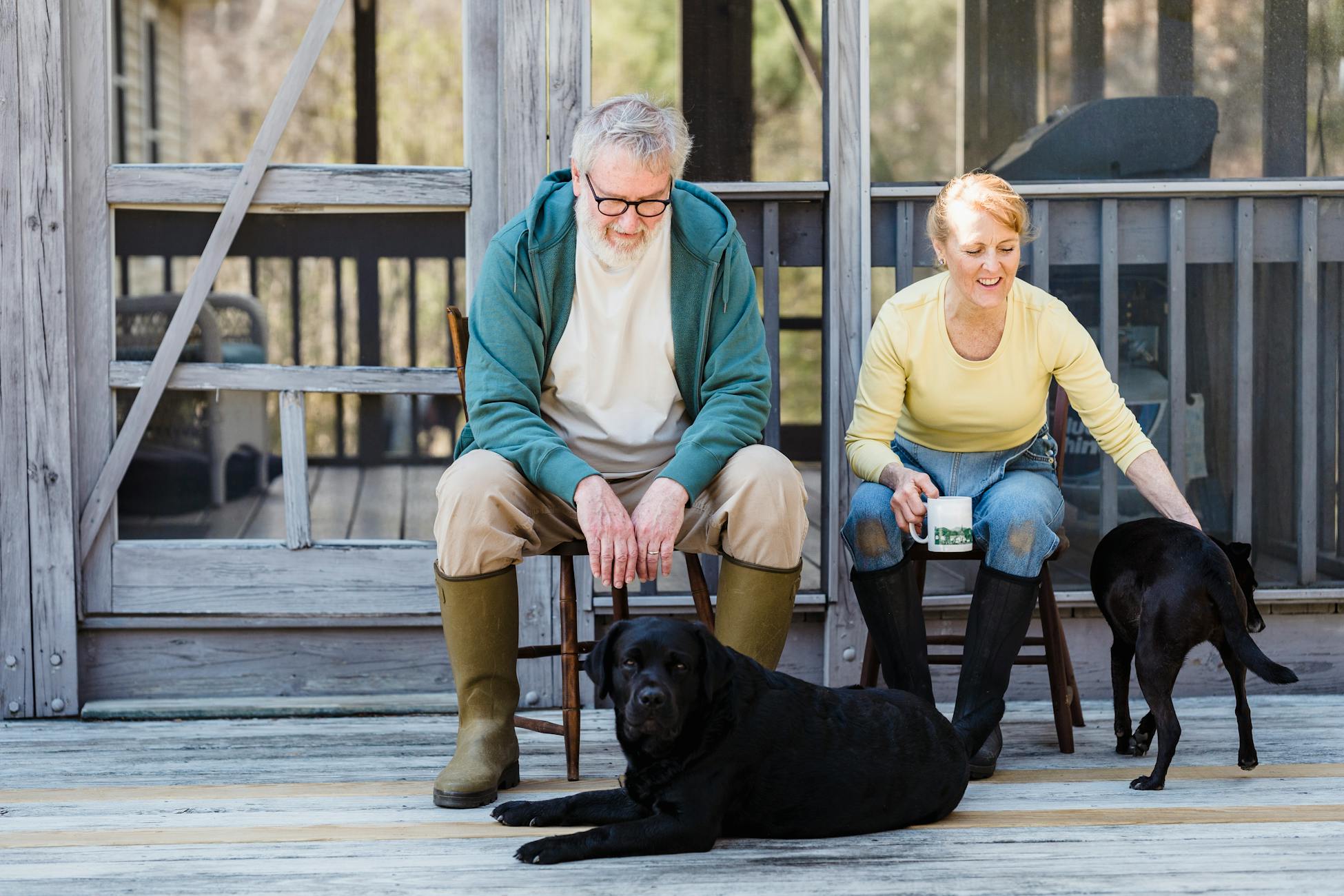
Consider what it feels like to have lived an entire life by a certain set of principles and then be told, in your seventies, that those principles were actually defense mechanisms. That your self-sufficiency was actually fear of vulnerability. That your preference for small, deep friendships over large social networks was actually avoidant attachment. The reframing strips agency from people who exercised it deliberately.
This matters because the way we think about generational differences shapes policy, healthcare, and family dynamics. If the dominant narrative says that quiet older people are lonely older people, then interventions will be designed to fix a problem that, for many, doesn't exist. Resources get directed toward increasing social contact when they might be better spent ensuring that people who are genuinely isolated can access help, while people who are genuinely content are left in peace.
The Difference Between Being Alone and Being Left Alone
There is a meaningful distinction between these two states that the loneliness conversation consistently collapses. Being alone is a circumstance. Being left alone is a choice. For much of this generation, being left alone was the highest form of respect someone could offer. It meant: I trust you to handle your own life. I don't assume you need rescuing.
That trust has eroded. Partly because the loneliness research, when it does identify genuine suffering, identifies real consequences. Older adults face higher risks of loneliness due to changes in health and social connections, and the strategies for managing those feelings matter. The challenge is distinguishing between the person who is isolated against their will and the person who has curated a quiet life on purpose. Both look the same from the outside. They feel completely different from the inside.
A culture that genuinely cared about older adults would stop asking whether they're lonely, which carries an implicit accusation, and start asking whether their life is shaped the way they want it to be. That question respects both the person who wants more connection and the person who wants to be left alone with their book and their tea and their silence.
Sovereignty Is Not a Symptom
The word "sovereignty" sounds grand, but its practical expression is modest. Choosing when to answer the phone. Deciding not to explain your feelings to someone who hasn't earned the context. Eating dinner alone because you enjoy your own company, not because no one called. These small exercises of control over one's own life are what privacy looks like in practice. They're also what dignity looks like.
For a generation that built its identity around this kind of self-determination, watching it get pathologized is disorienting. The cultural narrative around baby boomers shifts constantly, from admiration to resentment to pity, but rarely lands on simple respect for how they've chosen to live.
What's happening here deserves to be named plainly. A younger culture has decided that its particular emotional vocabulary — therapeutic, confessional, perpetually processing — is the universal standard, and it is retrofitting that standard onto people who were formed by a different and no less valid framework. That is not care. That is cultural imperialism with a clipboard. When we pathologize a seventy-year-old's preference for solitude, we are not diagnosing her. We are correcting her for failing to be legible to us.
The medicalization of ordinary privacy needs to stop. Not softened, not nuanced into a "both-sides" compromise, not balanced against the possibility that somewhere a quiet person might actually be suffering. Suffering, when it exists, announces itself in ways that don't require a checklist to detect. What the checklist catches instead is dignity. And turning dignity into a diagnosis is a failure of imagination on the part of a generation that prides itself on emotional literacy.
The generation born between 1945 and 1965 was taught that privacy was dignity. Many of them still believe it. They are not wrong, and they are not symptoms, and they do not need to be rescued from a value system they built on purpose. The most honest thing a younger person can do is close the diagnostic manual, put down the worried phone call, and accept that someone else's quiet is not a puzzle to solve. It is an answer. The answer is that they are fine, and they have been telling us so, and the only thing left is to believe them.