After a decade in restaurant kitchens, a chef discovers that the care she once reserved for paying guests transforms her relationship with cooking for herself—and ultimately, how she feels at day's end.
For years I believed cooking for yourself was a lower category of cooking. Something you did with less effort, less care, less everything, because there was no one across the table whose experience mattered. I was wrong about that, and it took me until 36 to understand how wrong.
The conventional wisdom about cooking for one runs something like this: why bother with mise en place for a single plate? Why plate properly when no one's watching? Why not just eat standing over the sink, or in front of the laptop, or out of the container you reheated it in?
What gets lost in that framing is the quiet assumption underneath it. That the effort is for the audience. That the ritual is a performance. That a meal without a guest isn't really a meal.
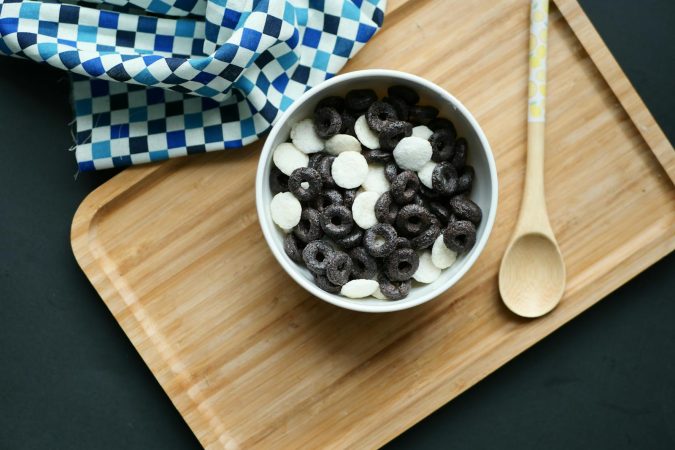
I spent over a decade in restaurant kitchens and then in private client work, where every plate left the pass looking the way I'd want to eat it myself. Then I'd come home and eat cereal at 11 p.m. The gap between the two didn't register as a problem. It registered as efficiency.
The shift
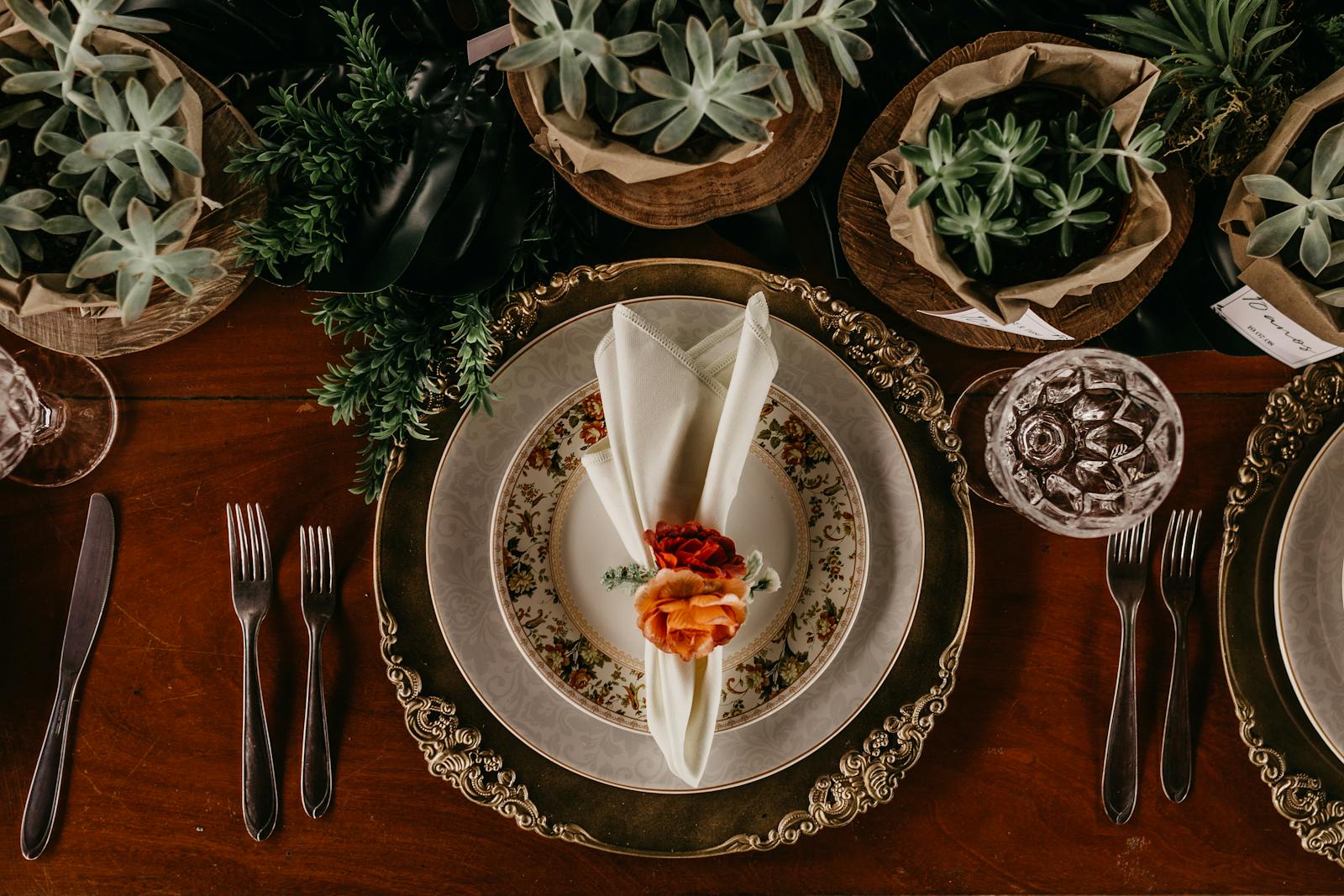
Sometime late last year, I started doing something small. I began treating my own dinners the way I used to treat a paying guest's. Not elaborately. Not with multiple courses or tasting spoons or any of the theater I was trained in. Just the basic respect of the craft: wipe the rim of the plate, taste before serving, sit down, put a napkin in my lap, pour water in an actual glass.
That was it. Those were the changes. I didn't cook more ambitiously. I cooked more attentively.
And something about the end of my day started to feel different.
What the research actually says about this
I'm suspicious of wellness claims that ride on vibes, so I went looking. It turns out there's a reasonably robust body of evidence on why small ritualized acts of attention affect mood more than you'd expect.
Research suggests that just ten minutes of daily mindfulness measurably improved wellbeing, reduced depression and anxiety, and nudged participants toward healthier eating and sleep habits.
The key word there is attention, not meditation. The participants weren't sitting on cushions. They were building a short, deliberate practice of noticing.
Practitioners in the clinical world argue this kind of presence doesn't require a formal sit at all. Researchers at the University of Utah's Resiliency Center describe informal mindfulness as the practice of bringing bodily awareness to daily activities — folding warm laundry, washing dishes in soapy water, moving through the small repeating tasks of a day with attention rather than autopilot. The benefits, they argue, accrue in the noticing itself.
That framing matched what I was experiencing. I wasn't adding a practice. I was subtracting the autopilot from one I already had.
Why autopilot eats your evenings
Research suggests that about two-thirds of daily behaviors begin automatically — running on habit rather than deliberate choice. Two-thirds. If most of what you do in a day is unexamined, the quality of your day depends heavily on the quality of those defaults.
My default for dinner used to be this: cook something fast, eat it while doing something else, feel vaguely unsatisfied, fill the gap with a snack an hour later. The meal wasn't registering. It was metabolic input, not an event.
What I've been doing instead is turning a single block of the evening — maybe thirty minutes — into a block where I'm not doing anything else. No podcast. No phone against the cutting board. Just the meal.
It sounds almost comically small. It is almost comically small. That's kind of the point.
The hospitality I was withholding from myself
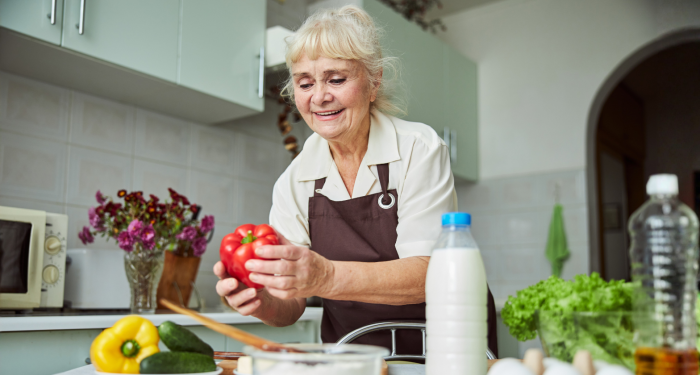
When I trained under classical European chefs in Boston, the first thing you learned was that plating wasn't decoration. It was the last act of respect for the ingredients and for the person about to eat them. You didn't garnish to impress. You garnished because a thoughtful plate told the guest: someone considered you.
I carried that philosophy through fine dining, through hotels, through years of private client work. I applied it, rigorously, to strangers. And then I came home and ate like the whole thing was beneath me.
There's a term in clinical psychology for the exhaustion of pouring care outward without replenishing inward. The World Health Organization classified burnout as an occupational phenomenon in 2019, and research on caregiver burnout points to the unequal distribution of emotional labor as a primary driver — the pattern of people who are expert at tending to others and incompetent at tending to themselves.
Hospitality workers have a version of this. So do a lot of people who aren't in hospitality at all. Anyone who's ever been the default host, the default cook, the default person who makes things nice for everyone else, knows the shape of it. A colleague of mine wrote something recently about the year she stopped hosting holidays and learned that what she'd thought was love had been a service contract. The hospitality had been a one-way channel.
Cooking for myself the way I cook for a guest is, in some small way, a correction to that asymmetry.
What changed practically
I don't want to oversell this. It's not transformative. It's just better.
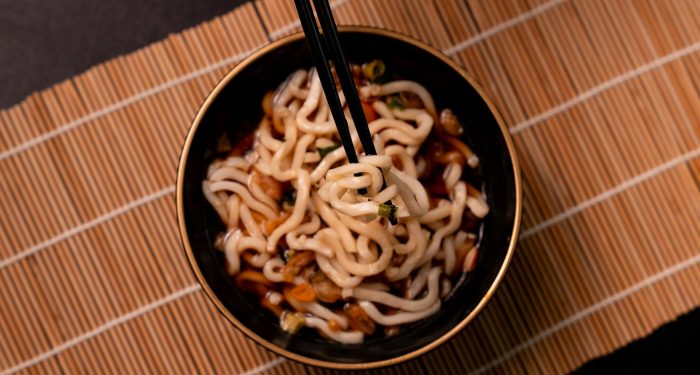
On a weeknight, dinner might be a bowl of rice, some blistered greens, a fried egg, chili oil I made on a Sunday. Five minutes of actual cooking. But I pull a real bowl off the shelf instead of eating from the pan. I taste the greens before I plate them and adjust the salt. I sit at the table. I eat slower than I used to.
Weekends I still cook the way I always did — elaborate, long, with three pots going and music on. That hasn't changed. What's changed is that the weekday meal is no longer a shadow version of the weekend meal. It's its own thing, complete.
The Thai concept I absorbed during my three years in Bangkok is called sabai. It's often translated as "comfort" or "ease," but it's closer to a state of being unhurried and at home in the moment you're in. My Thai friends taught me to cook by feel and to eat without rushing. It took me leaving the restaurant world and moving across the planet to learn something I could have been doing in my own kitchen the entire time.
Why the plate matters more than you'd think
Research suggests that the meaningfulness of daily activities — not their grandeur, but the sense that they matter — is a more reliable predictor of wellbeing than most lifestyle variables people obsess over. Meaning, in this literature, isn't philosophical. It's the felt sense that what you're doing right now counts.
A plated dinner counts more than a container dinner. Not because plates are magic. Because the act of plating is a signal to yourself that this moment is being treated as an event rather than a pit stop.
The Alexander Technique teacher Ann Rodiger made a similar point in a conversation on everyday mindfulness — most people go through their days on autopilot, with a disconnect between doing and being. The remedy isn't dramatic. It's small interruptions of awareness, repeated often.
The counterargument worth taking seriously
I should name the objection. Not everyone has the time, energy, or mental bandwidth to slow down over dinner. Single parents, people working multiple jobs, anyone deep in caregiving — prescriptions about slowing down over dinner and plating meals carefully can read as a luxury dressed up as wisdom.
Fair. I'm not arguing this is universally available. I'm arguing that if you have any margin at all — if there's a meal in your week where you could choose to be present and you're currently choosing not to be — the returns on that small shift are disproportionate to the effort it takes.
You don't need to cook more. You don't need better ingredients. You don't need a dining room. You need a plate, a chair, and thirty minutes where you're not also doing something else.
The end-of-day thing
The specific change I've noticed is hard to name precisely. It's not happiness. It's not energy. It's something more like closure.
Before, the end of my day had a trailing quality — work bleeding into evening bleeding into a late snack bleeding into tired scrolling. There was no punctuation. Just a slow fade.
The meal, treated as a meal, became a period at the end of the day's sentence. Everything that came after it felt optional. Everything before it was done.
I think that's what I was missing. Not the food. The ending.
Thirty-six is young enough that I'm embarrassed to have needed this long to figure out. Old enough that I'm glad I didn't need longer. The shift is small. The effect isn't. And the thing I keep coming back to is that I spent fifteen years giving strangers a version of care I'd been systematically withholding from myself, and that the correction — when it finally arrived — fit in the space of a single plate.
If there's a takeaway, it's this. The quality of your evening is probably not a function of what you ate. It's a function of whether you noticed eating it. The ingredients don't have to be impressive. The attention does.
That's the whole shift. That's the whole article. Enough.
What’s Your Plant-Powered Archetype?
Ever wonder what your everyday habits say about your deeper purpose—and how they ripple out to impact the planet?
This 90-second quiz reveals the plant-powered role you’re here to play, and the tiny shift that makes it even more powerful.
12 fun questions. Instant results. Surprisingly accurate.