
They didn't reject the blueprint — they read the results.
My cousin Daniel told me last Thanksgiving that he'd turned down a promotion. His father set down his fork. "You did what?" Daniel shrugged the way twenty-seven-year-olds shrug when they've already thought something through ten times and don't want to explain it for the eleventh. "It was more hours for not much more money. I'd barely see Maya." His father stared at him like he'd announced he was moving to the moon. "That's how you build a career." Daniel nodded, took another bite of turkey, and said quietly, "I watched you build yours."
The table went silent in the specific way tables go silent when someone says something true that no one wants to examine. His father didn't answer. His mother changed the subject. And Daniel, who had been accused earlier that same week on a family group chat of being "one of those lazy kids," had just performed the most precise cost-benefit analysis I'd heard in years. He wasn't rejecting work. He was rejecting a specific arrangement he'd watched up close for two decades.
The conventional wisdom says younger workers lack grit. They don't want to pay their dues. They expect remote flexibility and mental health days and four-day work weeks because they're soft, coddled, participation-trophy kids who never learned to push through discomfort. This framing dominates cable news segments, holiday dinner arguments, and LinkedIn posts written by people whose profile photos were taken in 2009. And it misses the entire mechanism at work.
What psychology actually reveals is something more uncomfortable: children absorb their parents' stress at a biological level, and that absorption shapes their orientation toward the very institutions their parents sacrificed everything to serve. When the generation now entering the workforce watched their parents grind through decades of long hours, they weren't just passively observing. They were encoding. Every slammed door after a bad shift. Every dinner eaten standing up. Every vacation that never happened. Every retirement party where the retiree looked more relieved than proud. That data went somewhere.
The Body Keeps the Spreadsheet
Research on how parental stress affects children's health has established that chronic parental distress doesn't stay contained within the parent. It migrates. Children of chronically stressed parents show elevated cortisol levels, disrupted sleep patterns, and heightened anxiety responses, not because someone explained stress to them, but because they lived inside it. The walls of the house absorbed it. The silences at dinner carried it. The way a parent's jaw tightened when the phone rang on a Sunday evening transmitted it.
My mother Carmen spent thirty-one years working food prep in Miami, starting at five in the morning, in kitchens without proper ventilation. She never once called in sick that I can remember. She never complained in a way that asked for anything. But I could read her body by the time I was eight years old. The way she held her shoulders when she came home. The specific heaviness in how she set her bag down. I didn't have language for what I was watching. I had sensation.
And that sensation became a kind of knowledge. Not the kind you can articulate on a resume or debate at Thanksgiving. The kind that lives in your nervous system and whispers to you, years later, when someone tells you the path to a good life is forty years of loyalty to a company that will replace you in two weeks.
Observational Learning at Scale
The psychological framework here involves what researchers call intergenerational transmission of behaviour, the process by which attitudes, coping strategies, and orientations toward risk are passed from parent to child, often without a single explicit conversation. You don't need to explicitly tell your kid that work is exhausting or damaging. Your kid already knows from observing your daily life.
This transmission is powerful precisely because it bypasses language. A parent who verbally champions hard work while physically deteriorating under the weight of that work sends two messages simultaneously. The mouth says persevere. The body says look what perseverance costs. Children, especially before adolescence, trust the body. They read nonverbal signals with a fluency that most adults have lost.
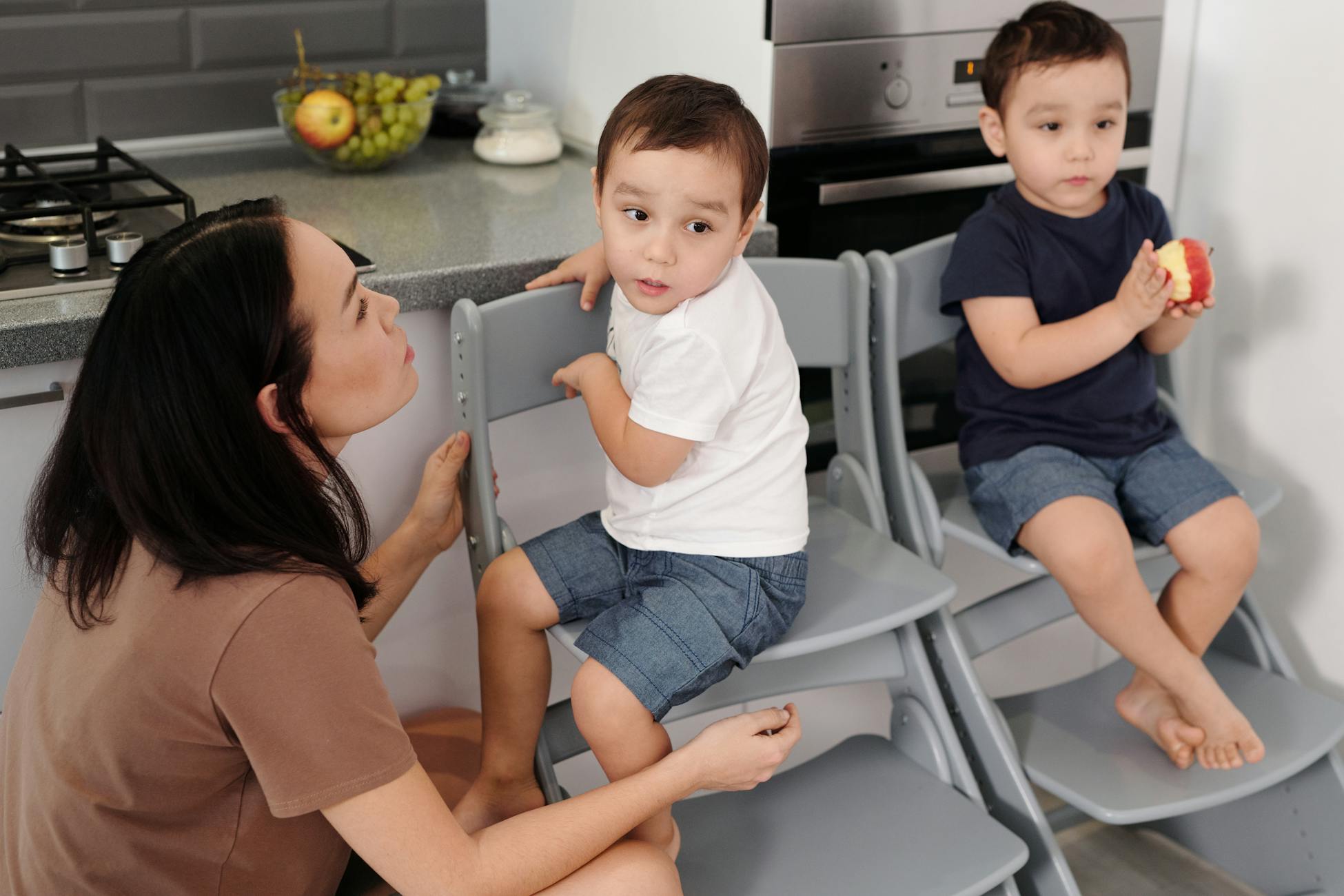
So when an entire generation grew up watching their parents arrive at retirement age with bad knees, thin savings, estranged relationships, and a vague confusion about who they were outside of their job title, the takeaway was not inspirational. The takeaway was cautionary.
The experiment had been run. The hypothesis, that decades of relentless work would yield security, fulfillment, and rest, had been tested on the bodies and marriages and bank accounts of their parents. The results came back. And the younger generation read them clearly.
Quiet Quitting as Quiet Conclusions
The phenomenon that got labeled "quiet quitting" around 2022 was framed almost entirely as a character flaw. Lazy workers doing the bare minimum. But researchers have been investigating the cognitive and emotional decision-making behind this kind of strategic disengagement, and the picture that's emerging is far more nuanced. People aren't disengaging because they lack motivation. They're disengaging because they've calculated, often unconsciously, that the exchange rate between effort and reward has collapsed.
That calculation didn't happen in a vacuum. It happened in living rooms where a parent's promotion meant they'd now be working Saturdays too. It happened at kitchen tables where the math of medical bills was done in silence. It happened when a father retired and spent the first three months sitting in a chair, unsure what to do with a body that had only ever known labor.
Calling this laziness requires ignoring every input that produced the output. And that kind of selective blindness tends to come from people who need the old narrative to remain intact, because if the younger generation is right, then the sacrifices of the older generation might not have been noble so much as unnecessary.
That's a devastating thing to consider at sixty-five.
The Accusation Tells You More About the Accuser
Calling an entire generation lazy is never actually about the generation. I keep coming back to this. The accusation functions as a defense mechanism. If younger workers are simply soft, then the system that consumed their parents' best years remains legitimate. The rules were sound. The game was fair. The suffering meant something.
But if younger workers looked at the same system and concluded, rationally, that it was a bad deal, that changes the story. It means the suffering was optional. It means there were other choices. And for someone who gave forty years to a company that handed them a cake and a handshake on the way out, that possibility is almost unbearable.
The psychology of parental mental health and its ripple effects on children tells us that kids don't just witness their parents' emotional states. They metabolize them. A parent who is chronically depleted, emotionally flat, or quietly resentful creates an atmosphere that children breathe like air. They may not develop the same condition, but they develop a relationship to it. Sometimes that relationship looks like avoidance. Sometimes it looks like a twenty-six-year-old turning down a promotion because they watched what management did to their mother's evenings.

That's not weakness. That's pattern recognition.
The Retirement That Changed Nothing
One of the most psychologically significant moments in a child's life, and one that goes almost entirely undiscussed, is watching a parent retire. The cultural script says retirement is a reward. You've earned your rest. Here's your gold watch, your pension if you're lucky, your freedom.
But what many children actually witnessed was something else entirely. A parent who didn't know how to rest because rest had been trained out of them. A parent whose identity had been so thoroughly consumed by their role at work that without it, they seemed diminished, almost translucent. A parent who had deferred every personal interest, every relationship, every creative impulse for "someday," and then someday arrived and they were too tired to pick any of it up. I think about Carmen's hands sometimes. Thirty-one years of prep work. She could break down a case of produce faster than anyone in that kitchen. And when she wasn't in the kitchen, those same hands didn't know where to go. They'd find the counter, the table edge, something to grip. A body calibrated for labor doesn't just switch off.
Her generation kept the promise. They showed up early. They stayed late. They didn't complain, or at least not loudly enough for anyone with authority to hear. And the reward for that compliance was a retirement defined more by exhaustion than by freedom. Financially fragile despite decades of work. Emotionally unrecognizable to the people who loved them. Physically worn in ways that made the golden years feel more like a medical appointment schedule than a victory lap.
Their children saw all of it.
I sat with this question for months, what does it actually cost us to chase wealth the way we've been taught to, before I recorded a video trying to untangle it, and honestly, filming that piece changed how I think about ambition entirely.
Not Rejection — Revision
The framing matters here. Younger workers are not rejecting the concept of work. The data on this is consistent: they want meaningful work, they want to contribute, they want to build things. What they're rejecting is a specific arrangement. The one that says your employer owns your best hours, your healthiest years, and your emotional bandwidth, and in exchange you receive just enough to stay dependent on the arrangement continuing.
That arrangement was never a natural law. It was an industrial-era bargain that made sense when a single income could buy a house and a pension was standard. Those conditions evaporated. The bargain didn't update. And the generation that inherited the obsolete terms looked at their parents, the control group, and declined to replicate the experiment.
Research on how parental circumstances shape child outcomes reinforces something many psychologists have long suspected: the environment parents create through their stress, their financial instability, and their emotional availability matters as much as direct instruction. Parents don't need to tell their children that the system is broken. Their children already absorbed the evidence from seventeen years of dinners, mornings, and overheard phone calls with creditors.
The generation accused of not working hard didn't come to their conclusions lightly. They came to them the way anyone comes to a conclusion about something they've watched up close for two decades. Slowly. Painfully. With love for the people whose lives served as the data.
The accusation of laziness is easier to make than the admission that the people making it might have been running on a treadmill the entire time, one that was always moving, never arriving. That's the thought that keeps getting pushed down every time someone over fifty-five posts about work ethic on social media. Because parental stress has reached levels that even government agencies now call alarming, and the cycle shows no signs of correcting itself through sheer willpower.
So here's the uncomfortable question nobody over fifty wants on the table: if your children looked at the life your work built and decided it wasn't worth copying, whose failure is that? Theirs, for noticing? Or the system's, for being exactly as honest as a body in a recliner at sixty-seven, staring at a wall?
Call them lazy if it helps you sleep. They're not asking for your approval. They already ran the numbers on the life you were sold, and the math was never going to work twice.
What’s Your Plant-Powered Archetype?
Ever wonder what your everyday habits say about your deeper purpose—and how they ripple out to impact the planet?
This 90-second quiz reveals the plant-powered role you’re here to play, and the tiny shift that makes it even more powerful.
12 fun questions. Instant results. Surprisingly accurate.