Success as defined by the eighty year olds, meaning the depth of your marriage, the character you're slowly becoming, the quality of the Tuesday afternoons with your children, has no dashboard. You can't benchmark it against your neighbour. You don't know you've won until it's largely too late to do much about it.
There's a café on Tran Quang Khai in District 1 where I've spent a lot of mornings over the past four years. The owner is a Vietnamese man in his eighties, lean, sharp, mischievous, usually wearing the same faded blue shirt. His name is Mr Tâm. I go in most weeks. He makes the coffee himself, despite having three staff members who could do it faster.
About a year ago I asked him a question that I've since asked many older people, one way or another. What did success end up meaning, looking back?
He stirred the coffee slowly. Then he said, in English that was better than he usually let on: "Success is that I am still here. And that my wife still looks at me like she did in 1974."
No mention of money. No mention of career. No mention of the coffee shop that he built from nothing after the war.
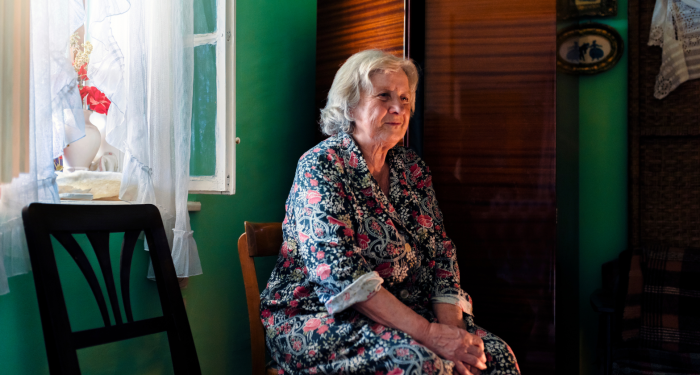
I've asked variations of that question a lot over the years. To my grandfather before he died. To the old men who play Chinese chess near Tao Dan park. To retired teachers, retired soldiers, a ninety one year old nun at a monastery in Hue. The answers vary in detail. They almost never vary in category.
Nobody leads with money. Almost nobody leads with career.
What the actual research says
This is not just my anecdotal impression. The most rigorous long-running research on this question in the English-speaking world is the Harvard Study of Adult Development, which has followed the same group of men since 1938. It's one of the longest-running studies of adult life ever conducted. When the men were in their eighties and nineties, researchers had nearly a century of data on what their lives had actually contained and how they felt about it.
The finding is now famous, partly because Robert Waldinger, the study's fourth director, put it in a TED talk. The key predictor of how people felt about their lives at eighty was not their income, not their job title, not their career achievements, and not even their cholesterol levels at fifty. It was the quality of their close relationships.
Waldinger's colleague, the psychiatrist George Vaillant, who led the study from 1972 to 2004, put it more bluntly. "The key to healthy aging is relationships, relationships, relationships."
A separate body of work comes from the Australian palliative care nurse Bronnie Ware, who spent years working with dying patients and wrote down what they told her when the performances dropped away. Her list, published in The Top Five Regrets of the Dying, is now known well enough that it has its own Wikipedia page. The top five regrets were about authenticity, overwork, unexpressed feelings, lost friendships, and not letting oneself be happy. Number two on the list, expressed particularly often by men, was "I wish I hadn't worked so hard." Not one of the five regrets was "I wish I'd made more money."
Ware's observations are not peer-reviewed research. She was a palliative carer, not a scientist. But the convergence between her hospice data and the Harvard study data is worth noticing. When people run out of time to impress anyone, the same answers come up.
The four things older people actually name
Across the conversations I've had, and the research I've read, four categories come up again and again.
The first is the people. Not "my family" as an abstract noun, but specific people. A wife. A son. A sister they didn't speak to for a decade and then did. A friend from primary school. An old neighbour. The names come easily. The achievements don't.
The second is the moments. Tiny, specific, usually completely useless in a professional sense. The afternoon on a particular beach. The long drive somewhere. The evening when the rain started falling and the kids came inside laughing. Nobody tells you about a quarterly target they hit in 1987.
The third is the character they became, or didn't become. This is the one that's hardest to articulate but that runs through almost every conversation. "I turned into someone who could sit with his own anger without passing it on." "I became kinder than my father was." "I stopped needing to be right." Older people tend to evaluate themselves not on what they built but on who they became while building it.
The fourth is the things they didn't do, and wish they had. The trip never taken. The letter never written. The apology never offered. The creative project they abandoned in their thirties to be responsible. These regrets are usually delivered without self-pity, which somehow makes them harder to hear.
The Buddhist angle
In Pali Buddhism there is a concept called maraṇasati, which is usually translated as mindfulness of death. It is one of the recommended objects of meditation. The Buddha taught that contemplating death, frequently and without morbidness, is one of the fastest ways to see clearly what your life is actually for.
I wrote about maraṇasati in my book Hidden Secrets of Buddhism: How To Live With Maximum Impact and Minimum Ego, and I've practised it in various forms for years. The practice isn't morbid. It's clarifying. When you sit with the fact that you are going to die, the hierarchy of your own priorities rearranges itself very quickly. Money stops being interesting. Status starts to look embarrassing. What stays is people, moments, character, and the things you haven't done yet.
This is the same list the eighty year olds give. They have just been forced to see it, because time has arranged the maraṇasati for them.
Why we don't live this way in our thirties and forties
Here is the honest part.
I know this research. I know what the old men say. I know what the dying say. I've meditated on it, written about it, nodded at it across hundreds of conversations.
And yet I still spent last week stressed about revenue figures for one of our businesses. I still checked analytics dashboards. I still, embarrassingly, felt a small spike of satisfaction when a particular deal went through.
The gap between what eighty year olds tell you matters and what you actually optimise your week around is one of the most persistent frustrations of adult life. It is not a failure of information. Nobody is walking around unaware that relationships matter more than money. The gap is something else. It's the friction between what we know abstractly and what the culture rewards daily.
Success, in the culture we swim in, is very easy to measure if you use money or career as the metric. The numbers report themselves. The comparisons are instant. The feedback loop is tight.
Success as defined by the eighty year olds, meaning the depth of your marriage, the character you're slowly becoming, the quality of the Tuesday afternoons with your children, has no dashboard. You can't benchmark it against your neighbour. You don't know you've won until it's largely too late to do much about it.
What Mr Tâm told me
I asked Mr Tâm one more question after the coffee that morning. I asked him what he'd tell me, a thirty eight year old with a young daughter and a business to run.
He thought for a while. Then he said, "You are already successful. You just have not noticed yet."
He wasn't being cute. He meant it quite precisely. If success, in the end, turns out to be measured by the presence of particular people in your life and the quality of your attention to them, then I already have the raw material. My wife. My daughter. A few old friends. A body that still runs along the river in the mornings. Mornings themselves.
The eighty year olds aren't telling us anything we don't already have. They're telling us what we're currently ignoring.
That's the useful version of this cliché. Not "money doesn't matter," which is the kind of thing only people with enough money say comfortably. The useful version is closer to this. The things you already have, and mostly take for granted, are almost certainly the things you will, in the end, define success by.
You might as well start noticing them now.