After eight years of plant-based living, I've discovered that nothing threatens male friendships quite like ordering a salad at a steakhouse—not because anyone says anything cruel, but because the unspoken rules of masculinity apparently include mandatory meat consumption, and breaking them leaves you floating in a social purgatory no one wants to acknowledge exists.
The silence at the poker game was different that night. Not the usual contemplative quiet while guys calculated odds, but something heavier. I'd just passed on the wings, grabbed some chips instead, and suddenly the energy shifted. Nobody said anything directly, but I caught the exchanged glances, the slight pause before someone dealt the next hand.
That was three years into being vegan, and I'd finally understood something: masculinity has a menu, and deviating from it makes you suspect.
The unspoken brotherhood code
Here's what nobody tells you about male friendships after forty: they're built on a foundation of shared rituals that nobody questions. Beer and burgers. Steaks at the company dinner. The automatic assumption that you'll split the meat lover's pizza.
When you opt out of these rituals, you're not just changing your diet. You're disrupting an entire social contract that nobody realized existed until you broke it.
I became vegan eight years ago after watching a documentary that completely shifted my perspective. The decision felt personal, internal, like choosing to start meditating or switching careers. What I didn't anticipate was how profoundly it would alter my place in male social dynamics.
The changes were subtle at first. A raised eyebrow when I ordered the veggie burger. A joke about eating rabbit food that lingered a beat too long. Then came the slow drift - fewer invitations to steakhouses, awkward pauses when planning guys' nights, and eventually, that quiet reclassification from "one of us" to "Jordan's different now."
When food becomes identity
Why does a dietary choice trigger such profound social recalculation among men?
Behavioral science offers some insights. Social identity theory suggests we define ourselves partly through group membership. When you violate expected group behaviors, you threaten the cohesion of that identity. For many men, especially in their forties and beyond, food choices are deeply intertwined with expressions of traditional masculinity.
The irony? These same guys would never bat an eye if I announced I was training for a marathon or cutting carbs for health reasons. Those choices align with accepted masculine narratives of conquest and control. But choosing not to eat animals? That enters different territory entirely.
I've watched this play out countless times. The corporate lunch where my salad order prompted someone to defensively explain why they "could never give up bacon." The barbecue where my veggie skewers sparked a twenty-minute monologue about our ancestors being hunters. The birthday dinner where my dietary restrictions became the main topic of conversation, overshadowing the actual celebration.
The evangelism trap
In my early vegan days, I made every mistake in the book. I became that guy - the one who couldn't shut up about factory farming at dinner parties. I remember completely derailing my friend Sarah's birthday dinner with an unsolicited lecture about dairy production. I still apologize for that one.
The evangelical phase is almost inevitable when you've had a genuine awakening about something. You want to share this new knowledge, this perspective that's changed everything for you. But here's what I learned: nothing alienates people faster than unsolicited moral superiority.
My friend Marcus went vegetarian six months after I finally stopped preaching about it. Not because of anything I said during my zealous phase, but because I'd finally learned to just live my choices without commentary. Actions without attitudes, it turns out, are far more persuasive than any argument.
Navigating the family minefield
If male friendships are complicated, family dynamics around food are emotional landmines.
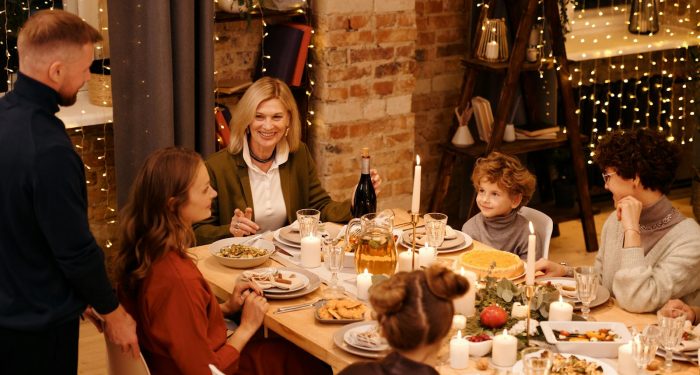
The image that haunts me most from this journey happened at my grandmother's Thanksgiving table. She'd made her famous stuffing, the recipe passed down through generations, and when I politely declined, she actually cried. Not angry tears, but genuine heartbreak that I was rejecting not just her food, but her love, her tradition, her very identity as the family matriarch who nourishes everyone.
How do you explain that your dietary choice isn't a rejection of family, culture, or love? That you can honor traditions without consuming them?
I've learned to navigate these moments with more grace now. I bring dishes to share. I focus conversations on gratitude rather than ingredients. I've discovered that showing up with presence and appreciation matters more than what's on your plate. But those early family gatherings were brutal lessons in how deeply food and emotion intertwine.
Living in the grey zone
Perhaps the most unexpected challenge has been living with a non-vegan partner for the past five years. She loves her pepperoni pizza with ranch dressing, and I've learned that relationship harmony doesn't require dietary uniformity.
We've developed our own rhythm. Separate shelves in the fridge. Two different orders from the same restaurant. The occasional meal where our plates look nothing alike but our conversation flows just the same. It's taught me that ideological purity is less important than mutual respect.
This grey zone extends beyond home. I've learned to attend steakhouses and find something on the menu. To bring my own burger patties to barbecues without making it weird. To answer questions about protein without launching into a nutrition lecture.
The quiet evolution
What surprises me most after eight years is how the judgement has evolved. It's rarely overt anymore. Instead, it's this subtle repositioning where I've become the designated "different one" in my circle.
I'm the friend people apologize to when choosing restaurants. The one who gets the cautious "Is this okay?" when someone orders meat. The guy who somehow makes others feel judged just by existing with different choices, even when I'm saying nothing at all.
But here's what I've observed: this discomfort isn't really about me. It's about the questions my choices inadvertently raise. When someone who looks like you, shares your background, and used to eat the same way suddenly changes, it suggests that change is possible. And possible change implies current choices might be worth examining.
That's an uncomfortable mirror for anyone, but particularly for men socialized to treat questioning as weakness.
Wrapping up
The quiet judgment from men in my circle isn't really about veganism. It's about the disruption of assumed shared values, the challenge to unexamined traditions, and the discomfort of categories that no longer fit neatly.
I'm still the same person who shows up for poker nights, who remembers birthdays, who listens when friends need to talk. But I'm also someone who's learned that masculinity has room for more expressions than the narrow ones we inherited.
The slow reclassification continues, and I've made peace with it. Some friendships have faded, others have deepened, and new ones have formed with people who don't need their friends to mirror their choices to feel secure in their own.
Maybe that's the real lesson here. Not about veganism or masculinity or social dynamics, but about the courage to live authentically even when it means standing slightly outside the circle, existing in a category of one.
The barbecue invitations still come, just less frequently. And when they do, I bring my own burgers and a thick skin. Because choosing your own path was never about being understood by everyone. It was about understanding yourself.