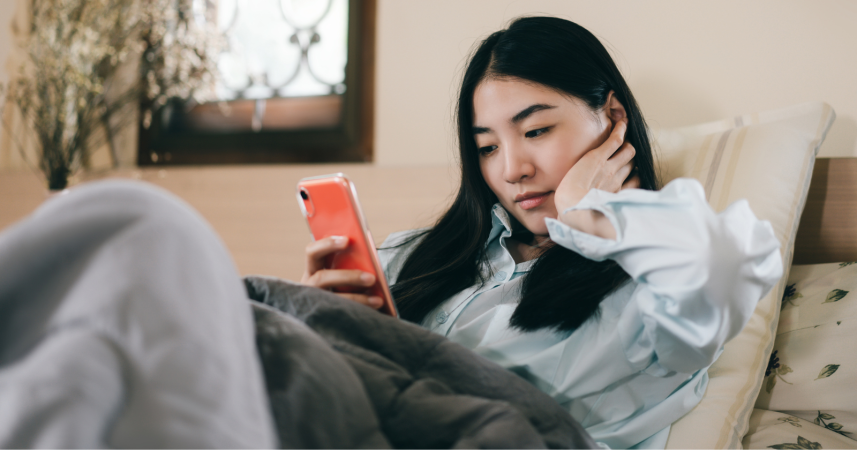
While they silently consume every detail of your digital life through stories, their refusal to leave even the smallest trace of acknowledgment reveals a calculated distance that speaks volumes about your true place in their world.
Instagram reports that the average user views stories from roughly 20% of the accounts they follow, but likes posts from far fewer. That gap — between who watches and who engages — is where a particular kind of relationship lives.
Back when I was still in finance, I had a colleague who viewed every story I posted within minutes. Weekend hikes, market observations, whatever I put up — her name was always there, first or second in the viewer list. My actual posts? Nothing. No likes, no comments, no trace. For months I chalked it up to algorithm quirks.
It wasn't until I left that world and started studying human behavior more deliberately that I understood what the pattern actually was. It wasn't random. It was precise.
The psychology of silent observation
It goes deeper than just lurking. These people have drawn an invisible boundary, one so subtle you might miss it entirely if you're not paying attention.
Think about it this way: viewing stories requires almost no effort or commitment. You tap through them while brushing your teeth, waiting in line, or half-watching TV. But liking a post? That's different. That's a public endorsement, a digital stamp that says "I support this" or "I connect with this."
When I made my career transition from finance to writing, the pattern sharpened into something I could actually read. The colleagues who watched my stories about my new writing journey but never liked my posts were telling me something without saying a word. They were curious. Maybe fascinated. But they weren't willing to publicly align themselves with the version of me that had walked away from a six-figure salary.
What watching without engaging really means
Stories feel safer than posts for a reason.
They are low effort — tap, swipe, tap, swipe. No public record. No permanent comment. Liking a post feels different because it announces: 'I was here.' A lot of story-only people are wired as observers.
This observation mindset isn't necessarily negative. Lucas Hartwell notes that "Silent scrollers are often hyper-observant." They're taking in information, processing it, filing it away. They know more about your life than you might realize, but they've chosen to remain in the shadows of your digital world.
I've filled 47 journals since I discovered journaling at 36, and one recurring theme is how people reveal themselves through what they don't do as much as what they do. The silent watchers in our digital lives are masters of this non-communication communication.
The comfort zone of passive consumption
Research from a study on social media behavior found that passive social media use, characterized by observing others' content without interaction, is associated with increased negative emotional states such as depression and anxiety among university students. This suggests that the story-only viewers might be stuck in a cycle of comparison without connection.
ForReal Team explains it beautifully: "Viewing is passive. Tapping through stories is easy; it does not require commitment, vulnerability, or a next step. Many people watch stories while half paying attention—like a feed ritual, not a love letter. Replying is active. A DM, a reaction, or a story reply means they chose to engage with you specifically, in words."
They know what you're up to. They're keeping tabs. But they're not willing to step into the arena of actual engagement. It's like having someone peer through your window but never knock on your door.
Understanding the boundary they've drawn
What does this invisible boundary really tell you?
These individuals are often described as "quietly curious introverts," but the personality-type explanation only gets you so far. When someone consistently watches but never engages, they are making a running calculation about proximity: how close they want to appear, how much of their interest they're willing to put on record, how much social capital they're prepared to spend on you. The watching is real interest. The silence is the ceiling on that interest. Together, they define a very specific position — close enough to monitor, far enough to deny. It is, in its own way, a form of emotional accounting. And like most accounting, it reveals priorities the person themselves might not admit to out loud.
After leaving my six-figure salary to pursue writing, I lost most of my finance colleagues as friends. The ones who stuck around liked my posts, commented, engaged. The ones who disappeared still watch my stories to this day. Curious about the outcome. Uninvested in the process.
Silent users usually notice far more than they reveal. They're gathering information, forming opinions, maybe even judging, all while maintaining plausible deniability about their interest in your life.
The dopamine dynamic of digital interaction
Here's something fascinating that Dumas et al. discovered: "A 'Like' is a micro-interaction. It provides a dopamine hit for both parties with zero commitment."
If a simple like provides that dopamine hit with zero commitment, imagine how much more vulnerable it feels for someone who's already hesitant to engage. They'd rather get their fix through anonymous story viewing than risk even that tiny level of public connection.
When I confronted my own achievement addiction and realized external validation was never enough, I started seeing these patterns everywhere. The people who watch but don't engage are often dealing with their own complex relationships with vulnerability and connection.
What this means for your relationships
Psychology Today conducted research where participants "were also asked if they were curious about others, including what they might be thinking, as well as how much attention they paid to non-human aspects of the dining room (as opposed to people watching)." This curiosity about others without engagement is a fundamental human behavior that social media has simply made more visible.
Another research study indicates that passive social media use, involving browsing and observing content without engagement, can lead to unhealthy social comparisons, negatively affecting psychological well-being during the COVID-19 pandemic. The watchers might be comparing their lives to yours, but from a safe distance where they don't have to reveal anything about themselves.
So where does this leave you with the silent observers? Recognize that their behavior is about them, not you. They've picked their level of engagement, and that choice reveals something — their comfort zone, their fears, their preferred way of existing in digital spaces.
Finding peace with the silent watchers
An experimental study by Aston identified three distinct social media engagement styles—passive, reactive, and interactive—and found that interactive users reported greater feelings of social connectedness than passive or reactive users. This tells us that the story-only viewers might be missing out on genuine connection, but that's their choice to make.
Understanding this dynamic freed me from wondering why certain people watched but never engaged. My analytical mind, which served me well in finance, now helps me see these patterns without taking them personally. The silent watchers have shown you exactly where you stand — interested enough to watch, not invested enough to participate.
And yet. I'm not fully convinced any of this matters as much as we think it does. Maybe the person silently watching my stories is drawing a boundary. Maybe she's just tired. Maybe I'm doing the same thing to six other people this week without noticing — watching, not liking, not reaching out, telling myself it doesn't mean anything when I'm on the other side of the glass.
We're all performing some version of distance. The viewer list is just the part that happens to be visible. What it actually reveals — about them, about us, about whether any of these micro-signals add up to something worth reading — I'm no longer sure.