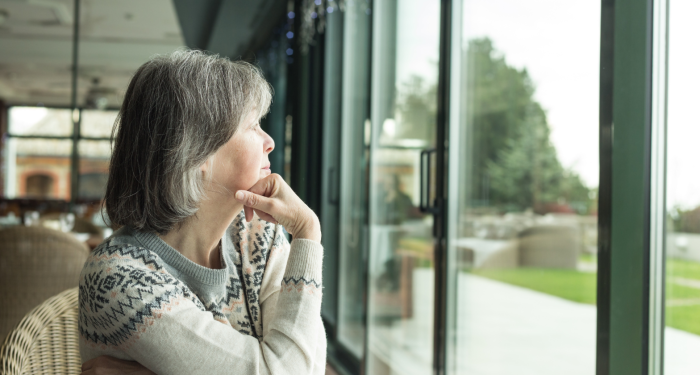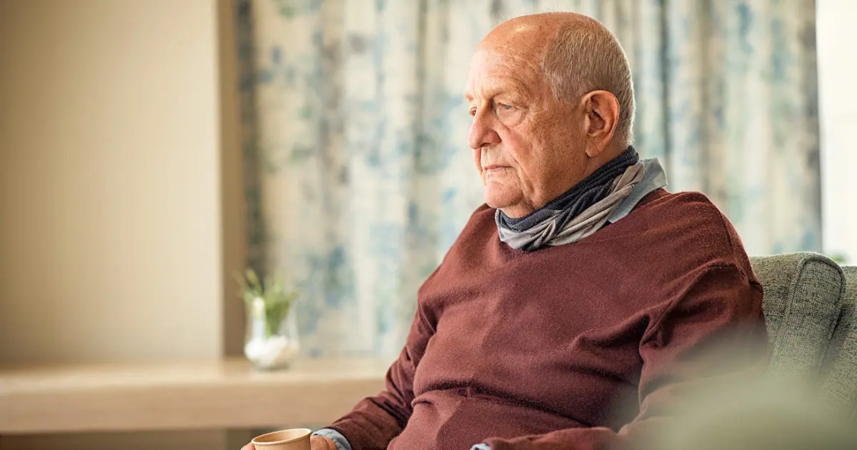
They weren’t taught to lean on anyone — they were taught to handle it, push through, and stay strong no matter what. Now, decades later, many are realizing that strength built on independence can quietly cost you the very connection you end up needing most.
My second husband, Robert, was the most competent man I ever knew. He could fix anything, plan anything, handle anything. He was also the man who, in seven years of marriage and four years of Parkinson's, never once told me he was scared. Not once. And I stood at his grave at sixty-eight years old, knowing with absolute certainty that the bravest thing he never did was ask me to sit with him in his fear.
That is the quiet weight nobody is writing about right now. Not entitlement. Not nostalgia. Not the stubborn thermostat wars or the Facebook misinformation or whatever generational sin is trending this week on social media. The real thing boomers are carrying into their seventies is something far older and far sadder than any of that: they were raised, thoroughly and deliberately, to never need anyone. And now they are discovering, too late for some, that self-reliance and connection were never the same thing at all.
What the Post-War World Actually Taught Them
You have to understand the emotional climate boomers grew up inside. Their parents had survived the Depression. They had survived the war. Feelings were not a priority when survival was. The message passed down, quietly but completely, was this: you handle things yourself, you do not complain, and you keep going. According to therapists, many boomers were raised by parents who defined resilience as pushing through discomfort, staying functional, and not stopping for emotional processing or self-reflection. That definition was then reinforced by every school, every workplace, every cultural institution they moved through.
The result was a generation genuinely impressive in its capacity to function. Resilience, work ethic, the ability to push through discomfort and keep their chin up, these are real qualities earned through real difficulty. But the same upbringing also encoded something else, something that is only becoming visible now that these men and women are in their seventies: a deep, cellular suspicion of needing other people. Psychologist Dr. Ernesto Lira de la Rosa has noted that boomers were repeatedly told not to cry or to "tough it out" as children, and that suppressed emotions do not disappear. They show up instead as stress, anxiety, and physical health problems. The armor was always costing something. The bill is just arriving now.
The Numbers Tell a Quieter Story Than You'd Expect
Here is a thing that surprises people when they first hear it. Raw loneliness statistics actually show boomers as less lonely than younger generations right now. Cigna's loneliness research found that Gen Z adults report the highest rates of loneliness at around 71%, while boomers sit closer to 44%. At first glance, that looks reassuring. Dig a little deeper and the picture shifts considerably. That same research found that boomer loneliness increased by 9% in a single year, the steepest jump of any generation. And research tracking older Americans over time consistently shows that loneliness increases sharply after age 75, which means the full weight of the boomer wave has not yet arrived. It is coming.
There is also a question of underreporting that researchers rarely discuss openly. If you have spent an entire lifetime believing that needing connection is weakness, you are not going to check "lonely" on a survey form. You are going to say you are fine, because that is what you were trained to say, and because after seventy years of practice, you may not even recognize the feeling for what it is. The silence reads as stoicism. The stoicism reads as strength. And the strength slowly becomes a kind of prison nobody can see from the outside.
Meanwhile, surveys consistently find that only about 8% of baby boomers use therapy as a mental health tool, compared to 45% of millennials. That gap is not just a preference. It is the measurable distance between a generation that was taught that asking for help is weakness and one that was taught that asking for help is wisdom. I know which lesson I prefer, and I say that as someone who spent years learning it the hard way, long after I thought I already knew everything.
What Self-Reliance Actually Costs
I raised two children alone after my divorce at twenty-eight. Daniel and Grace. I worked. I managed. I did not fall apart in front of them, because I believed, with everything I had, that holding it together was the most loving thing I could do. And it was, partly. But I also know now that there were moments, many moments, when what my children needed was not my competence. They needed to see that their mother was human. That needing people was not shameful. That connection was not a reward you earned after you had handled everything else.
This is the inheritance boomers passed down without meaning to. They raised their children to be self-sufficient, to stand on their own two feet, to not be a burden. And overwhelmingly, their children listened. Those children moved cities, built careers, became exactly the independent adults they were trained to be. Now those same parents are in their seventies, looking around and wondering why everyone feels so far away. The independence was always the curriculum. It worked exactly as designed.
The health consequences of this are not small or theoretical. Research reviewed by Harvard found that social connection increases odds of survival by 50%, with studies across decades establishing that people with strong social bonds are happier, healthier, and live longer than those who lack them. Social isolation rivals smoking and obesity as a risk factor for premature death. These are not soft, emotional observations. This is biology. The body keeps a record of disconnection, whether or not the mind has language for it.
The Thing That Can Still Change
What I have learned, at seventy years old, from tending my garden and reading my two books a week and sitting with my journal at five-thirty every morning, is that grief does not shrink. You just grow larger around it. And I think something similar is true of the capacity for connection. It does not disappear just because it was never properly developed. It waits. It is patient in a way we rarely give it credit for.
The boomers who are thriving in their seventies, the ones I see volunteering, laughing with grandchildren, calling old friends at odd hours, they are not the ones who finally conquered their self-reliance. They are the ones who figured out, sometimes very late, that letting someone in is not the opposite of strength. It is the deepest expression of it. Asking for help is not weakness. It is the wisdom of someone who has finally lived long enough to know what actually matters.
Robert never got there. And I carry that, alongside everything else I carry, as its own kind of lesson. I wonder sometimes what he would have said, given the chance, on a quiet evening with nowhere to be. I think he would have said he was scared. I think he would have said he needed me. I think saying it would have been the bravest thing he ever did. And I think we both would have been better for it, in ways neither of us had words for back then.
What would it mean, really, to let that be enough: to reach out, before it's too late, and simply say, "I don't want to do this alone"?