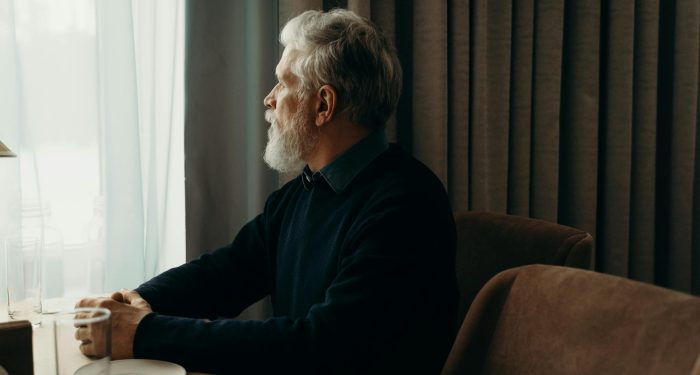
At seventy, she fills her gratitude journal nightly and volunteers at the shelter weekly, yet sits each morning with her tea and a persistent, beige unhappiness that resists every solution she once would have thrown at it—a weight that's neither depression nor crisis, just the strange burden of outliving the life she'd imagined.
There's a particular loneliness that comes with being unable to explain yourself. Not because you lack the words—after 32 years of teaching high school English, I have plenty of those—but because what you're feeling doesn't fit into any of the neat categories people have created for later-life emotions. When friends ask how I'm doing, I want to hand them a disclaimer: I'm not having a midlife crisis (that ship sailed long ago), I'm not clinically depressed (I know that territory well), and I'm certainly not ungrateful for the life I've built. I'm simply, persistently, quietly unhappy in a way that feels both profound and completely unremarkable.
The inadequate vocabulary of discontent
Have you ever noticed how we have a thousand ways to describe physical pain but only a handful for emotional states that don't qualify as disorders? The medical forms I fill out these days ask about depression symptoms—sleeping too much or too little, loss of appetite, inability to enjoy things. I sleep seven hours, eat three meals, and still find pleasure in my morning coffee and evening novels. But there's this weight, this gray presence that sits beside me like a patient dog, neither demanding attention nor willing to leave.
Last week at a writing group, a woman read a piece about feeling "beige." That's exactly it, I thought. Not black with despair, not bright with joy, just beige. Beige with good days and bad days painted over it in slightly different shades of the same color. Her husband is alive, her children call regularly, her health is decent. Like me, she has nothing legitimate to complain about and yet complains to herself constantly about this nameless dissatisfaction.
When gratitude isn't enough
My gratitude journal sits on my nightstand, filled with years of daily entries. I know the science behind it, taught my students about neural pathways and positive psychology when we read "Man's Search for Meaning." Every night I dutifully list my things: the cardinal at my bird feeder, my daughter's text message, the successful opening of a stubborn jar, the library book that made me laugh, the fact that my knees held up during my walk. I am genuinely grateful for these things. But gratitude, I've discovered, doesn't cancel out unhappiness any more than eating vegetables cancels out aging.
Virginia Woolf wrote, "The compensation of growing old... is simply this; that the passions remain as strong as ever, but one has gained—at last!—the power which adds the supreme flavour to existence,—the power of taking hold of experience, of turning it round, slowly, in the light." I understand this now. I can examine my unhappiness like a curator studying an artifact, turning it in the light, noting its texture and weight. The examination doesn't dissolve it, but it does remove some of its power to shame me.
The myth of the golden years
When my husband was dying from Parkinson's, a well-meaning friend told me I'd find peace after he passed, that I'd discover a new chapter full of possibility. It's been two years now, and I'm still waiting for that chapter to begin. Instead, I've found something more complicated—a freedom that feels like loss, possibilities that feel like pressure, and time that stretches out like an ocean when you're tired of swimming.
The women at the shelter where I volunteer often talk about starting over, and I encourage them because they need to believe in new beginnings. But at 70, starting over feels less like a fresh page and more like editing a document that's already been revised too many times. You can still make changes, but you can't delete the tracked changes of everything that came before.
Living with comfortable discomfort
There's a strange comfort in admitting this unhappiness without trying to fix it. For years, especially during my teaching career, I was a solver. Student struggling? Extra tutoring. Marriage failing? Counseling. Single mother chaos? Rigid schedules and creative budgeting. But this current unhappiness resists solution because it's not exactly a problem. It's more like weather, or aging itself—something to be lived with rather than conquered.
My yoga instructor talks about sitting with discomfort, breathing through it rather than fleeing from it. During hip openers, when my body protests and my mind races for escape, she reminds us that the pose isn't comfortable, but we're safe. That's become my mantra for this stage of life: not comfortable, but safe. Not happy, but held. Not thriving, but thoroughly, stubbornly still here.
In a previous post, I wrote about the unexpected grief of outliving your imagined future. This unhappiness feels related to that—it's the daily experience of living in a reality that's neither tragic nor particularly joyful, just relentlessly actual. The future I'd imagined included growing old with my husband, being the grandmother who hosts Sunday dinners, maybe traveling to places we'd bookmarked in atlases. Instead, I eat soup on Sunday nights, see my grandchildren regularly, and the atlases gather dust because traveling alone feels like work rather than adventure.
The permission to be honestly unhappy
What would happen if we gave ourselves permission to be unhappy without justification? Without trauma or crisis or legitimate complaint? When my granddaughter helped me in the garden last month, she asked if I was sad. "No," I told her, "just thinking grown-up thoughts." But the truth is more complex—I'm thinking about how happiness might be a younger person's aspiration, while at my age, the goal is something quieter. Acceptance, maybe. Or just the ability to be honest about the full spectrum of what we feel.
The woman who trained me at the shelter once said, "We tell these women they deserve to be happy, but maybe first they just deserve to be honest about being unhappy." That wisdom extends beyond crisis situations. Maybe we all deserve to acknowledge that life can be simultaneously blessed and difficult, full and empty, grateful and grieving for something we can't quite name.
Final thoughts
Tomorrow morning, I'll wake at 5:30, make my tea, and sit with this unhappiness like an old acquaintance who's overstayed their welcome but has nowhere else to go. I'll tend my garden, where things grow and die according to their own timeline, not mine. I'll fill the bird feeder that my husband installed, teach at the shelter, maybe bake bread that I'll give to a neighbor because small kindnesses still matter even when—especially when—happiness feels out of reach.
At 70, I've learned that some truths don't fit on forms or in the cheerful narratives we're supposed to embrace about aging. Sometimes you're simply unhappy in a way that doesn't require medication or meditation or motivational quotes. It just requires the radical act of acknowledgment, of saying: This is where I am today, in this beige space between gratitude and joy, holding both my blessings and my inexplicable sorrow, being honest about the complex emotional weather of a long life.