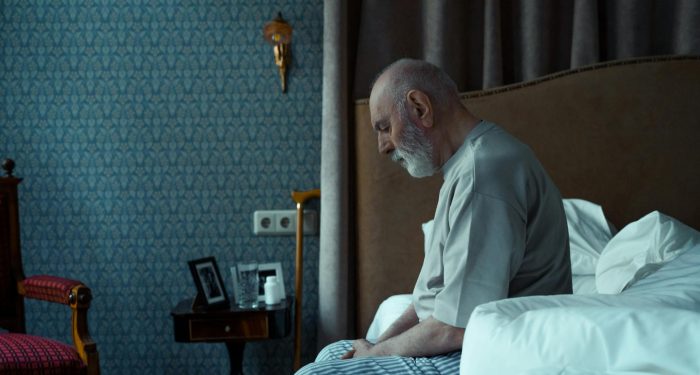


Memory rewrites itself not through what happened, but through the words you finally find to describe what you were actually experiencing. Your twenties feel foreign at forty because you can now name what was illegible then.
Memory researchers have a name for what happens when you try to revisit your twenties from your forties. It's called retrospective coherence, the brain's habit of imposing a tidy narrative on a period that, at the time, was anything but tidy. The events get arranged into a story. The story gets a moral. The person who actually lived it disappears underneath the editing.
That's why so many people in their forties describe their twenties as a foreign country. Not because the events have moved, but because they finally have the vocabulary for what was happening inside them while those events were unfolding. The scenes are unchanged. The subtitles weren't there before. They are now.
People love to say their twenties were chaotic, lost, wild, free. Those are after-the-fact labels. The real word, the one most people in their forties land on after enough conversation, is something closer to illegible. They couldn't read themselves at the time. They had feelings without names for them, and so they had reactions without explanations for them, and now, looking back, the whole decade reads like a film with the subtitles finally turned on.
The conventional story is wrong
The standard line is that we feel disconnected from our twenties because we've changed so much. Different job, different city, different relationships, different body. The external life looks unrecognisable, so the inner life must be too.
But ask anyone in their forties to walk you through a specific year of their twenties and you'll notice something. The externals aren't actually that strange to them. They remember the apartment, the friends, the breakup, the awful boss. What feels foreign is something subtler. They can't quite inhabit who they were inside those scenes. The person making those decisions seems to have been operating on instructions written in a language nobody had taught them yet.
That language has a name in psychology. It's called emotional granularity, and it's the difference between knowing you feel "bad" and knowing you feel specifically lonely, or specifically humiliated, or specifically jealous in the precise way that comes from comparing yourself to someone you actually love. Lisa Feldman Barrett's work frames it as something more than vocabulary. It's the brain's capacity to make finer distinctions between internal states, and people who have it tend to suffer less and decide better.
Most twenty-three-year-olds don't have it. Not because they're shallow. Because they haven't yet accumulated the experiences, the conversations, or the language that calibrates it.
The granularity gap
Consider a specific case. A woman I'll call Maya described a fight she had at twenty-four with the boyfriend who would eventually become her husband, and then her ex-husband. He'd come home late from a work dinner, again, and she'd thrown a coffee mug into the sink hard enough to chip it. At the time she remembers thinking, with total clarity, that she was angry. That was the word. She held onto it for years.
At forty-one, in the third year of therapy, she described that same scene differently. What she'd called anger was actually a fear of being abandoned that she'd inherited from her father's first marriage ending, layered with shame about how dependent she'd let herself become on a man who was clearly drifting, layered with disappointment in herself for staying when a quieter voice had been telling her to leave for eighteen months. None of those feelings had names in 2007. They had one name. Anger.
That's the granularity gap in one example. One word was carrying the weight of three or four distinct emotional states. It wasn't dishonest. It was the best she could do with the words she had at the time. And the decisions that followed, staying, marrying, eventually leaving, were made by someone navigating with one word where four were needed.
A Forbes piece on emotional granularity in leadership describes the same dynamic with a project manager whose deliverable gets delayed. She labels her whole internal surge as anger and reacts by escalating and criticising. Same surge, different label, different outcome. When she names it as disappointed, exposed, worried about reputation, the conversation she has with her team is completely different. The neuroscience is identical. The vocabulary changes the response.
Now imagine making every major decision of your twenties, who to date, what job to take, when to leave, when to stay, with the equivalent of one or two emotional words to describe what you were feeling. That's not a personality flaw. That's a tooling problem. And it's the reason your twenties feel like they were lived by someone else.
Why the language arrives late
You can't name an emotional state you've never seen named anywhere. The first time you read a sentence that describes the exact feeling you've been having for a decade, something clicks into place that didn't exist before. The feeling existed. The container for it didn't.
For people who grew up in homes where emotions weren't discussed in detail, this delay can stretch even longer. If the family vocabulary was "fine," "tired," "stressed," and "annoyed," that's the toolkit you brought into adulthood. Therapy, books, certain friendships, certain podcasts are often the first places people encounter words like enmeshed, parentified, dysregulated, avoidant, and realise these aren't jargon. They're descriptions of things that have been happening for years. I wrote recently about how children praised mostly for being mature often grow into adults who can only receive love when they're being useful. People who recognise themselves in that description usually didn't have the words for it at twenty-five. They just had the pattern. They were living it. They couldn't see it. The language arrived in their thirties or forties, and suddenly the previous fifteen years made sense in a way they hadn't.
This is also why so many people in their forties report a kind of tenderness toward who they were at twenty-five that they didn't feel at thirty.
At thirty, you're still close enough to be embarrassed. At forty-five, you can see the kid was doing their best with the words they had, and the embarrassment softens into something more like sympathy. You forgive Maya at twenty-four for throwing the mug, because you can finally hear what she was actually saying.
Why this matters now
The reason any of this is worth thinking about isn't nostalgia. It's that the same gap exists right now, in your current life, with your current self. Whatever you're feeling at this moment that you don't have a word for, that thing will eventually get a word, and when it does, you'll look back at this period and feel the same disorientation you feel about your twenties.
The version of you reading this is producing data your future self will eventually translate. The translation isn't available yet. That's not a failure. That's just how the equipment works.
What you can do, knowing this, is two small things. Pay closer attention to what you're actually feeling, and resist the urge to file every internal state under "stressed" or "fine." And be patient with the parts of your current life that don't make sense yet. You're not failing to understand them. You're just early.

Here's the harder version of all this, the one most people don't want to sit with. The affection you feel for your younger self is convenient. It lets you off the hook for the people that version of you hurt while operating with one word where four were needed. The partner you couldn't really see. The friend you ghosted because you called it overwhelm and it was actually contempt. The job you blew up and labelled as growth.
Your twenties aren't a foreign country. They're a place where you were saying things, doing things, costing other people things, and you weren't listening hard enough to hear what you were actually doing. The dictionary expanded. That's good. But the bill from the years you spent without it doesn't disappear just because you can finally read it.