
What you think is a small talk problem might actually be a mismatch between how you're wired and what typical conversations demand—a difference worth understanding before you blame yourself for struggling.
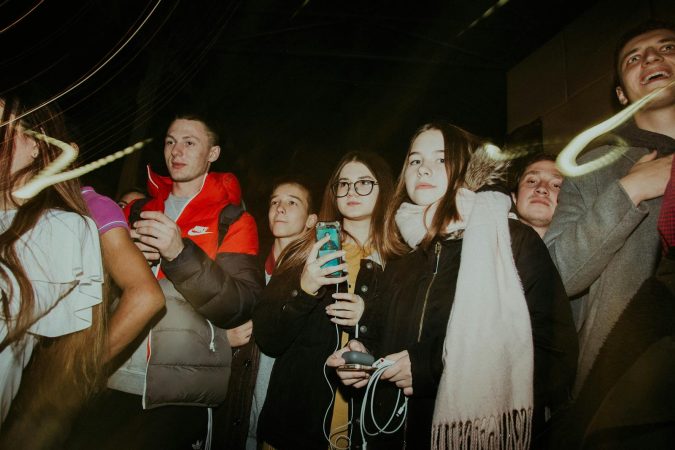
A woman at a work mixer asked me what I did for a living, and while I was answering I watched her eyes drift to the door behind me, then to the cheese plate, then back to my mouth, where they stayed just long enough for her to nod at the right intervals. I finished my sentence. She said "oh wow, that sounds great," which was a strange response given what I'd just told her. We both stood there for another minute before one of us invented an excuse and walked away.
I drove home that night doing what I'd done after every event in my twenties: replaying it, cataloguing what was wrong with me, deciding I needed to read another book about conversation. I tried scripts. I practiced asking better questions. I assumed the problem was a skill I hadn't acquired yet.
It took an embarrassing amount of time to notice the woman at the mixer wasn't listening either. Neither of us was. We were both running a loop of how-was-your-weekend and what-do-you-do-for-work where neither person was tracking the other person's answer, and I'd spent years trying to get better at a thing that nobody in the room was actually doing.
Here's what I eventually figured out, and it's the whole argument of this piece: the difference between small talk that drains you and small talk that doesn't isn't about technique, topic, or personality type. It's about whether anyone is actually paying attention. Presence is the variable. Everything else, the scripts, the better questions, the networking advice, is downstream of that one thing.
The two things we keep calling the same thing
There's small talk where two people are actually paying attention to each other and using surface topics as a doorway. The weather is a way in. The commute is a way in. You're not really talking about the commute.
And then there's the other thing, which has the same vocabulary but none of the attention. Two people taking turns saying the things they always say, scanning the room over each other's shoulders, waiting for an exit. That version isn't a doorway to anything. It's a holding pattern.
People who say they're bad at small talk are often only bad at the second kind. They can sit at a kitchen table with one person for three hours. They can talk to a stranger on a long flight. What drains them is the version where nobody is really there.
Why we keep doing the version that nobody enjoys
Some of it is structural. Open-plan offices, networking events, parents waiting at school pickup: these are environments designed for low-stakes contact, not for depth. You can't have a meaningful conversation in the elevator with someone who'll be gone in twelve seconds. So we developed a script. The script is fine. The problem is that the script became the whole thing.
Some of it is also performance. Dealing with people who feel inauthentic is genuinely exhausting, because our internal interpreters work overtime trying to figure out what's going on under the surface. We're hardwired to read subtle cues. When the cues don't add up, we feel guarded, and being guarded for an hour at a work mixer leaves you wrecked.
So when someone says small talk drains them, they may not be socially anxious. They may be picking up on the fact that nobody in the room is fully there, including themselves, and the labor of pretending otherwise is real labor.
Introversion is a different conversation
It's worth separating this from introversion, which gets blamed for too much. Introverts can love conversation. They just want it to mean something. You can be skilled at socializing and coaching and still adore your time alone. Skill and preference are not the same.
I know people who are extroverted and still hate the script version of small talk. I know introverts who happily make small talk with the cashier every morning because that cashier actually looks at them. The variable isn't personality type. It's whether anyone is paying attention.
What I had wrong
For years I thought the goal was to get better at the version I disliked. Practice the script. Be more pleasant. Stop being the guy who answers "how was your weekend" with a real answer and watches the other person's face glaze over.
What changed was noticing that the people I admired most weren't great at small talk in any technical sense. They were just unusually present. They asked the same questions everyone else asked, but they actually listened to the answers, and that small adjustment turned the script into something else entirely.
It also made me notice when I wasn't being present. Half the time I was the one running the loop, asking how someone's kids were while already thinking about my next meeting. I was contributing to the thing I was complaining about.
This is connected to something I wrote about recently: how what we call personality is often just adaptation to specific people. Being "bad at small talk" can be the same thing in reverse. You're not bad at it everywhere. You're bad at it in environments where nobody is really showing up, including you.
The cultural piece
There's also a wider shift worth naming. The performative version of social life has been losing ground for a few years now. Even on Instagram, where curation was the whole game, the trend has moved toward what platforms are now marketing as authentic or unfiltered content: messier feeds, photo dumps, less retouching. The perfectly polished feed is giving way to something rougher and more honest, with users actively rewarding posts that look unedited.
I'm not naive about this. The platforms profit from whatever we engage with, and they've simply noticed that authenticity sells now. But the underlying hunger is real. People are tired of performance, online and off. The script version of small talk is the conversational equivalent of the perfectly curated grid, and it's losing for the same reason: people can feel when there's nothing behind it.
What actually helps
I'm not going to give you a list of better questions to ask at parties. The internet has enough of those, and most of them feel like a script too, just a more interesting one. But if presence is the whole game, here are three things you can actually try tomorrow.
First: before you respond to whatever someone just said, repeat the last thing they said back in your head. That's it. It sounds remedial, but it forces you to have actually heard it, and the other person will feel the difference even if they can't name it. Most of the time we're loading up our next sentence while the other person is still talking. Stop doing that for one conversation and watch what happens.
Second: if you notice you're not present in a conversation, scanning the room, drafting your exit, either come back to it or end it. Don't keep the loop running on autopilot. A short, honest "I need to grab some water, good seeing you" is better than ten more minutes of two people pretending. You're not being rude. You're refusing to add another data point to the thing everyone hates.
Third: take the brief contact seriously when it's the only contact available. A real hello to the doorman. A real thank you to the barista that involves looking at their face. The friend who texts asking how you're doing—answer with one true sentence instead of "good, you?" These are the conversations where presence is cheapest and pays the most. The witness effect is real. The people who track you across time are the ones worth allocating to, and being that person for someone else costs almost nothing.
The thing I still get wrong
I want to be honest about the limit of this. There's a version of "I just don't like inauthentic small talk" that's a cover for being a difficult person. I've used it that way myself. Sometimes I wasn't bored. I was tired. Sometimes I wasn't being selective. I was being a snob.
So I'll say what I actually believe, which is that most of us who claim to dislike small talk are wrong about ourselves about half the time, and the half where we're wrong is the half that matters. Opting out feels principled in the moment. It almost never is. It's mood, or fatigue, or some self-image we're protecting by deciding the room isn't worth our attention.
The harder thing is to assume the conversation is worth showing up for and let the other person decide whether to meet you there. Most of the time they will, because almost nobody actually wants the script. They're running it because they think you are. Someone has to stop first. If you're the one who noticed the problem, that someone is you. Sitting it out and calling yourself selective is just the script in a costume you find more flattering.