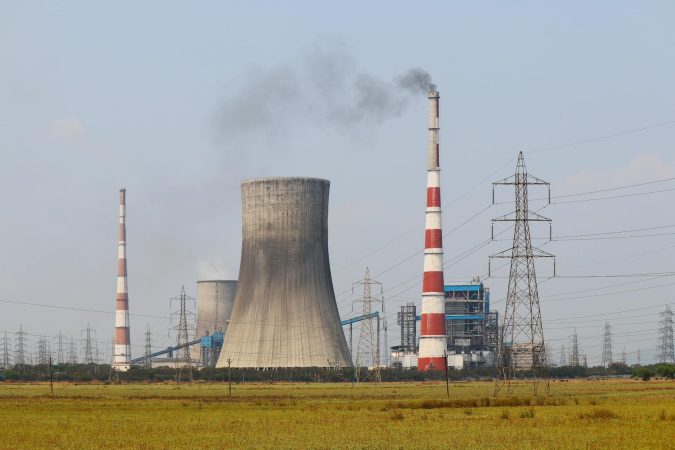
As data center demand explodes, food processors are losing the competition for electrical grid capacity. Three meat plants have already canceled expansions or closed — and the queue is getting longer.
A mid-sized poultry processing facility in central Michigan shelved plans for expansion last fall. The plant, operated by a regional processor with ties to the state's poultry industry, had planned to add a second processing line — an investment that would have created roughly 80 jobs. But according to documents filed with the Michigan Public Service Commission and reporting by local outlets, the expansion was put on hold after the local utility informed the company that available grid capacity at the relevant substation had been committed to a hyperscale data center campus under development nearby.
This story reflects a growing pattern. Across the Midwest and Mid-Atlantic, a quiet competition for electrical infrastructure is reshaping which factories get built, which expansions move forward, and which plants quietly close. And in at least three documented cases, food processing facilities — including meat plants — have lost out to data centers vying for the same substations.
The new math of the grid
The scale of the demand shift is staggering. In Michigan alone, proposed data center developments could eventually require electricity equivalent to six nuclear power plants, according to reporting from WKAR. That's not a projection for 2050. That's the queue utilities are processing right now.
For context, a single large meat processing plant typically draws between 15 and 40 megawatts at peak load — a figure consistent with energy audits published by the U.S. Department of Energy's Industrial Assessment Centers — while a hyperscale data center campus can demand 500 megawatts or more, and it wants that power 24 hours a day, seven days a week, with redundancy guarantees that food processors rarely require.
From a utility's perspective, the math is straightforward. Data centers offer steady, predictable, premium-priced demand with long-term contract commitments that can stretch 15 to 20 years. Food processors offer variable load, thinner margins, and political headaches around water usage and emissions. When grid capacity is constrained — and it increasingly is — data centers go to the front of the queue. That dynamic shapes every case that follows.
Three plants, three different stories
The first case is the most clearly documented. A beef processing facility operated by a mid-sized packer in rural Ohio had been planning a cold storage and packaging expansion since 2022. According to filings reviewed by the Ohio Power Siting Board and confirmed by a company spokesperson quoted in the Columbus Dispatch, the project stalled in the interconnection queue after QTS Realty Trust secured capacity commitments at the same substation feeder for a planned 150-megawatt data center campus. The beef processor's 12-megawatt request was effectively deprioritized. As of early 2025, the expansion remains on hold.
The second case unfolded in Virginia's data center corridor — the most concentrated cluster of data center infrastructure on Earth. A Perdue Farms poultry processing plant in Bridgewater, Virginia, which had operated for decades and employed several hundred workers, announced its closure in 2024. Perdue cited multiple factors including rising energy costs and facility modernization challenges. Local officials, including members of the Rockingham County Board of Supervisors, publicly noted that the region's grid capacity was being consumed by data center developments in neighboring Loudoun and Prince William counties, making industrial energy contracts increasingly expensive for legacy food processors.
The third is the Michigan case described above. In each instance, energy infrastructure was identified by company representatives or local officials as a determining factor — though labor costs, consolidation pressure, and shifting consumer demand all played roles as well.
Why this is happening now
Three forces are converging.
The first is the AI boom. Training and running large language models requires enormous, sustained computational power. Hyperscalers — Amazon, Microsoft, Google, Meta — have been racing to secure grid capacity faster than utilities can build it. According to a January 2025 report from the Electric Power Research Institute, U.S. data center electricity consumption is projected to more than double by 2030.
The second is aging infrastructure. Much of the U.S. transmission system was built decades ago for a different load profile. Adding capacity requires new substations, new transmission lines, and regulatory approvals that can take years to complete.
The third is the timing mismatch. Data centers can be built relatively quickly, while new transmission infrastructure takes significantly longer. So the queue for existing capacity has become the battleground — and food processors, with their smaller load requests and shorter contract horizons, find themselves outbid rather than outbuilt.
The plant-based angle nobody's talking about
There's an underappreciated dimension to this story. The competition for grid capacity is happening at exactly the moment when the protein landscape is diversifying.
Plant-based and fermentation-based food production facilities tend to have meaningfully different energy profiles than conventional meat processing. According to a 2023 lifecycle analysis published in the journal Nature Food, plant-based protein production requires approximately 50 to 80 percent less energy per kilogram of finished product compared to conventional beef processing. They also use less water and generate less wastewater requiring energy-intensive treatment.
Specific examples are emerging. Perfect Day, the precision fermentation company producing animal-free whey protein, has publicly stated that its production facilities are designed with energy efficiency as a core specification — including co-location with renewable generation. Upside Foods' EPIC facility in Emeryville, California, was designed to operate at approximately 5 megawatts peak load while producing volumes that would require significantly more power in a conventional protein facility of equivalent output. And Beyond Meat's facility in Columbia, Missouri, operates at a fraction of the energy intensity per pound of finished product compared to the beef plants it competes with on supermarket shelves.
That doesn't mean alternative protein producers are immune to the same pressures. They're not. But it does mean that as the grid tightens, the relative cost calculus between conventional and alternative protein production may shift in ways that haven't fully shown up in retail prices yet.
It's a slow-moving structural change rather than a dramatic reversal. But structural changes tend to compound.
What utilities and regulators are saying
State utility commissions are beginning to grapple with the implications. In Virginia, the State Corporation Commission opened a formal proceeding in 2024 to examine how large-load customers — specifically data centers — should be evaluated in capacity planning. Ohio's Public Utilities Commission has received testimony from industrial customers, including food processors, arguing that existing interconnection queue rules unfairly advantage hyperscale developers. Georgia Power's 2025 integrated resource plan explicitly addresses data center demand as a major driver of new generation needs. And in Texas, ERCOT has flagged the concentration of data center load in specific grid zones as a reliability concern.
The questions are technically dense — capacity allocation rules, demand response requirements, who pays for transmission upgrades — but the underlying tension is simple. When demand outstrips supply, who gets served first?
So far, the answer in many jurisdictions has been: whoever signed the contract first, or whoever offers the highest guaranteed revenue. That favors data centers.
Some utilities are pushing back. Dominion Energy in Virginia and AEP Ohio have both proposed tariff structures that would require very-large-load customers to bring their own generation, effectively pushing data centers toward on-site solar, gas turbines, or eventually small modular reactors. Whether those proposals survive regulatory review is an open question.
The longer view
The story playing out in substations across the Midwest is, at its core, a story about choices. Every megawatt allocated to one purpose is a megawatt unavailable for another. As the grid becomes the binding constraint on industrial development, those allocation decisions become more consequential.
For workers in affected communities, the consequences are immediate and personal. Expansions that don't happen represent jobs that don't exist, paychecks that won't be earned, and communities that won't grow in the way they expected.
For consumers, the consequences are slower and more diffuse. Constrained processing capacity contributes — alongside many other factors — to higher food prices and longer supply chains.
And for the broader food system, the grid competition raises questions that haven't yet been seriously asked at the policy level. If electricity is the new bottleneck, which uses of electricity should be prioritized? Should feeding people compete on equal footing with training chatbots?
Those are the conversations that regulators, utilities, and eventually voters will have to navigate. The first plants have already lost. Many more decisions are coming.