While everyone else is carefully curating their words and managing impressions in every human interaction, those who confide in their pets have discovered the rare luxury of a relationship where they can be completely unedited—and science says this might be the most psychologically nourishing choice they make all day.
Ever catch yourself having a full conversation with your dog about the terrible ending of that Netflix series? Or explaining to your cat why you're running late for work again?
You're not losing it. Actually, you might be onto something that most of us are too embarrassed to admit.
I used to feel self-conscious about the way I'd chat with my friend's golden retriever during visits, asking her opinion on everything from my career choices to what we should order for dinner. Then I started digging into the psychology behind these interactions, and what I found completely changed my perspective.
The science of unconditional presence
Here's what fascinated me: when we talk to our pets, we're not actually expecting them to solve our problems or offer advice. We're seeking something much more fundamental.
Dorfman, a psychologist, puts it perfectly: "Pets offer unconditional love. Perhaps, that's why human-animal interactions also seemingly stimulate the production of oxytocin—sometimes called the 'love hormone.'"
Think about that for a second. When was the last time you felt completely accepted by another human being without having to perform, achieve, or prove something?
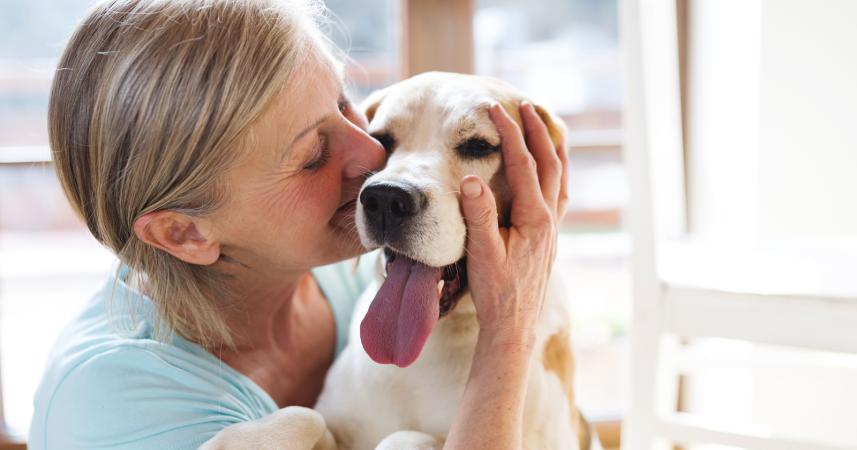
With pets, there's no pressure to be witty, successful, or even coherent. You can stumble over your words, contradict yourself, or spend twenty minutes complaining about your coworker's annoying email habits. Your dog won't judge. Your cat won't offer unsolicited advice about how you should handle it differently.
They're just... there. Present. Available.
Why simplicity beats complexity
I've noticed something interesting about the most stressed people I know. They're constantly performing. Every interaction feels like an audition. Every conversation requires careful navigation of social dynamics, expectations, and unspoken rules.
But watch these same people with their pets? Complete transformation. Shoulders drop. Voice softens. The mask comes off.
A study published in Scientific Reports found that pet owners living alone experienced lower levels of loneliness compared to non-pet owners, suggesting that pets can provide significant companionship and emotional support, especially for individuals without human social interactions.
This isn't just about lonely people finding comfort, though. It's about all of us recognizing that sometimes, the most nourishing relationships are the simplest ones.
The performance-free zone
Have you ever considered how exhausting it is to constantly curate yourself for others?
With my partner of five years, I still sometimes catch myself editing my thoughts before speaking. With friends, I calibrate my responses based on their moods. At work? Forget about it. That's performance art at its finest.
But pets? They create what I like to call a "performance-free zone."
Research published in Personality and Individual Differences demonstrated that contact with pets, whether through direct interaction or even imagination, is associated with higher psychological well-being, indicating that pets can fulfill basic psychological needs and enhance mental health.
The key phrase there? Basic psychological needs. Not complex social navigation. Not impression management. Just basic, fundamental human needs for connection and acceptance.
Beyond the stigma of "crazy pet people"
Why do we mock people who treat their pets like family members? Why does talking to your dog make you "eccentric" while talking to yourself is just "thinking out loud"?
I think it's because we're uncomfortable with the idea that non-human relationships might fulfill needs that human relationships sometimes can't. It challenges our assumptions about what connection should look like.
Sarah Marshall-Pescini and her research team found that "Studies have demonstrated that shelter dogs benefit from interacting with complete strangers. These interactions result in a reduction in plasma cortisol, which is correlated to an overall reduction in stress."
Notice something? The stress reduction works both ways. It's not just us getting something from these interactions. There's a genuine exchange happening, even if it doesn't follow traditional social scripts.
The ripple effect of unconditional acceptance
Here's where it gets really interesting. The benefits of these simple, judgment-free relationships extend beyond just feeling good in the moment.
Krista S. Geller, Ph.D., President of GellerAC4P, Inc., notes: "Pets actively care unconditionally, and in turn likely increase the recipient's propensity to perform AC4P behavior for others."
Translation? Experiencing unconditional acceptance from pets might actually make us better at offering it to other humans.
I've seen this in my own life. During my evangelical vegan phase (yes, I was that person), I lost some friendships because I couldn't stop pushing my agenda. It wasn't until I learned to shut up and listen - something I'd been practicing with pets all along - that I could rebuild those relationships.
The biological symphony of connection
What really blows my mind is how our bodies respond to these interactions on a physiological level.
A systematic review in Frontiers in Veterinary Science found evidence of physiological co-modulation during human-animal interactions, suggesting that these interactions can lead to synchronized physiological responses, which may contribute to the emotional and psychological benefits of pet companionship.
Our hearts literally sync up. Our stress hormones decrease. Our "love hormones" increase. All without saying a single word that makes sense.
How many human relationships give you that level of biological harmony without any effort on your part?
Reframing the conversation
So maybe it's time we stop seeing pet conversations as a quirky habit and start recognizing them for what they are: a completely rational response to an increasingly complex social world.
When you talk to your pet, you're not being weird. You're being human in perhaps the most authentic way possible. You're acknowledging your need for connection without conditions, for presence without performance.
You're choosing simplicity in a world that constantly demands complexity.
Wrapping up
Next time you catch yourself having a heart-to-heart with your pet, don't apologize or feel embarrassed. You've found something that many people spend their whole lives searching for in human relationships: complete acceptance.
The fact that it comes with four legs and a tail? That's not a limitation. It's a feature.
Our pets remind us that sometimes the most profound connections happen when we stop trying so hard. When we stop performing. When we just show up as we are, messy and imperfect and completely, wonderfully human.
And honestly? In a world where every interaction feels like it needs to be optimized, strategic, or productive, maybe talking to someone who just wants you to come home is exactly the kind of relationship we all need.