Luxury might start with a new faucet, but it often ends with self-discovery.
When I was a kid, bathrooms weren’t designed for “relaxation.” They were purely functional: a sink, a mirror, a toilet, and a tub that squeaked every time you stepped in. We didn’t light candles or soak in bubbles while a playlist hummed in the background. We got clean and moved on.
So even now, decades later, I can’t help but smile when I see people, especially lower-middle-class homeowners, talk about certain bathroom features as if they belong in a luxury hotel. Because to many of us, they really do.
After all, “luxury” is relative. What feels standard in one household can feel like pure indulgence in another. And when you’ve spent most of your life making do, even a modest improvement can feel like a milestone.
Let’s talk about the bathroom upgrades that still make people pause, smile, and think, Wow… this feels fancy.
1) A rainfall showerhead
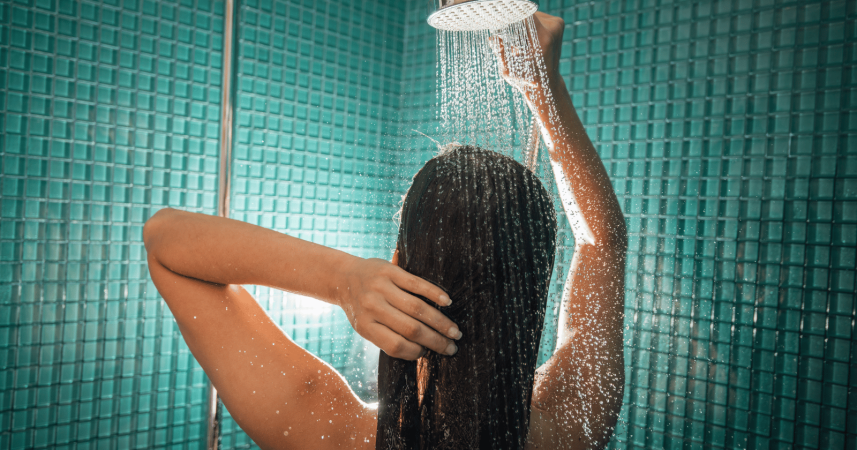
There’s something about standing under a rainfall showerhead that changes your entire morning. It’s not just a shower; it’s an experience.
Instead of water spraying sideways into your ear, you get that soft, steady stream from above that feels like a gentle downpour. It’s calming, immersive, and oddly meditative. You linger longer, breathe slower, and maybe, just maybe, forget your to-do list for a few minutes.
I remember the first time I installed one. It wasn’t expensive, maybe forty bucks online, but it transformed my mornings. Suddenly, showering wasn’t just part of the routine; it was something I looked forward to.
There’s even a bit of psychology behind it. The sound and sensation of falling water are known to trigger relaxation responses in the brain. It mimics natural rainfall, which our nervous systems associate with safety and calm. So yes, even a $40 showerhead can make you feel like you’re living the spa life.
2) A glass shower door instead of a curtain
If you grew up with a plastic shower curtain sticking to your leg mid-rinse, you know this one.
For years, shower curtains were standard: practical, affordable, and easily replaced. But once you’ve experienced a glass shower door, even the simplest kind, there’s no going back.
It’s not just the convenience of not fighting with a clingy curtain. It’s the way it changes the whole look of the bathroom. Light reflects off the glass, the room feels larger, and everything suddenly looks cleaner, more open, more intentional.
Even if the rest of the bathroom still has old tile or beige walls, a glass door signals a subtle shift. It says, Someone here cares about aesthetics.
I helped a friend on a budget install one last year, nothing fancy, just a clear panel from a home improvement store, and she texted me the next morning saying she felt like she was showering in a boutique hotel. That’s the thing about perception: sometimes, it’s all in the details.
3) Matching towel sets
This might sound trivial, but there’s real psychology behind coordinated towels.
When everything matches, the bath towels, hand towels, and washcloths, it gives the space a sense of order. A sense of care. And that visual harmony subtly influences how you feel.
Growing up, we had an odd mix of towels: floral, striped, souvenir ones, even a faded beach towel that somehow ended up in the bathroom rotation. Functional, yes. But “luxurious”? Not exactly.
So when I finally bought my first matching towel set, it felt like a personal milestone. The color matched the walls, the texture was soft, and every time I hung them up, I thought, This looks like something out of a catalog.
It wasn’t about impressing guests. It was about claiming a sense of dignity in the everyday. It’s funny how something as small as matching towels can shift your mindset from survival mode to self-respect.
4) A real vanity with storage
If you’ve ever balanced your toothbrush on the edge of a pedestal sink, you’ll know how deeply satisfying this upgrade feels.
Pedestal sinks are fine, they’re charming in theory, but they’re absolutely terrible for storage. Everything ends up piled on the back of the toilet or crammed into a corner basket.
So when someone finally installs a vanity with drawers, shelves, or even a single cabinet door, it’s a game changer.
A vanity isn’t just a convenience; it’s a symbol of order. A place to tuck things away, to make the visible space calm and clear. And as someone who used to work in finance, I can tell you: external order has a real psychological effect on internal calm.
One of my favorite minimalist writers once said, “Outer chaos mirrors inner chaos.” And she’s right. A tidy bathroom counter can make mornings smoother, calmer, and less reactive.
That little rectangle of countertop space might seem mundane, but it holds something deeper: a sense of control over your environment. And when life feels unpredictable, that matters.
5) A deep soaking tub
When I bought my first home, I inherited a shallow bathtub that could barely cover my knees. I remember thinking, How is anyone supposed to relax in this?
So when I finally replaced it with a deep soaking tub, it felt like a victory. Not just a home upgrade, but a lifestyle upgrade.
There’s something ritualistic about soaking in warm water. It’s an act of self-care that slows time down. You’re not rushing, multitasking, or responding to anyone. You’re just being.
From a psychological perspective, baths engage the parasympathetic nervous system, the “rest and digest” mode. Warm water literally helps the body unwind, lowering cortisol levels and easing tension.
For lower-middle-class homeowners, a soaking tub often represents more than relaxation. It’s a declaration that rest is allowed. That even without a luxury budget, you can create a sanctuary for yourself.
And that shift, from survival to self-soothing, is powerful.
6) Decent lighting
Lighting changes everything.
You can have the most beautiful tile in the world, but if your lighting is bad, it won’t matter. And yet, for decades, so many lower-middle-class bathrooms have relied on those harsh, Hollywood-style vanity bars with exposed bulbs.
They cast yellow light, create shadows, and make even the best mornings feel dull.
Swapping those out for LED fixtures or soft white bulbs is an underrated form of transformation. Suddenly, your reflection looks kinder. The space feels brighter, cleaner, calmer.
Research in environmental psychology backs this up: lighting influences mood, energy, and even decision-making. Bright, balanced light helps people feel more positive and alert.
I once helped my mom replace her old vanity light with a frosted glass fixture. She couldn’t stop saying how “fresh” the room felt. It wasn’t just new lighting; it was a new atmosphere.
Luxury doesn’t always mean expensive materials. Sometimes, it’s simply seeing yourself in better light.
7) A plant that stays alive
Bathrooms and plants have a complicated relationship. Too much humidity, not enough sunlight, temperature shifts, it’s not the easiest environment for greenery.
But when you find a plant that thrives in that space, it changes the entire energy of the room.
Even a small pothos on a shelf or a fern near the window softens the hard edges of tile and metal. It makes the space feel more alive, more nurturing.
There’s a psychological reason for that, too. Studies show that the presence of plants indoors can reduce stress, improve mood, and even enhance creativity. They remind us that nature and life persist, even in small, tiled spaces.
So for lower-middle-class homeowners, adding a healthy plant isn’t just decoration. It’s a small, hopeful act. It says, I can nurture something. I can create beauty here.
And honestly, that’s as luxurious as it gets.
The psychology of modest luxury
There’s a fascinating concept in consumer psychology called affordable luxury. It describes the emotional satisfaction people get from small indulgences, items or experiences that feel high-end without being financially out of reach.
For many in the lower-middle class, bathroom upgrades fall into this category. They’re attainable symbols of progress. They might not transform your financial reality, but they do change how you experience it.
When you invest in even one small upgrade, a rainfall showerhead, soft lighting, matching towels, you’re communicating something powerful to yourself: I deserve comfort, even if I can’t afford extravagance.
This sense of earned comfort is deeply human. It’s not vanity. It’s emotional self-maintenance.
Psychologists call this self-signaling: using tangible actions to reinforce internal beliefs. When you improve your environment, you’re not just making your space look better; you’re reminding yourself that you’re worth caring for.
A personal reflection
When I first bought my home, I couldn’t afford much renovation. The bathroom had yellowed linoleum, a mirror so old it had started to spot, and a tub faucet that made an ominous squeak.
But little by little, I started making changes. I replaced the showerhead. Painted the walls a soft sage green. Bought a matching towel set and placed a small ivy plant by the window.
Each change was small, but each one carried meaning. It wasn’t about impressing anyone. It was about coming home to a space that reflected who I was becoming, not just where I’d come from.
That’s the real story behind these upgrades. They’re not about class, or keeping up appearances, or pretending to be rich. They’re about finding joy in the attainable, beauty in the simple, and peace in the personal.
Final thoughts
Luxury isn’t defined by price tags or brand names. It’s defined by how something makes you feel.
For lower-middle-class homeowners, these bathroom upgrades are more than home improvements; they’re small, tangible affirmations of self-worth. They remind us that comfort doesn’t belong to the wealthy alone.
So whether it’s a plant that thrives, a soft towel that matches, or the sound of rain from your new showerhead, these simple details matter. They make ordinary spaces feel sacred.
Because in the end, luxury isn’t about having the best of everything. It’s about making the best of what you have, and realizing that’s enough.