You've renamed anxiety as productivity and your sleep schedule is paying the price. Learn to spot the difference between genuine night-owl creativity and a nervous system using work to avoid difficult thoughts.
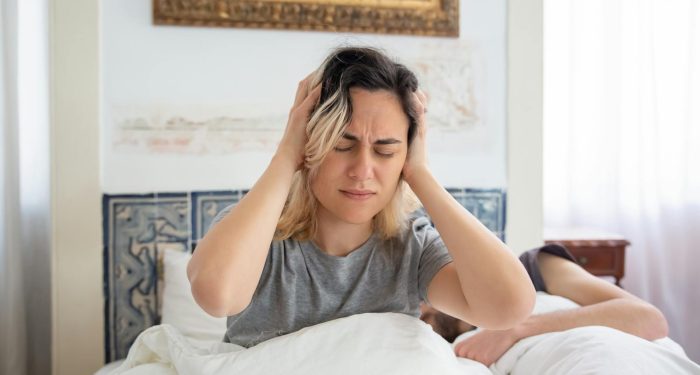
Most of what you call "grinding" after 10 p.m. is just anxiety wearing a productivity costume. The hustle-culture branding makes it harder to see, because we've built an entire vocabulary around sleeplessness that frames it as ambition rather than what it frequently is: a nervous system stuck in overdrive, dressed up in a Notion template.
The conventional pushback here is fair. Some people genuinely do their best work late. Night owls exist. Creativity doesn't punch a clock. But there's a meaningful difference between choosing to work late because your brain lights up after dark and being unable to stop working because stopping means sitting alone with your thoughts. The first is a preference. The second is a coping mechanism. And the gap between them is where a lot of sleep damage quietly accumulates.
I've been on both sides of this. Years ago, I convinced myself that my 1 a.m. kitchen experiments and late-night blog edits were signs of passion. They were, partly. But they were also the only way I knew how to burn off the low-grade dread that showed up every evening like clockwork. It took an honest conversation with my partner, who gently pointed out that I seemed calmer when I actually went to bed before midnight, for me to start questioning the story I was telling myself.
So here are five signs that your sleep patterns might be less about productivity and more about anxiety that's found a socially acceptable outlet.
1. You treat your wind-down routine like a performance
You bought the weighted blanket. You have the magnesium spray. There's a sound machine on your nightstand that cycles through rain, ocean waves, and something called "brown noise." Your pre-sleep ritual has seventeen steps, and you execute each one with the precision of a surgical team.
Here's what's worth examining: when sleep requires that much infrastructure, the infrastructure itself might be masking why sleep feels so hard in the first place. And some of those tools might not even be helping. Recent research suggests that pink noise may actually reduce REM sleep and disrupt overall sleep recovery—while earplugs, the decidedly unglamorous alternative, worked far better at protecting sleep quality. Millions of hours of white noise and ambient content are streamed daily, which means a lot of people are investing in sound environments without knowing whether those environments serve their sleep or just serve their anxiety about sleep.
The elaborate ritual becomes the thing you control when everything else feels uncontrollable. That's not rest. That's management.
2. You tell yourself you need to just check one more thing before bed, every single night
The email that can't wait. The Slack thread you want to close out. The quick scan of tomorrow's calendar so you can mentally prepare. You frame it as being responsible, staying on top of things, not letting the morning ambush you.
But what's actually happening is your brain refusing to power down, because powering down feels unsafe. This isn't just a mindset problem—research on hyperarousal and insomnia identifies it as a neurobiological state where the nervous system stays on high alert. The body is tired. The brain won't cooperate. And rather than sitting with that discomfort, you give it something productive to do, so the vigilance gets a purpose and stops feeling like a problem.
The pattern of needing one more thing is almost never about the thing. It's about the feeling you'd have to face if you didn't have the thing. And because our work culture rewards availability and responsiveness at all hours, nobody questions it. Your boss doesn't notice the anxiety behind your late-night responsiveness. Your boss praises your quick replies instead.
That feedback loop is hard to break, because the reward structure actively reinforces the behavior. The system doesn't care whether your late-night responsiveness comes from dedication or dread. It just benefits from the output.
3. You wake up already behind
You slept. Technically. Six, maybe seven hours. But you open your eyes and the first sensation isn't rest, it's deficit. There's a running mental tally of what you didn't finish yesterday, and it starts before your feet touch the floor.
Burnout researchers describe this as a cycle where chronic exhaustion, increased sensitivity, and the progressive loss of function feed into each other. Neurodivergent burnout research in particular highlights how this pattern hits hardest among people whose brains are already working overtime to meet neurotypical expectations, but the dynamic applies broadly. When the baseline is perpetual inadequacy, sleep becomes just another arena where you're falling short.
The cruel trick of anxiety-driven productivity is that it redefines rest as laziness. So even when you sleep, you don't let yourself receive the sleep. You're already calculating what the sleep cost you in output. That mental math is exhausting in its own right, and it fragments whatever recovery you did manage to get.
4. You've turned sleep into a metric and poor sleep into a personality trait
You track your sleep with a ring or a watch. You know your HRV, your deep sleep percentage, your REM cycles. You've read about sleep latency and you have opinions about it. And when someone asks how you slept, you say something like: I've never been a great sleeper. Or: I'm just wired to run on five hours.
These two habits—the optimization and the identity claim—are doing the same work from different angles. The tracking turns a basic biological need into a data problem you can solve with the right stack of supplements and devices. The identity claim takes whatever's left unsolved and files it under "just who I am." Between the two, the actual anxiety underneath never has to be named.
None of the tracking is inherently bad. But when a "bad" sleep score ruins your morning, when you're optimizing your way out of actually resting, you've turned sleep into another performance metric. And when you claim poor sleep as a personal characteristic rather than recognizing it as a symptom, you remove it from the category of things that might need addressing and place it in the category of things that are just true about you. The connection between sleep deprivation and anxiety runs in both directions—anxiety disrupts sleep, and disrupted sleep amplifies anxiety—which means both the optimization spiral and the identity-level resignation can keep that cycle locked in place.
Productivity culture loves this whole arrangement. The person who doesn't need much sleep is the person who can do more. The person who tracks their sleep is the person who takes performance seriously. There's social capital in sleeplessness, and that capital makes it genuinely difficult to look at the behavior honestly.
I spent a solid year tracking every metric available on my sleep app. My scores were mediocre, which made me anxious, which made my scores worse. Classic feedback loop. The week I deleted the app and just started cooking dinner earlier, going for a short walk, doing less, my sleep improved in ways no optimization protocol had managed. Sometimes the best thing you can do for your sleep is stop treating it like a project. And your body isn't wired to run on five hours. Your body has adapted to a pattern driven by something you haven't named yet.
What actually helps (and what doesn't)
The fix isn't another product. It's probably not another app. Research has found that the simplest, cheapest intervention, plain earplugs, can outperform sophisticated sound technology at protecting sleep architecture. Deep sleep losses from environmental noise were largely prevented by earplugs, while some ambient noise made things worse, especially when combined with environmental noise.
That finding feels like a useful metaphor for the broader problem. We keep adding layers of complexity to a situation that might improve most with subtraction. Fewer screens before bed. Fewer obligations carried past 9 p.m. Less content consumed under the pretense of winding down that actually keeps the brain engaged.
If your body has been holding stress in places your mind won't acknowledge, your sleep habits are probably downstream of that. And if you're in a career that fits your résumé but not your nervous system, no sleep hygiene checklist will override the eight to ten hours of daily activation your job is producing.
The anxiety-to-productivity pipeline works because it gives an unpleasant feeling a pleasant name. Renaming it doesn't change what it does to your body at 2 a.m. It just makes you less likely to question it.
Start by asking a different question at bedtime. Not asking what you still need to do, but asking yourself what you might be avoiding feeling right now. The answer might be nothing. You might genuinely just want to reorganize your spice drawer at 11 p.m.
But if the answer is something, if there's a hum of unease underneath the busyness, that's worth sitting with for five minutes before you pick up your phone or open your laptop. Five minutes of honesty might do more for your sleep than any sound machine ever could.
And if sitting still feels unbearable, that's information too. Probably the most important information you'll get all day.
If You Were a Healing Herb, Which Would You Be?
Each herb holds a unique kind of magic — soothing, awakening, grounding, or clarifying.
This 9-question quiz reveals the healing plant that mirrors your energy right now and what it says about your natural rhythm.
✨ Instant results. Deeply insightful.

Jordan Cooper
Jordan Cooper is a food and culture writer based in Venice Beach, California. Before turning to writing full-time, he spent nearly two decades working in restaurants, first as a line cook, then front of house, eventually managing small independent venues around Los Angeles. That experience gave him an understanding of food culture that goes beyond recipes and trends, into the economics, labor, and community dynamics that shape what ends up on people’s plates.
At VegOut, Jordan covers food culture, nightlife, music, and the broader cultural forces influencing how and why people eat. His writing connects the dots between what is happening in kitchens and what is happening in neighborhoods, bringing a ground-level perspective that comes from years of working in the industry rather than observing it from the outside.
When he is not writing, Jordan can be found at live music shows, exploring LA’s sprawling food scene, or cooking elaborate meals for friends. He believes the best food writing should make you understand something about people, not just about ingredients.
More Articles by Jordan