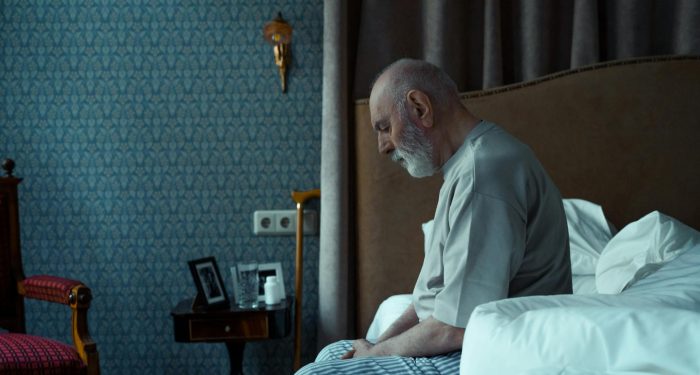


The silence at four in the afternoon doesn't mean nothing is happening — it means everything you used to be is asking whether it still exists.
Retirement's most dangerous hour has nothing to do with money. It has nothing to do with your marriage, your health insurance, or whether your portfolio is properly diversified. The dangerous hour is the one where the house is quiet, the errands are done, the email has been checked and answered in forty seconds because almost nobody emails you with anything urgent anymore, and you find yourself sitting in a chair you chose specifically for comfort. And the comfort feels like a verdict.
Four in the afternoon. Maybe four-fifteen. The light is doing that thing where it shifts from productive to amber.
And something in you says, very quietly: Is this it?
Most retirement advice addresses the wrong conversation. The financial adviser helps you plan withdrawals. Your partner negotiates whose turn it is to plan dinner. Your adult children call on Sundays with polite questions about your week. All of those conversations have scripts. The one that doesn't — the one that ambushes you in the late afternoon silence — asks a question you spent forty years avoiding: Who are you when nobody needs you to be anything?
The identity that lived inside the work
Conventional wisdom says retirement is earned rest. You put in the decades, you saved responsibly, you sacrificed weekends and vacations for the organization's benefit, and now the reward is freedom. Time. Choice. The whole culture reinforces this: retirement parties and congratulatory cards often reinforce messages about deserving rest and freedom.
What that narrative misses is that your job was never just a job. It was a nervous system. It was the thing that told you when to wake up, where to direct your attention, whom to call, which problems were yours to solve. Research on firefighter retirement and identity loss illustrates this sharply. People who defined themselves through a demanding vocation don't just lose a schedule when they retire. They lose the architecture of selfhood. The framework that made their decisions legible, their sacrifices meaningful, their daily existence coherent.
And firefighters aren't unique. Executives, teachers, nurses, small-business owners. Anyone who merged identity with occupation faces the same fracture. The title disappears. The competence that structured your self-respect has no stage.
After observing patterns among retirees who struggled with identity loss, I noticed too many high-achieving people crumble the moment their title vanished. The pattern was so consistent it almost looked like a diagnosis: high performance, abrupt exit, existential free-fall. The people who had been the most capable, the ones everyone assumed would thrive, were often the most disoriented.
Why four in the afternoon
The timing matters more than you'd think. Mornings have momentum. You can fill a morning with coffee rituals, a walk, reading, a trip to the grocery store. Morning still feels purposeful because the day is ahead of you. Evening has its own gravity. Dinner, a show, conversation, the acceptable winding down.
But mid-afternoon occupies a strange no-man's-land. During your working life, four o'clock was the final push. Meetings, deadlines, the homestretch energy that comes from knowing you'll be released soon. Your brain was engaged. The prefrontal cortex was still activated by task demands. Dopamine was still circulating because completion was near.
Remove the task structure and the brain notices. Research on circadian rhythms and human biology confirms we are deeply seasonal and time-sensitive creatures. Our internal states shift across the day in ways that modern life often masks but retirement exposes. The afternoon dip in alertness, the subtle cortisol shift, the mind's tendency to turn inward when outward demands disappear — all of these converge into a window where intrusive thoughts find their opening. You used to be tired at four o'clock because you'd spent the day solving problems. Now you're tired at four o'clock because you've spent the day wondering whether anyone would notice if you didn't wake up tomorrow, and you're not sure whether that thought is dramatic or honest, and the not-knowing is itself exhausting in a way that no amount of sleep repairs, and the chair is comfortable, and the light is amber, and the house is so quiet you can hear the refrigerator cycling on and off like it's the only thing in the building still doing its job.
Morning silence is a blank page. Afternoon silence is an unanswered question.
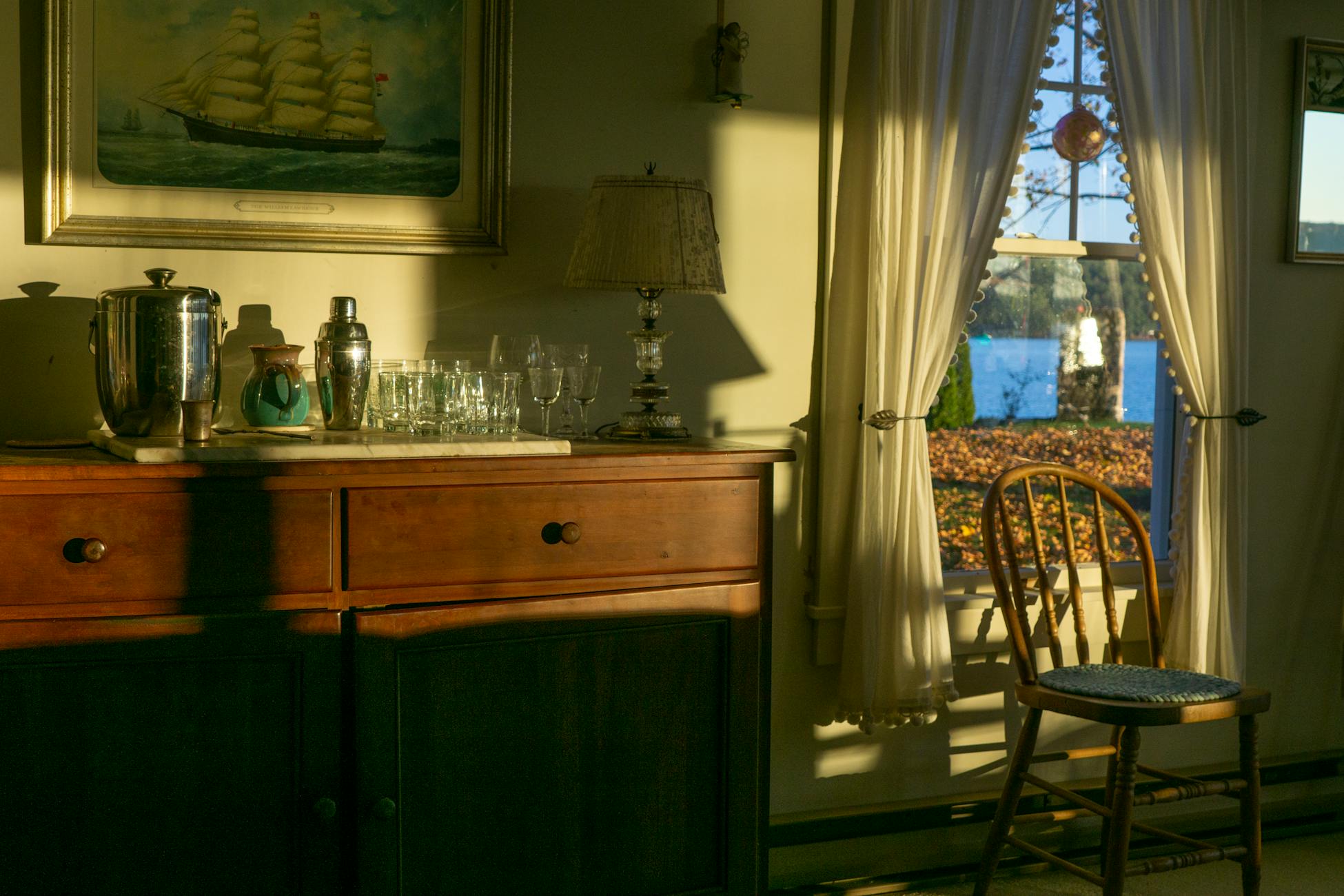
The conversation nobody rehearses
Here is what the internal monologue actually sounds like, if you're honest about it:
I used to matter. People called me for decisions. I had a calendar that was too full, and I complained about it, and now I'd give anything for someone to need me at three-thirty on a Thursday.
I have hobbies. I golf. I garden. I read. I volunteer at the food bank on alternating Tuesdays. And none of it carries the weight that work carried. None of it makes me feel like I am essential.
Am I depressed, or am I just unnecessary?
That last question is the one that does the real damage. Because it conflates two very different things: mood and meaning. The relationship between unstructured time and mental health in older adults is well-documented. When external demands vanish, psychological well-being doesn't automatically improve. It often declines. The absence of obligation can feel, neurologically, indistinguishable from the absence of significance.
The generation that learned early to translate distress into "I'm fine" is especially vulnerable here. If you grew up in a culture that equated vulnerability with weakness, you probably don't have the vocabulary to name what's happening at four in the afternoon. You just know something feels wrong, and the wrongness has no obvious fix, because the fix would require admitting that freedom is not what you expected.
What the silence is actually saying
Retirement, as we practice it in the United States, is a relatively recent invention. A 20th-century solution to an industrial labor problem, not a natural human life stage. For most of human history, people contributed to their communities until their bodies gave out. Elders had roles. They taught, arbitrated, remembered. The modern idea that people should stop being useful at an arbitrary age and instead focus on enjoyment would have baffled earlier generations. And it baffles something deep inside most retirees too, even the ones who won't say it out loud.
The women who held families together in the 1970s and 80s know this feeling intimately, even if they never had a formal career to retire from. The role was different, but the loss of being needed — of being the one who holds the structure together — creates the same hollow frequency.
So the silence at four in the afternoon sounds like irrelevance. But I want to push against that interpretation, because I think the silence is saying something else entirely.
It's saying: You built your identity on external validation and productivity metrics, and now those are gone, and the person who remains is someone you barely know.
That's not irrelevance. That's unfamiliarity.
There is a massive difference between being unnecessary and being unacquainted with yourself outside a role. The first is a permanent condition. The second is a temporary, and solvable, disorientation.
This period is marked by genuine shifts in roles and priorities. Most of us only encounter two cultural narratives about it: either you're blissfully free or you're tragically diminished. Neither captures the actual experience, which is more like standing in a room you've lived in for decades and suddenly noticing the walls are a different color than you remembered.
The loneliness that disguises itself as preference plays a role here too. You tell yourself you like the quiet. You tell yourself you've earned the solitude. And some of that is true. But some of it is a story you're telling to avoid the harder acknowledgment: that the quiet has a texture you didn't anticipate, and the texture feels like being forgotten.

Answering the unanswerable question
So what do you do at four-fifteen on a Wednesday when the silence gets loud?
You might start by not running from it. The instinct is to fill. Turn on the television, check the phone, start a project, call someone. Those are fine instincts. They're also avoidance.
The conversation you're avoiding often centers on questions of continued relevance and value. Because embedded inside questions about relevance are smaller, more answerable questions:
What did I value about being needed — the contribution itself, or the proof that I existed?
If nobody is keeping score, what would I choose to do with this afternoon?
I recorded a video about the retirement trap that catches people off guard—not the financial kind, but the psychological one that arrives in those quiet Wednesday afternoons when you realize no one needs you to be anywhere. It's something I've been thinking about a lot, and if this article resonates with you, that video might offer some additional perspective on navigating this particular kind of emptiness.
When was the last time I did something that engaged me so fully I forgot to check whether anyone noticed?
These are better questions. They lead somewhere. Questions about relevance create a closed loop that generates anxiety without resolution. But asking yourself what you would choose independent of external validation opens new possibilities. Purpose and connection, as research increasingly confirms, are the twin engines of retirement satisfaction. Not leisure, not travel budgets, not square footage.
Purpose doesn't have to look like your old career. It can be granular. Teaching a neighbor's kid to cook a plant-based meal from scratch. Writing letters — actual letters, on paper — to people you've lost touch with. Learning something difficult enough that you're bad at it for months, which is its own form of aliveness.
The people I work with who navigate this transition most gracefully share one trait: they're willing to be beginners again. They accept the discomfort of not knowing who they are yet, in this new context, and they treat the uncertainty as information rather than indictment.
Learning to hear it differently
I wrote a free guide on navigating this territory, because I kept having the same conversation with people who had done everything right. Saved well, retired on schedule, ticked every box. And still found themselves ambushed by a feeling they couldn't name. The guide exists because thriving in retirement requires an entirely different skill set than surviving a career, and most people have never been taught the difference.
But I want to leave you with something more immediate than a resource.
The silence at four in the afternoon will come again tomorrow. It will come the day after that. You can't outrun it, and filling it with noise only postpones the reckoning. But you can learn to sit inside it long enough to hear what it's actually saying. And what it's saying, if you stay quiet long enough to catch it beneath the panic, is not you are irrelevant. It's you are unfinished.
Irrelevance is a door that closes. Unfinished is a door that hasn't been opened yet. The person who sat in that office, who answered those calls, who carried that title. That person was real, and their contributions mattered. But they were one version of you. The afternoon silence is asking whether you have the courage to meet the next one.
I built Your Retirement Your Way precisely for people navigating these quiet afternoon reckonings—when you realize that freedom from structure isn't the same as freedom toward meaning.
And so tomorrow it will be four in the afternoon again. The light will shift. The house will be quiet. The chair will be comfortable in that way that feels like too much and not enough at once. And the question will return — the one about who you are when nobody needs you to be anything. It will sit across from you like a guest you didn't invite but can't ask to leave. You don't have to answer it yet. But it will still be there. Waiting.