Go to the main content

Psychology says people who still write shopping lists on paper aren't resisting technology — they're using the one input method neuroscience confirms actually transfers information into long-term memory

What looks old-fashioned on the surface may actually be one of the simplest ways to make information stick, because writing by hand forces the brain to slow down, select, and encode. In a world built for speed and forgetting, the humble paper list still does something screens often don’t: it leaves a deeper cognitive trace.

Lifestyle

What looks old-fashioned on the surface may actually be one of the simplest ways to make information stick, because writing by hand forces the brain to slow down, select, and encode. In a world built for speed and forgetting, the humble paper list still does something screens often don’t: it leaves a deeper cognitive trace.

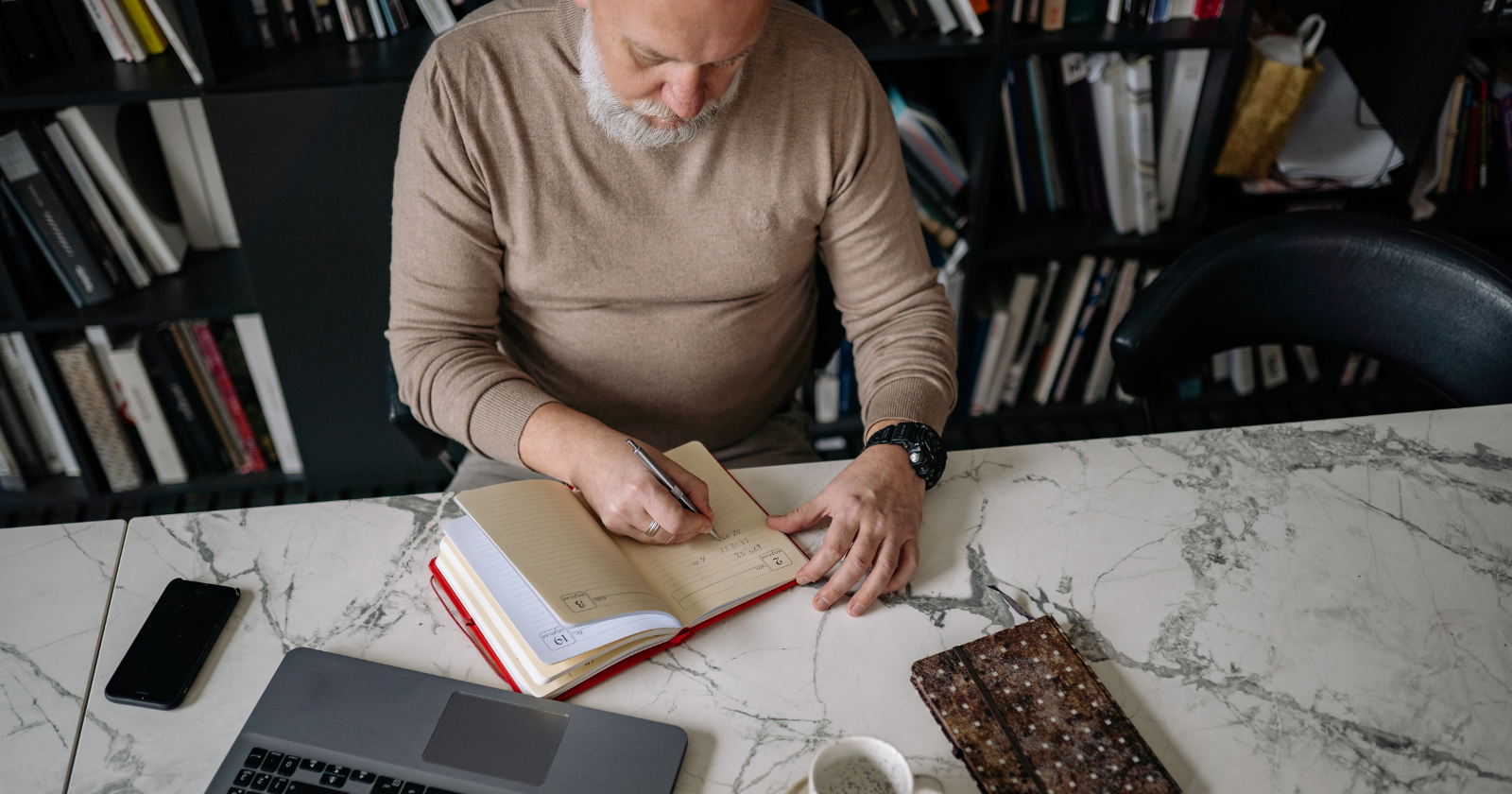
My wife thinks I'm stubborn. Every Saturday morning before the market, I sit at the kitchen table with a pen and a scrap of paper and write down what we need. She watches me do this from across the room, phone in hand, where she's already typed the same list into her notes app in about nine seconds.

She's faster. She's more organised. Her list is searchable, sortable, and synced to the cloud.

And she'll forget half of it by the time she gets to the vegetable stall.

I won't. Not because I have a better memory. Because the act of writing it down by hand did something to my brain that her thumbs on glass didn't do to hers.

This isn't opinion. It's neuroscience. And the research on it is now extensive enough that the real question isn't whether handwriting helps memory. It's why we ever stopped doing it.

What happens in the brain when you write by hand

A landmark study published in Frontiers in Psychology by Audrey van der Meer and Ruud van der Weel at the Norwegian University of Science and Technology used high-density EEG with 256 electrodes to monitor brain activity in university students as they handwrote words versus typed them on a keyboard.

The results were striking. When writing by hand, brain connectivity patterns were far more elaborate than when typewriting. Specifically, handwriting produced widespread theta and alpha frequency connectivity between network hubs and nodes in parietal and central brain regions. These are the frequencies and regions that existing literature identifies as crucial for memory formation and for encoding new information.

When typing, the same patterns didn't appear. The brain was active, but it was active differently. Less connected. Less integrated. More localised and more passive.

As Scientific American reported, the distinction comes down to what the motor system is doing. When you handwrite the word "eggs," your hand produces a unique sequence of movements specific to those letters. The shape of the E is different from the shape of the G. Your motor cortex, visual cortex, and somatosensory regions all coordinate to produce something that is physically distinct for every word you write.

When you type "eggs," you press four keys. The finger movement is virtually identical for every letter on the keyboard. There's no motor distinction between typing "eggs" and typing "milk." The brain doesn't need to engage its spatial, visual, or motor systems in any word-specific way. And because of that, the encoding is shallower.

The Mueller and Oppenheimer study

The research that first brought this into mainstream awareness was the 2014 study by Pam Mueller and Daniel Oppenheimer, published in Psychological Science, with the memorable title "The Pen Is Mightier Than the Keyboard." They found that students who took notes by hand in lectures performed significantly better on conceptual questions than students who typed their notes on laptops.

The reason? Typing is fast enough to allow verbatim transcription. Students typing their notes were essentially taking dictation, recording what was said without processing what it meant. Their typed notes had an average of 14.6 percent verbatim overlap with the lecture content.

Students writing by hand couldn't keep up with the speed of speech. They were forced to listen, filter, compress, and rephrase. Their notes had only 8.8 percent verbatim overlap. They were paraphrasing. And paraphrasing is deep processing. It requires you to understand something before you can say it in fewer words.

On factual recall questions, both groups performed similarly. But on conceptual application questions, the kind that require you to understand and apply information rather than just retrieve it, the handwriters performed significantly better. The pen didn't just record. It processed.

Why this matters for a shopping list

You might think that a shopping list is too simple to benefit from this effect. It's just a list of items. How much deep processing does "bananas" require?

More than you'd think. Because the research isn't just about conceptual encoding. It's about the basic mechanics of how memory forms.

A study published in Frontiers in Human Neuroscience by Ihara and colleagues examined what happened when participants learned new words by handwriting them versus typing them. The handwriting group demonstrated superior memorisation regardless of whether they used a traditional pen or a digital pen. The researchers found that the handwriting movements allowed better encoding of the words into memory compared with typing, which provided the advantage of writing more words but at the cost of shallower processing.

The comprehensive neuroscience review published in Life put it directly: handwriting is a more cognitively demanding process, requiring the brain to engage in deep encoding of the information. When typing, individuals tend to transcribe information passively, often without engaging deeply with the material. Handwriting slows down the process, prompting the person to actively process the material rather than merely record it.

When you write "tomatoes" on a piece of paper, your brain does something it doesn't do when you tap it into a phone. It forms the letters individually. It engages spatial processing to place the word on the page. It creates a visual-motor memory trace that is unique to that specific word in that specific location on that specific piece of paper. You might even remember, standing in the market, that "tomatoes" was the third item, written slightly to the left, under "garlic."

That spatial and motor encoding doesn't happen on a screen. On a screen, every item looks the same. Same font, same spacing, same context. There's nothing distinctive for memory to grab onto.

The brain connectivity difference

Science News reported on the van der Meer and van der Weel study and highlighted a detail that I think gets to the heart of the matter. When participants wrote by hand, the researchers observed increased connectivity not just in motor areas but across parietal regions involved in sensory processing and central regions involved in memory. The brain was working as a network. Multiple regions were communicating with each other through synchronised oscillations.

When participants typed, this network communication largely disappeared. The brain was active, but it was active in isolation. Motor areas fired. But they didn't connect to memory areas in the same integrated way.

Sophia Vinci-Booher, an assistant professor of educational neuroscience at Vanderbilt University, noted that these findings are consistent with a broader body of research showing that the coordinated hand movements involved in handwriting produce a kind of neural integration that typing simply doesn't replicate.

Van der Meer herself put it plainly: "When you are typing, the same simple movement of your fingers is involved in producing every letter, whereas when you're writing by hand, you immediately feel that the bodily feeling of producing A is entirely different from producing a B."

That difference, the physical distinctiveness of each letter, is what gives handwriting its encoding advantage. Your body knows the difference between writing "A" and writing "B" in a way that your fingers don't know the difference between pressing one key and another.

The shopping list as cognitive practice

Here's where I want to push beyond the research and into the practical implication.

Every morning, hundreds of millions of people around the world make lists. Shopping lists, to-do lists, meal plans, reminders. Most of them now do this on their phones. And most of them will tell you, if you ask, that they frequently arrive at the shop and can't remember what they needed without checking the app.

The person who wrote the list on paper often doesn't need to check it. Not because they memorised it deliberately. Because the act of writing encoded it. The pen transferred the information from intention to memory through a pathway that the phone skipped entirely.

In Buddhism, there's a practice called sati, mindfulness, which at its root means to remember. Not in the nostalgic sense. In the sense of keeping something present. Holding it in awareness. The Pali texts describe sati as the quality that prevents experience from slipping away unnoticed.

Writing by hand is, in a small and practical way, an act of sati. It slows you down. It forces you to attend to each word. It makes the mundane, a list of groceries, into something your brain actually registers rather than discards.

Typing on a phone is optimised for speed. But speed, as the research keeps showing, is the enemy of encoding. The faster you go, the less your brain retains. The more efficient the input method, the shallower the memory trace.

The real reason they still use paper

The people who still write shopping lists on paper aren't Luddites. They're not resisting progress. Most of them couldn't tell you why they do it. They just know it works. They remember more. They feel more organised. They arrive at the shop and know what they came for.

The Harvard Study of Adult Development didn't study shopping lists. But it did find that the practices that sustain wellbeing in later life are often the simplest and most embodied: face-to-face conversation, physical presence, and daily rituals that engage the body and the mind together. Writing by hand belongs in that category. It's a practice that connects intention to action through the body, not around it.

My daughter is two. She watches me write lists in the morning and she grabs at the pen. She wants to make marks on the page. Her marks mean nothing yet. But the impulse is right. The hand wants to make meaning. The brain wants the hand involved. The connection between the two is ancient, and the neuroscience is only now catching up to what the body has always known.

Don't put the pen down. The phone is faster. But the pen remembers.


VegOut Magazine’s February Edition Is Out!

In our latest Magazine “Longevity, Legacy and the Things that Last” you’ll get FREE access to:

    • – 5 in-depth articles
    • – Insights across Lifestyle, Wellness, Sustainability & Beauty
    • – Our Editor’s Monthly Picks
    • – 4 exclusive Vegan Recipes

Lachlan Brown

Lachlan Brown is a writer and editor with a background in psychology, personal development, and mindful living. As co-founder of a digital media company, he has spent years building editorial teams and shaping content strategies across publications covering everything from self-improvement to sustainability. His work sits at the intersection of behavioral psychology and everyday decision-making.

At VegOut, Lachlan writes about the psychological dimensions of food, lifestyle, and conscious living. He is interested in why we make the choices we do, how habits form around what we eat, and what it takes to sustain meaningful change. His writing draws on research in behavioral science, identity, and motivation.

Outside of work, Lachlan reads widely across psychology, philosophy, and business strategy. He is based in Singapore and believes that understanding yourself is the first step toward making better choices about how you live, what you eat, and what you value.

More Articles by Lachlan

More From Vegout