The restlessness that defines your twenties often isn't ambition at all—it's the moment you realize nobody's coming to hand you a blueprint for your life, and you have to build it yourself.
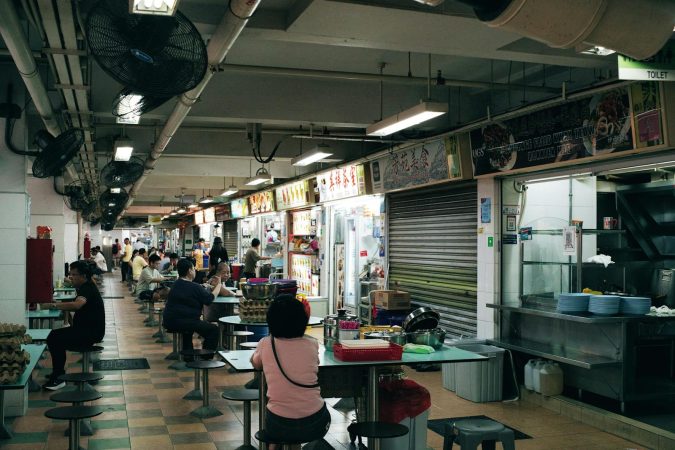
Maya is twenty-seven and sitting across from me at a hawker centre in Tiong Bahru, stirring a bowl of laksa she's barely touched. She tells me she quit her consulting job three weeks ago. Her parents don't know yet. Her boyfriend thinks it's a great idea, which somehow makes her feel worse. She's been waiting, she says, for some kind of confirmation that she's doing the right thing, and it keeps not arriving. Then she looks up and adds, almost apologetically, that she's starting to think what she always called ambition was actually panic.
I recognised it immediately because I spent most of my twenties mistaking the same feeling for drive.
The story we tell about restless twentysomethings is that they're ambitious, that they're hungry, that they're building the engine of their careers and shouldn't stop to think too hard about what they actually want. It's a flattering narrative. It's also, for a lot of people, wrong.
The myth of productive restlessness
The common read on twenties restlessness is that it's the fuel of a generation finding itself. Hustle culture made a religion of this. Every founder memoir, every productivity podcast, every LinkedIn post about embracing the grind reinforces the idea that the churn in your chest is a good thing. It means you want more. It means you're going somewhere.
What actually gets missed is that agitation and ambition feel almost identical from the inside, and most of us never learn to tell them apart. The Atlantic recently pushed back on the old script that your twenties are the best years of your life, pointing out that this is more cultural rumour than reality. For a lot of people, the twenties are quietly miserable in a way that doesn't photograph well.
The restlessness I'm describing isn't a signal that something exciting is coming. It's the nervous system registering that you've been handed the wheel of a car you never learned to drive, and nobody's in the passenger seat.
Why this hits in the twenties specifically
Here's the thing nobody warned me about. The decade from about eighteen to twenty-nine isn't really adolescence anymore, but it isn't the full-blown adulthood our parents seemed to drop into either. It's its own weird in-between country, and researchers have started calling it emerging adulthood — a stretched-out period where you're supposed to be figuring out school, work, love, and who you actually are, all at once, with no map.
On paper that sounds like freedom. Inside it, it feels like standing in a room with a hundred doors and being told, cheerfully, that any of them could be the right one, and also that you're running out of time.
The generation before ours had a shorter list of doors. You finished school, you got a job, you bought a house if you could, you married someone, you had kids. You could dislike that script, you could rebel against it, but it existed. It gave you something to push against or conform to. Either way, you knew what the shape of a life was supposed to be.
That script has collapsed for most people under thirty-five, and nothing coherent has replaced it.
The panic hiding inside the productivity
This life stage is marked by five core struggles: identity, instability, self-focus, feeling in-between, and a sense of possibility that tips easily into overwhelm. Depression and anxiety rates among emerging adults have been climbing for years, well before the pandemic accelerated the trend.
I want to be careful here. Not every twentysomething who feels restless is clinically anxious. And not every twentysomething who's anxious is failing at life. But we owe it to people to name what's actually happening, because calling quiet panic ambition is how you end up at thirty-two in a career you built specifically to avoid feeling a feeling.
The quarter-life crisis is now widely recognized as distinct from midlife unraveling. A recent Psychology Today piece on quarter-life crises observes that research on quarter-life crises suggests that people rarely identify their struggle as existential—instead, they report feeling stuck or hollow.
What I was actually doing
When I look back at that period honestly, I wasn't building. I was auditioning. I was trying on a shape of a life to see if someone — a parent, a boss, a friend, some imagined authority figure — would look at it and say, "Yes, this one. This is yours."
Nobody ever says that. I've come to believe nobody is actually qualified to say that, and the ones who try are usually projecting their own unfinished business.
The restlessness I kept interpreting as hunger for more was the sound of my own nervous system asking, quietly and then less quietly, "Is this it? Is this the life? Am I doing the right version?" And because I didn't know how to sit with that question, I just worked harder. I took on more. I said yes to things I didn't want. I mistook momentum for direction.
People who grew up being praised for being high-achieving are especially vulnerable to this, because they have a ready-made anaesthetic. Work harder. Accomplish more. The gnawing feeling will go away. Except it doesn't, it just gets louder, and eventually it stops taking the shape of ambition at all and starts taking the shape of exhaustion.

Why no one was ever going to tell me
Here's the part I wish someone had said to me at twenty-four. There is no authority figure coming. Not your parents, who are mostly making it up too. Not your mentor, who has their own unresolved stuff. Not your therapist, who can help you think but can't hand you the answer. Not the internet, which will sell you a thousand contradictory versions of a good life and make money off your confusion.
The realisation that nobody is coming is genuinely terrifying the first time you have it. It's also, eventually, the most freeing thing that ever happens to you.
Because the flip side of "nobody is coming to tell me what my life should look like" is "nobody gets to tell me what my life should look like." The same sentence. Completely different emotional weather depending on where you stand with it.
Restlessness as information
The University of Nevada recently introduced an undergraduate stress management course specifically for early adulthood, acknowledging that this stage of life produces a particular kind of pressure: academic, financial, relational, existential. People aren't given tools to handle it. The course leans on things like gratitude reflections, vision boards, mindfulness, breathwork. Small, applied, unglamorous.
I used to think that kind of work was soft. At twenty-five I'd have rolled my eyes at a vision board. Now I think the eye-rolling was part of the problem. I was so committed to the narrative of ambition that I couldn't take seriously any practice that asked me to slow down and ask what I actually wanted.
Restlessness isn't something to cure. It's information. It's your body telling you that something in the current arrangement isn't fitting, and if you're willing to listen instead of just run faster, it can point you somewhere useful.
But you have to stop calling it ambition first. You have to be willing to admit that the feeling is actually fear about being in the wrong life without guidance.
The quiet work of choosing on purpose
I wrote recently about the moment I stopped explaining myself to people who'd already decided who I was, and a version of the same shift applies here. At some point in your late twenties or early thirties, if you're lucky, you stop asking the room to tell you who you are and you start telling the room.
That shift is quieter than it looks from the outside. It doesn't usually come with a big life change. Sometimes it looks like staying in the same job but stopping the inner monologue questioning whether it's enough. Sometimes it looks like ending a relationship that everyone else thought was great. Sometimes it looks like finally taking a nap on a Saturday without feeling guilty.
Identity formation is often described as the slow integration of beliefs, values, and goals into a coherent self. In practice it feels less like integration and more like elimination. You spend your twenties accumulating shoulds, and your thirties figuring out which ones were never yours.
What I'd say to Maya
I didn't say most of this to Maya at the hawker centre. It would have been too much, and anyway, people in the middle of the panic rarely want a framework. They want someone to sit with them in the not-knowing without trying to fix it.
What I did say, roughly, was this. The feeling you're calling panic is actually pretty accurate. Nobody is coming. That's the bad news and the good news. The restlessness isn't telling you to work harder. It's telling you to start asking better questions about what you actually want, not what you think you're supposed to want. And the fact that you can't answer those questions yet isn't a failure. It's the beginning of the only work in your twenties that really matters.
She nodded, slowly. Then she picked up her spoon and ate her laksa, which had long gone cold.