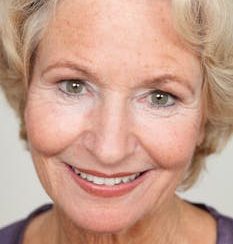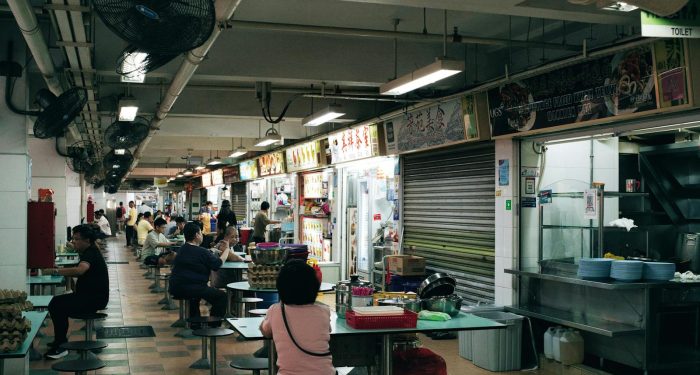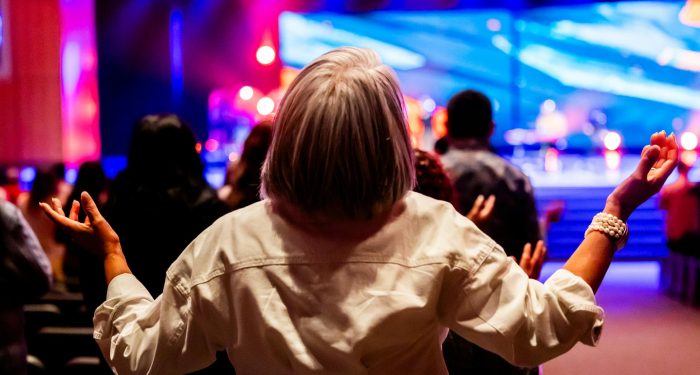
They move through grocery stores with invisible suitcases full of ghosts—former colleagues, relocated friends, and younger versions of themselves—each "difficult" moment actually the sound of someone learning to exist in a world that no longer recognizes their losses as real.
The invisible luggage we carry
"So much about growing older seems connected to loss: loss of muscle, loss of drive, loss of energy, loss of memory," writes Josh Gressel Ph.D., in an observation that lands differently once you're the one doing the losing. At 70, what strikes me isn't just the obvious losses Gressel names. It's the ones nobody counts. The colleague who understood your shorthand after twenty years of shared coffee breaks. The couple three doors down who moved to Florida. The hairdresser who knew exactly how to hide your thinning crown.
Last week, I watched my neighbor struggle to explain why she couldn't attend another book club meeting. "I'm just not feeling up to it," she said, but I heard what she didn't say: the exhaustion of being the only one who remembers when the group had twelve members instead of four, when they read actual books instead of skimming summaries, when Margaret was still alive to argue about symbolism.
I think about this often when I catch myself being what my daughter delicately calls "particular." Am I difficult, or am I just tired of pretending that losing my work family didn't gut me in ways I'm still discovering six years into retirement? According to Psychology Today Staff, "Grief is the acute pain that accompanies loss." But what do we call the dull, persistent ache of losses that accumulate like dust, invisible until suddenly you're choking on them?
When retirement feels like exile
The morning after my retirement party, I woke at 5:30 AM as usual. But instead of lesson plans and essay grading waiting for me, there was nothing. Just silence where purpose used to live. Changgui Wenbo notes that "Retirement marks a major life shift, moving individuals from structured work environments to a new phase characterized by greater personal freedom but also potential uncertainty and change."
Freedom. That's what everyone calls it. But freedom from what, exactly? From the teenagers who made me laugh even on my worst days? From the fellow teachers who became my chosen family after my divorce? From feeling necessary?
What I've learned is that retirement grief is particularly cruel because it's socially unacceptable. You're supposed to be grateful, relaxed, finally living your best life. Nobody wants to hear that you miss the chaos, the complaints, even the Sunday night anxiety. A systematic review I came across found that retirement can lead to increased psychological distress, particularly among individuals with poor psychosocial working conditions and limited social support. But even with good conditions and support, there's still the fundamental shift from being essential to being optional.
The body as stranger
"We live on images," says psychologist Robert Lifton, and nowhere is this truer than in our relationship with our aging bodies. The image I carry of myself, capable, strong, the woman who once painted her entire house in a weekend, collides daily with the reality of joints that betray me, energy that evaporates by noon, a face in the mirror I sometimes don't recognize.
Last month, I couldn't open a jar of pickles. Such a small thing, but I sat at my kitchen table and cried. Not about the pickles, but about all the jars I'd opened without thinking, all the things my body did without negotiation or complaint. Now every physical act requires calculation: Is this worth tomorrow's pain? Can I manage the stairs after gardening? Should I pretend my knee isn't screaming during my granddaughter's recital?
The loneliness of being the only witness
Here's something I wrote about in a previous post on navigating widowhood: grief compounds. But what I didn't fully understand then was how the grief of losing people intersects with the grief of being the sole keeper of shared memories. When my colleague died last year, I lost not just a friend but the only other person who remembered the principal who wore bow ties, the year the ceiling collapsed during state testing, the student who became a bestselling author.
As I'm sure you've noticed, older adults tend to build up many major losses within a short period of time.
But what they don't capture is how these losses create a domino effect. Lose enough witnesses to your life, and you begin to question whether it happened at all.
Why we seem "difficult"
Perhaps you've noticed it too. The way conversations stop when you enter a room, the careful patience in your children's voices, the suggestion that maybe you're being "a bit much" about something that feels monumentally important to you. CommonSpirit Health Professionals note that "Older adults may not express grief in the same way as other adults."
What shows up as inflexibility might actually be the desperate attempt to maintain some control when everything else is shifting. What reads as negativity might be exhaustion from pretending everything's fine. What seems like withdrawal might be self-protection from further losses.
I remember snapping at my son recently when he suggested I "just get an Uber" instead of driving to his house. He didn't understand that driving represents one of my last frontiers of independence, that every "just get an Uber" feels like another vote of no confidence in my capability.
The myth of golden years
"Retirement can mean different things to different people," according to Psychology Today. "Despite being an important life transition for older adults, the psychological impact of retirement can be devastating for many people, whether because of inadequate finances, the loss of work friendships, or simply because they have no idea what to do with themselves afterward."
The narrative we're sold — travel, hobbies, grandchildren, contentment — doesn't account for the disorientation of losing your primary identity. After 32 years of being "Mrs. M" to thousands of students, who am I now? The woman who used to teach? The absence where a teacher used to be?
Research indicates that retirees reported more psychological symptoms than workers, even after controlling for physical health status. Yet we're expected to be grateful for every day, to embrace this "freedom" with enthusiasm, to finally be living our best lives. The pressure to perform happiness becomes another burden to carry.
Finding meaning in the accumulation
Dr. Katherine Shear, a psychiatrist, has found that older adults are more likely to experience "grief that doesn't change or heal" over time. This persistent grief makes sense when you consider that we're not just grieving individual losses but the accumulated weight of them.
Yet there's something else I'm learning, something that surprises me: the peculiar strength that comes from surviving your own irrelevance. When you've grieved the loss of your professional identity, your physical prowess, your social circle, and your reflection, what's left? Perhaps something truer, stripped of pretense.
I volunteer now at the women's shelter, teaching resume writing and interview skills. They don't know I once commanded a classroom of thirty teenagers. They just know I show up, patient and persistent. My garden doesn't care that I can't kneel anymore; it blooms anyway from the raised beds my nephew built. My journal doesn't judge my handwriting, increasingly shaky from arthritis; it just holds my thoughts.
The grace in difficulty
Mental Health Association of Maryland reminds us that "Grief is a natural response and may come with a loss of any kind (whether it was expected or not, whether it is the loss of a pet or a job or financial security)."
What if we reframed "difficult" as "grieving"? What if we recognized that the sharp edge in an older person's voice might be the sound of someone who's tired of being invisible? What if impatience is actually the exhaustion of carrying unacknowledged losses?
Daniel B. Kaplan, PhD, LICSW, notes that "Retirement is often the first major transition faced by older adults. Its effects on physical and mental health differ from person to person, depending on attitude toward and reason for retiring." But attitude is a luxury when you're drowning in losses nobody acknowledges.
Final thoughts
Tomorrow morning, I'll wake again at 5:30 AM. The silence will still be there, but I'm learning to fill it differently. Not with the busy-ness of my teaching years, but with the quiet acknowledgment of what I've lost and what remains.
If I seem difficult, perhaps it's because I'm doing the hard work of grieving in a culture that only recognizes certain losses as legitimate. If I'm only tolerable in moderation, maybe it's because I'm rationing my energy for a marathon I didn't sign up for. The long, slow race of outliving my own life while still being expected to live it.
We who are over 60 and "difficult" aren't trying to be. We're just carrying our invisible luggage the best we can, grieving our quiet losses without funerals, and trying to matter in a world that's already moved on. And sometimes, that looks like being particular about pickles, impatient with platitudes, and fiercely protective of what little autonomy remains.
That's not difficult. That's human.