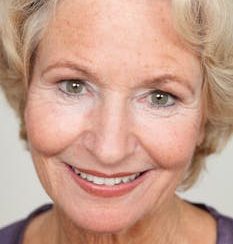
At 70, I've finally become the woman I never let my children see—the one who dances in kitchens, wastes afternoons painting badly, and pursues joy without justification—and watching them struggle to understand this version of me is when I realized the true cost of being a perfect mother who forgot to be human.
This morning I painted a tree that looks more like a wet mop, and I laughed so hard at it that the dog came in from the other room to check on me. The paint was still drying on my fingers when I propped it against the window anyway, beside the other mediocre watercolors I refuse to throw away. This is what seventy looks like for me now — badly painted trees, slow coffee, Italian verbs I keep forgetting, and a kind of laughter my children have almost never heard.
That's the part that stops me cold. Not the bad painting. The laughter.
Because when I look back at photos from my children's childhood, I see a woman I barely recognize. Not because of the younger face or darker hair, but because of what's missing from her eyes. There's duty there, certainly. Love, absolutely. But joy? Spontaneity? The wild, uncontained essence of who I was before I became "Mom"? Those had been carefully packed away, like good china saved for occasions that never came.
The invisible woman behind the mother
My children knew a mother who read them bedtime stories but never saw me lost in a novel at 2 AM just because I couldn't put it down. They watched me teach them to ride bikes but never knew I once dreamed of hiking the Appalachian Trail. They saw me make their Halloween costumes with precise attention to detail but never witnessed me dress up just because I felt beautiful that day.
The tragedy wasn't that I sacrificed for them. The tragedy was that I made sacrifice my entire identity. In trying to be the perfect mother, I erased the woman, and in doing so, I robbed them of knowing that mothers are allowed to be whole human beings.
When responsibility becomes a prison
After their father left, I built our life on a foundation of schedules and systems. Wake up, make breakfast, pack lunches, drop off at school, teach five periods of English, grade papers during lunch, pick them up, homework, dinner, baths, bed. Repeat. The weekends brought their own rigid structure: laundry, grocery shopping, meal prep, cleaning. Every moment had a purpose, every action had a reason.
Do you know what happens when you live like this for years? You forget how to exist without an agenda. You lose the ability to waste time beautifully. You become so efficient at managing life that you forget to actually live it.
I remember one afternoon when Daniel was about ten. He asked if we could just go to the park, not for soccer practice or a planned playdate, but just to go. I actually had to check my planner. When we got there, he ran off to play while I sat on a bench mentally planning the week's meals. He came back and asked, "Mom, why don't you ever play?" I didn't have an answer. I had forgotten that adults were allowed to play.
The lessons we teach without words
Virginia Woolf wrote, "A woman must have money and a room of her own if she is to write fiction." But what if the room exists and we never enter it? What if we have the key but convince ourselves the door must stay locked?
My children learned to be responsible, reliable, and capable. These are gifts, certainly. But they also learned that rest was laziness, that hobbies were luxuries, that joy needed to be earned. They watched me put myself last so consistently that they internalized this as normal, even noble.
When Grace had her first child, she called me crying one night. "I don't know who I am anymore," she said. "I'm just someone's mother, someone's wife, someone's employee." I held the phone, my heart breaking, because I knew I had modeled this disappearing act so perfectly that she thought it was the only way to love.
The thawing of a frozen life
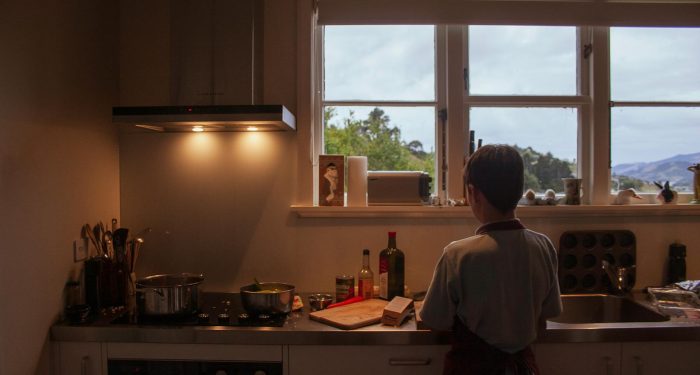
Change came slowly, like spring after a particularly harsh winter. My second husband would find me in the kitchen, efficiently preparing dinner, and he'd put on music. Not background music, but dancing music. At first, I'd resist. "I need to finish this," I'd say. But he'd take the spoon from my hand and spin me around our small kitchen until I remembered that I once loved to dance.
The breast cancer scare at 52 was another crack in my armor. Sitting in that waiting room, I didn't think about the papers I needed to grade or the meals I needed to prep. I thought about the poetry I used to write in college, the art classes I'd always wanted to take, the way I used to sing in the shower before I worried about waking everyone up.
When the results came back clear, I made a promise to myself: one hour a day of something purposeless. It was harder than you might think. I'd sit with a book of poetry and feel guilty. I'd start a watercolor and think of six other things I should be doing. But slowly, slowly, I remembered how to exist without justification.
Becoming the woman I wish they'd known
Now, at 70, I'm finally the woman I wish my children had grown up watching. I spend entire mornings in my garden, not because it needs tending, but because I love the feeling of soil between my fingers. I meet friends for coffee and let the conversation wander wherever it wants to go. I take watercolor classes where I'm spectacularly mediocre and completely delighted.
But here's what breaks my heart: my children don't quite know what to do with this version of me. When I told Daniel I was learning Italian, he asked, "For what?" When I mentioned joining a hiking group, Grace worried I was "overdoing it." They're not comfortable with me pursuing joy without purpose because I never showed them it was allowed.
I see them struggling with the same prison I built for myself. Grace schedules her self-care between obligations. Daniel works through illnesses, vacations, weekends. They've inherited my inability to rest, to play, to be. When I suggest they take time for themselves, they look at me with confusion, as if I'm speaking that Italian I'm learning.
Final thoughts
If I could go back, I wouldn't be a less devoted mother. But I would let my children see me as a person who happened to be their mother, rather than a mother who used to be a person. I would dance in the kitchen while dinner burned. I would read books that made me laugh out loud. I would pursue dreams that had nothing to do with them, showing them that love multiplies when we're whole, it doesn't divide.
What I don't know — what I may never know — is whether any of this reaches them in time. Whether watching their mother finally laugh at a badly painted tree is enough to loosen something they learned too early and too well. Some nights I believe it is. Other nights I watch Grace answering emails at eleven and I think the script I handed her is already set in a handwriting she can't read her way out of.
Maybe it's too late. Maybe it isn't. Maybe the most honest thing I can say at seventy is that I'm still painting the trees badly, still learning the Italian, still hoping they're watching — and still not sure what they'll do if they are.