

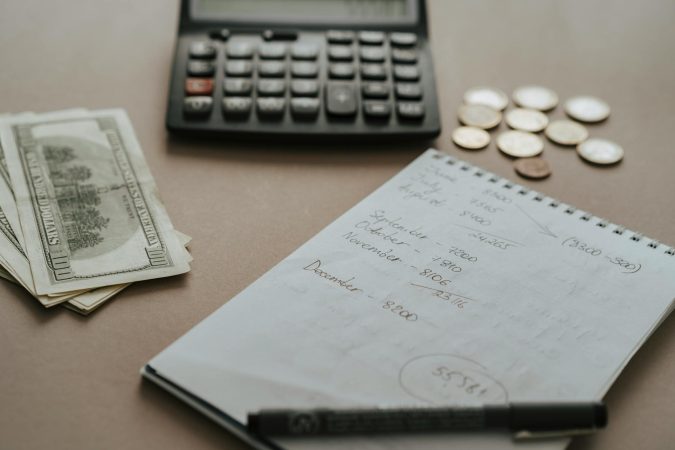
The money arrived, but the nervous system never got the memo — and these nine invisible habits are the proof.
I still remember the exact moment I realized something was off about how I experienced comfort. I was sitting at a resort pool — the kind with towels already folded on the lounge chairs — and instead of relaxing I was doing arithmetic. The room was four hundred a night. We'd been there two days. That was eight hundred dollars for roughly six hours of actual poolside time, which meant each hour of lying there doing nothing cost me about a hundred and thirty-three dollars. I knew this was absurd. I knew I could afford it. But my body didn't know. My body was still operating on old software, a set of assumptions about money and comfort that no amount of professional success had managed to fully overwrite.
That moment cracked something open for me. I started paying attention to the small, almost imperceptible ways that an early awareness of financial limits had wired habits into me — habits that no salary, no business milestone, no zeroes on a bank statement could fully erase. And over the years, through honest conversations with people who'd traveled similar economic distances, I noticed the same invisible habits showing up again and again.
The Math That Runs in the Background
The vacation calculation is the one people laugh about, but the laughter always has an edge of recognition. You're at a nice dinner, and somewhere behind the conversation a quiet calculator is running: this appetizer costs what a full grocery trip used to cost. You're enjoying a spa day and part of your brain is converting the bill into the number of hours someone would have had to work to cover it. Research suggests that growing up with financial scarcity creates lasting patterns in how people make financial decisions, even long after their circumstances have changed. The math doesn't stop when the money arrives. It just becomes a background process you can't seem to close.
This is the first invisible habit: the inability to experience leisure without converting it into a cost-per-unit-of-enjoyment equation. You can afford the vacation. You genuinely want to be there. But enjoyment and accounting have become so tangled together that separating them feels almost impossible.
Frugality as Identity, Not Strategy
The second habit is related but distinct: you still save things. Rubber bands. Glass jars. The nice bag from a clothing store. You keep the hotel shampoo even though you could buy a case of better shampoo without thinking about it. Writers on this site have explored how habits like unplugging appliances and checking receipts reveal something deeper than thrift. These small conservation behaviors aren't about money anymore. They're about identity. Throwing away a perfectly good container feels like a betrayal of the person you once were, of the mindset that shaped you.
The third habit lives next door to the second: you experience a flash of genuine anxiety when someone else is wasteful. A friend leaves half a plate of food at a restaurant and your stomach tightens. A colleague throws away a working pen because it's the wrong color and something in you recoils. You've learned to hide the reaction, but it's there, fast and involuntary, like flinching at a loud noise.

The fourth habit is guilt around spending on yourself, even when the spending is rational. You can buy things for other people with relative ease, but purchasing something purely for your own pleasure activates a kind of internal tribunal. Do you really need it? Couldn't that money go somewhere more responsible? You end up justifying a purchase the way a lawyer justifies a case, building an argument for the defense before you've even swiped the card.
The Invisible Armor of Competence
The fifth habit is quieter and harder to name. People who grew up with financial awareness and later earned real money often become hyper-competent in ways that look like ambition but are actually survival patterns that never switched off. You research everything before buying it. You read the fine print. You comparison shop even when the difference between options is negligible. You do this because, somewhere deep in your nervous system, you learned that mistakes cost more when you have less margin. That vigilance was adaptive once. Now it just means you spend forty-five minutes reading reviews for a thirty-dollar toaster.
The sixth habit is the inability to fully trust financial stability. You have savings. You have investments. You have more than enough. But you still carry a low hum of worry that it could all disappear. You check your bank balance more often than necessary, the way someone who once had a house fire checks the stove. Psychologists describe this as a scarcity mindset — a lens through which the world always appears to be running low. The scarcity isn't in your account anymore. It's in your perception.
The seventh habit catches people off guard: you feel uncomfortable around people who grew up wealthy, even now that your income matches or exceeds theirs. There's a subtle code that old money carries — a fluency with comfort, with leisure, with spending without narrating the spending to yourself. You can mimic it, and you do, but there's always a slight delay, a half-second where you're translating from your original language into theirs. You notice the ease with which they order the more expensive wine, the way they don't glance at the right side of the menu first. You perform that same ease, but performance and instinct feel different from the inside.

The Reluctance to Ask for What You're Worth
The eighth habit shows up at work and in negotiations. People who grew up cost-conscious and climbed into real earning power often struggle to ask for what they're worth. They accept the first offer. They feel grateful for the opportunity in a way that undercuts their leverage. They carry an internalized sense that they're lucky to be here at all, that asking for more might reveal them as someone who doesn't belong. This connects to research on the stickiness of poverty: the way economic origins cling to people, shaping not just their bank accounts but their sense of entitlement to comfort, advancement, and rest.
I've noticed this pattern in my own career. When I was a management consultant, and later when I was building Ideapod, negotiating compensation or pricing always felt fundamentally different because part of me still believed that any steady income was a gift rather than an exchange. You know, intellectually, that your labor has market value. But knowing and feeling are two different countries, and the border crossing between them is slow.
The One Nobody Talks About
The ninth habit is perhaps the most invisible of all, because it masquerades as a virtue: the compulsion to be low-maintenance. You don't send food back at restaurants. You don't ask for upgrades. You tip generously and then feel strange about having been in a position to tip at all. You carry a deep reluctance to take up space with your needs, because somewhere in your early wiring, needs were things you managed quietly so as not to add to anyone's burden.
This is the habit that costs the most in the long run, because it doesn't just affect how you spend money. It affects how you show up in relationships, in business, in life. You become the person who says "I'm fine with whatever" when you actually have a preference. You become the person who absorbs inconvenience rather than naming it. You become, in a very real sense, someone who has earned the right to comfort but cannot fully claim it.
Why These Habits Persist
I've spent a lot of time thinking about why these patterns are so resistant to change — and honestly, I think it comes down to something the research on scarcity mindset keeps confirming: financial habits formed under constraint don't just live in your conscious decision-making. They live in your nervous system. They live in the split-second reactions that happen before your rational mind can intervene.
Having founded companies and navigated the uncertainty of entrepreneurship across multiple countries — from New York to Bangkok to Singapore — I've had plenty of opportunities to watch my own invisible habits surface in unfamiliar settings. The specific numbers in my bank account changed. My address changed. But the background hum of vigilance, the quiet arithmetic, the flinch at waste — those traveled with me.
The good news, if there is good news, is that awareness is the first crack in the pattern. You can't overwrite code you don't know is running. But once you see these habits for what they are — adaptations that were once necessary and are now mostly outdated — you gain at least the possibility of choosing differently. Not effortlessly. Not completely. But differently.
The pool is still four hundred a night. The towels are still folded. And somewhere in the background, the calculator is still running. But these days, I can hear it, name it, and sometimes — not always, but sometimes — I can set it down and just lie in the sun.