
The small habits that made being around them feel different, and why most of us have quietly stopped practicing them.
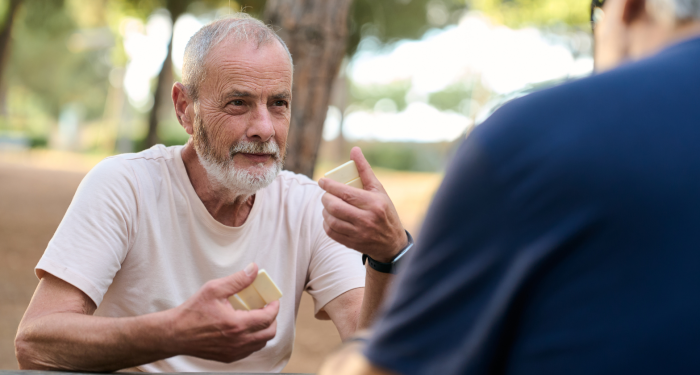
I was at a function recently where an older man, probably in his late seventies, arrived early. He didn't make a fuss about it. He didn't apologise either, in that strange way people do now when they show up before everyone else. He just sat down quietly, waited, and started a small conversation with the younger person beside him who was on their phone.
I watched him for a few minutes. Nothing dramatic happened. But there was something about him I don't see often anymore. A kind of self-contained dignity. A way of being in a room without needing it to revolve around him.
That's what got me thinking about class. Not the social kind. The other kind. The kind my grandparents had, and my wife's grandparents had, and that most of us, including me, have quietly stopped practicing.
Being on time meant something
My grandfather used to say that being late was a small way of telling someone their time mattered less than yours. He didn't put it that politely. But that was the meaning.
He'd arrive ten minutes early to everything. The dentist. A coffee with a friend. A flight. There was no panic about it. It was just baked into how he moved through the world.
I think people today see punctuality as logistics. Something to manage. Something to optimise around. But for older generations it was a quiet form of respect. Showing up when you said you would was a way of saying that the other person was worth the small inconvenience of not running your own life entirely on your own schedule.
I'm not always good at it. I run a business with my brothers, my daughter is nearly one, and time has become more elastic than I'd like. But when I catch myself rushing in five minutes late, I think of him. And I notice that something small has been spent that I won't get back.
They didn't say everything they thought
There was a kind of restraint that older people had which I've come to admire more as I get older.
Not silence. Not bottling things up. Just discretion. A sense that not every opinion needed to be expressed, not every disagreement aired, not every private matter shared with the room.
My grandmother had strong opinions about people. She didn't pretend she didn't. But she also didn't share them at dinner. She'd give you a look. A pursed mouth. Sometimes a small comment in private later. That was it.
We live in a world that confuses honesty with disclosure. Saying every passing thought is treated as authenticity. But the older I get, the more I notice that the people I trust most are the ones who don't tell me everything. They keep things. They hold things. And what they do say carries more weight because of it.
They wrote things down
A thank-you note. A condolence card. A birthday message in their own handwriting.
It feels old-fashioned now. But the gesture wasn't about formality. It was about effort. The act of sitting down, finding a pen, writing a few lines, addressing an envelope, walking to a postbox. The whole sequence was the point.
A text message can carry the same words. It doesn't carry the same weight. We all know this, even if we don't talk about it. The card on the mantelpiece stays there for a week. The text gets swiped past in two seconds.
My wife's grandmother in Vietnam still writes letters. Long ones, in beautiful handwriting, on thin paper. When one arrives, the whole family stops what they're doing.
Disagreement didn't mean war
This is the one I think we've lost the most.
Older generations knew how to disagree with someone without deciding the person was their enemy. You could argue about politics, religion, money, family, all the difficult stuff, and still sit down to lunch together the next day.
I watch people now and I notice how quickly disagreement becomes contempt. The other person isn't wrong, they're stupid. They're not just mistaken, they're a bad person. There's no room left for someone to hold a different view and also be someone you love.
My grandfather had a brother he disagreed with on almost everything. They'd argue at the kitchen table for an hour and then go fishing together in the afternoon. Neither of them seemed to need to settle the argument once and for all. They'd both said their piece. They'd both heard the other. That was enough.
They dressed for the room, not for themselves
Older people understood that what you wore wasn't really about you.
It was about respecting the occasion. A funeral. A wedding. A meeting with someone older than you. A visit to a temple or a church. The clothes were a way of saying, this matters to me, I'm taking it seriously.
We've moved a long way from that. Most of us dress for our own comfort, our own mood, our own self-expression. Which is fine, most of the time. But there's something worth keeping in the small act of dressing up a little for the things that matter.
My father-in-law still puts on a clean shirt for Sunday lunch with his grandchildren. Not because anyone asks him to. Just because that's how he was raised. And there's something about it that the kids pick up on, even if they couldn't tell you what.
They knew when to leave
A short visit. A quiet exit. Not staying past the moment when you should have gone.
Older people had a feel for this. They could read a room. They knew when the host was tired, when the dinner was over, when the conversation had naturally ended. They didn't need to be told.
There's a kind of grace in leaving while people still wish you'd stayed.
A lot of social awkwardness now comes from not knowing how to end things. Conversations stretch past their natural finish. Visits run long. People hang around because they don't want to seem rude leaving, and the host can't quite ask them to go. Everyone loses a little.
They noticed the people serving them
This one is the test. How someone treats the waiter, the driver, the cleaner, the person at the counter. The people who can't do anything for you.
The older people I admired seemed to have this almost without thinking. A please. A thank you. Eye contact. A small chat about the weather. A moment of recognition, even with someone they'd never see again.
I notice it most in older Vietnamese people when I'm in Saigon. The way my wife's aunts speak to the woman who delivers their groceries, or the security guard at the building. It isn't a performance. It isn't for show. It's just how they were taught to move through the world.
You can tell a lot about a person by how they speak to someone who has no power over their life.
What I'm left with
None of this requires a return to some imagined golden age. Older generations got plenty wrong. But there were a handful of small habits, almost invisible, that made being around them feel different. Most of them are still available to us. We've just stopped reaching for them.
My daughter is nearly one. She'll learn most of what she learns from us by accident. How I speak to the man at the coffee shop in the morning. Whether I show up on time. Whether I bother to write the card. That's where most of it gets passed on.