There's a pan bubbling away on my stove right now. Tomatoes, courgettes, peppers, and onions all melting into each other, the smell of garlic and olive oil drifting through the kitchen.
My cat is sat on the windowsill, half-asleep in the afternoon sun, completely unbothered by the chopping and stirring.
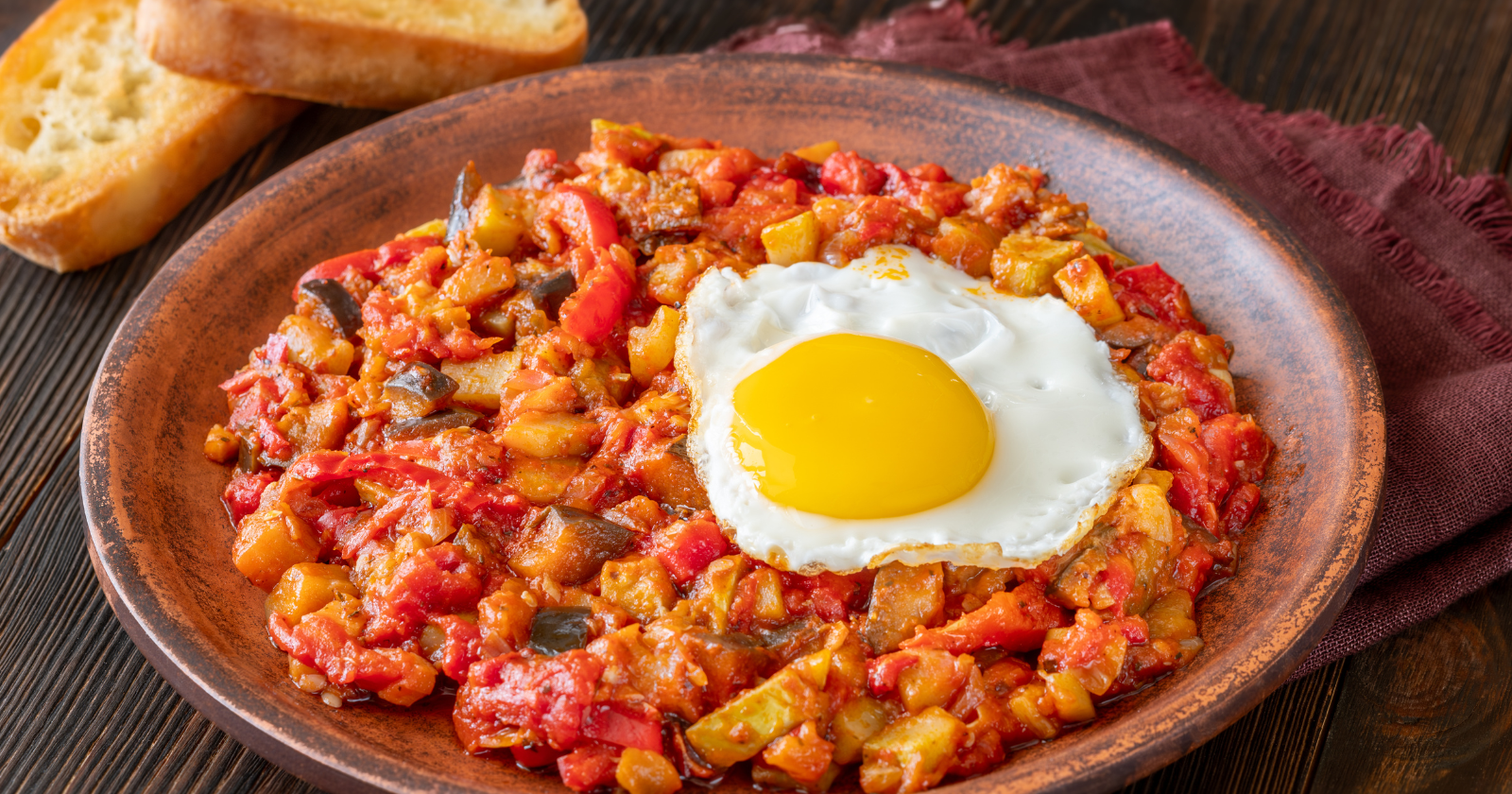
This is pisto. The Spanish answer to ratatouille, and somehow, the dish that finally turned me into someone who actually enjoys vegetables.
I know that sounds dramatic for a stew of tomatoes and courgettes. But for someone who spent the first 26 years of her life pushing veggies around her plate, it's nothing short of a miracle.
I was the kid who hid peas in her napkin
Growing up in the UK, vegetables were the punishment portion of my dinner.
You know that bit of the plate where the soggy carrots and limp broccoli sat next to whatever you actually wanted to eat? That was my sworn enemy.
My mum would do her best. She'd boil, steam, season, sometimes try and disguise them under turmeric and cumin (Pakistani households tend to believe spice can fix anything). But by the time veggies hit the plate, they'd usually lost any will to live.
I'd push them around for a bit, sneak a few onto my brother's plate when no one was looking, and call it a day.
The trouble was, this didn't really stop when I became an adult. I'd buy veggies with the best intentions, leave them to rot in the fridge for a week, and feel guilty when I had to throw them away.
For someone who cared about her health in theory, I had a very strange relationship with the food that's supposed to be good for you.
Then I moved to Spain
When I left the UK and settled in southern Spain, I wasn't thinking about my vegetable habits. I was thinking about sunshine, slower mornings, and finally being able to write for a living.
But Spain has a way of changing your relationship with food, whether you mean for it to or not.
For one thing, the produce here is different. The tomatoes actually taste like tomatoes. The peppers are sweet and fragrant. The courgettes come from a stand at the market, not wrapped in plastic, and they cost almost nothing.
For another, vegetables aren't an afterthought here. They're the main event in plenty of dishes, and nobody apologises for that.
My neighbour was the one who first introduced me to pisto. She'd brought a tupperware round one afternoon, set it on my counter, and told me to try it with a bit of bread.
I'll be honest, I was polite about it. I thanked her and put it in the fridge planning to eat a bit out of obligation later.
But that evening I had a few spoonfuls, and then a few more, and before I knew it I'd eaten half the tub straight out of the container, standing in my kitchen with a piece of bread in one hand.
What makes pisto so good
Pisto is one of those dishes that sounds too simple to be exciting. A few veggies, some good olive oil, a bit of garlic. That's basically it.
But the magic happens in the way it all cooks together. The vegetables aren't crisp or al dente. They're slow-cooked until they almost melt, until the flavours blend into something rich and warm and comforting.
It doesn't taste like veggies that have been forced onto your plate. It tastes like a meal someone made with care.
The other thing I love about it is how flexible it is. You can serve it on bread, alongside rice, with a fried egg cracked on top, with pasta, with a tortilla, on its own. I've even eaten cold leftovers for breakfast more times than I'd like to admit.
It's completely vegan in its purest form, but nothing about it feels like deprivation. It's the kind of dish that satisfies you properly.
My pisto recipe, the way I make it now
I should say from the start that there's no single correct way to make pisto. Every Spanish household has its own version, and mine has shifted over the years based on what's in season and what my neighbour has told me off about.
But this is the version I make most weeks. Enough for two big servings, or one of me eating it three nights in a row.
You'll need:
- 1 large onion
- 4 cloves of garlic
- 2 green peppers
- 1 red pepper
- 2 medium courgettes
- 1 small aubergine (optional, but I like it)
- 5 ripe tomatoes, or 1 tin of good quality chopped tomatoes
- A generous glug of good olive oil
- A teaspoon of sweet smoked paprika (pimentón dulce)
- Salt and pepper
- A pinch of sugar to balance the tomatoes
Start by chopping everything into small, roughly even cubes. Not tiny, but not chunky. You want them to cook evenly and break down together.
Heat a good amount of olive oil in your biggest pan. More than feels right, honestly. This is one of those dishes where the oil isn't optional, it's part of the flavour.
Add the onion and let it soften slowly over a low heat for about ten minutes. You're not browning it, just letting it get sweet and soft.
Throw in the garlic, then the peppers. Cook them down for another ten minutes or so, stirring now and again.
Next, add the courgettes and the aubergine if you're using it. Stir everything together, season with salt and pepper, and let it all cook for another ten minutes.
Finally, add the tomatoes, the paprika, and a pinch of sugar. Lower the heat right down, put a lid on it, and leave it to bubble away for at least 30 to 40 minutes. Stir occasionally, but mostly just let it do its thing.
You'll know it's ready when the vegetables have lost their shape, the tomatoes have broken down into a thick sauce, and the whole thing tastes like more than the sum of its parts.
Serve it warm with crusty bread, a fried egg on top, or save it for the next day when it's somehow even better.
I enjoy it with bread, rice, or even mixed in with some spaghetti.
What veggies taught me about patience
Falling in love with pisto wasn't really about pisto.
It was about learning that food, like most things in life, gets better when you slow down with it. When you let it take the time it needs. When you stop trying to force it to be something it isn't.
I spent years trying to eat vegetables I didn't enjoy, in ways that didn't suit them, because I thought that's what healthy eating looked like.
Pisto taught me that the right ingredients, cooked the right way, can change everything.
These days, I cook a pot of it most weeks. I eat it on bread, on rice, straight from the pan when no one's looking. My cat watches from the windowsill, completely unimpressed, and I get to feel like a person who actually enjoys her vegetables.
Some days, that feels like the most unexpected win of my whole move to Spain.