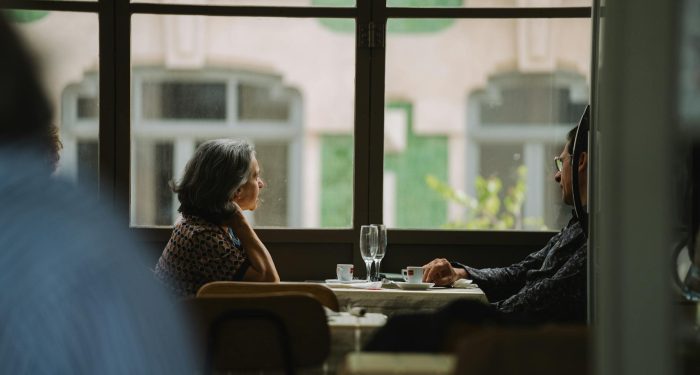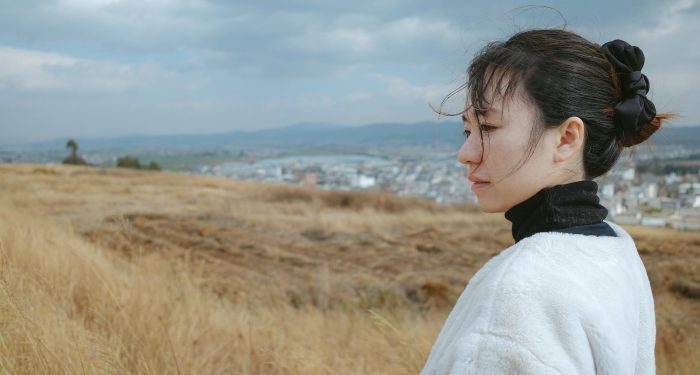
It’s not the words that stay with you - it’s the quiet doubt they plant in your own mind. When love is still there, even unfair judgments can feel like truths you’re forced to carry.
When your adult child tells you who they think you are, and the picture they paint looks nothing like the person you've spent a lifetime trying to be, the first wound is obvious. It's the shock of hearing someone you love describe you as if you're the villain in their story.
But that isn't the deepest cut. The deepest cut comes later, quietly, in the hours and days that follow, when part of you starts to wonder whether they're right. When you catch yourself replaying every decision you ever made as a parent and suddenly seeing it through their eyes. When the accusation you initially rejected starts to burrow in, not because the evidence supports it, but because the person making it is someone whose opinion you cannot dismiss. Because you love them. And love, it turns out, has a terrible design flaw: it makes you take seriously the things said by the people who matter most, even when those things aren't true.
Why love opens the door to internalisation
This isn't weakness. It's actually one of the most fundamental features of human attachment. Attachment theory, first developed by psychiatrist John Bowlby, proposes that human beings form internal working models of themselves based on their closest relationships. These mental frameworks don't just shape how we see others. They shape how we see ourselves. When the relationship is healthy, the working model reinforces a stable, positive sense of self. When the relationship turns critical or rejecting, the model shifts. Self-doubt creeps in. The question "Am I who they say I am?" starts to feel less like a rhetorical exercise and more like a genuine crisis.
Most of the research on attachment focuses on children internalising experiences with their parents. But the mechanism works in both directions. Parents form deep attachment bonds with their children too. And when an adult child redefines that parent as harmful, neglectful, or toxic, the parent's internal working model comes under assault from the one person whose love they've organised their life around. The accusation doesn't land because it's accurate. It lands because it comes from inside the fortress.
The perception gap that makes everything worse
Research from Ohio State University studying over 1,000 estranged mothers found that parents and adult children almost never agree on what caused the rift. Mothers overwhelmingly attributed the estrangement to external influences or their children's mental health struggles. Adult children pointed to feeling unloved, unsupported, or dismissed. An earlier study of 898 unmatched parents and adult children found virtually no overlap in how the two sides explained what went wrong.
This perception gap is critical to understanding why love makes the accusation so destructive. If your child's account of your parenting lined up perfectly with your own memory, you could process it rationally. You could say: yes, I did that, and here's why, and here's what I'd do differently. But it doesn't line up. It feels like you're being convicted of a crime you don't remember committing, by the one witness whose testimony you can't dismiss. And so you oscillate. One hour you're certain they're wrong. The next hour you're tearing apart your entire history looking for evidence that they might be right.
That oscillation is the cruelest part. Not the verdict. The inability to reach one.
Why you believe them even when you shouldn't
There are several psychological mechanisms at work here, and none of them have anything to do with whether the accusation is warranted.
The first is what psychologists call the self-referential effect. When information is connected to your identity, to who you are as a person, it's processed more deeply and remembered more vividly than neutral information. Your child's characterisation of you isn't just data. It's a statement about the central project of your adult life: raising them. That's why it hits differently than criticism from a colleague or a stranger. It strikes at the core of your self-concept.
The second is the authority of intimacy. We grant more credibility to the people who know us best, even when they're viewing us through a distorted lens. Your child grew up watching you from closer range than anyone else on earth. That proximity creates a presumption of accuracy. If they saw something in you, surely it must be there. But proximity doesn't guarantee clarity. In fact, research on intergenerational dynamics shows that the closer the relationship, the more emotional loading gets attached to memories. Children don't record their parents objectively. They record them through the filter of their own needs, fears, and developmental stage. What they remember is real to them. But real and accurate are not the same thing.
The third is the parental guilt instinct. Most parents carry a low-grade guilt about their parenting at all times. Did I work too much? Did I push too hard? Was I emotionally available enough? This pre-existing vulnerability means that when an accusation arrives, it doesn't have to convince you from scratch. It just has to tap into the doubt that was already there. And love, because it makes you care so intensely about the outcome, ensures that the doubt is always there. A parent who didn't care wouldn't lose sleep over this. You lose sleep precisely because you cared enough to worry about getting it right, and now someone is telling you that you didn't.
The Buddhist lens on borrowed suffering
I wrote about this pattern in my book Hidden Secrets of Buddhism: How To Live With Maximum Impact and Minimum Ego. In Buddhist philosophy, there's a distinction between first-arrow and second-arrow suffering. The first arrow is the event itself: your child says something that wounds you. You can't prevent that. The second arrow is what you do with it afterwards: the rumination, the self-blame, the wholesale revision of your life story to accommodate someone else's interpretation. The second arrow is the one you fire at yourself. And it causes far more damage than the first.
The love-driven internalisation I'm describing is essentially a second arrow delivered by the most trusted hand in your life. Your child fires the first arrow. Then your love for them picks it up and drives it deeper, because love tells you: if they believe it, maybe it's true. Maybe I really am the person they describe. Maybe everything I thought I knew about myself was self-serving delusion.
But here's what I've come to understand through years of meditation practice and sitting with difficult truths: the fact that someone you love sees you a certain way does not make that perception fact. Perception is shaped by pain, by timing, by therapeutic frameworks, by the stories we need to tell in order to make sense of our own suffering. Your child's pain is real. Their interpretation of its source may not be.
Holding two truths at once
The way through this isn't to reject your child's perspective entirely. That creates a different kind of prison: the defensive posture where you spend all your energy proving them wrong instead of understanding what they're actually trying to communicate. Psychologist Joshua Coleman, who specialises in family estrangement, emphasises that even parents who did a good job may find that their child experienced the same events very differently. The capacity to hold that possibility without collapsing into self-destruction is one of the hardest things a parent can learn.
But the way through also isn't to accept the accusation wholesale. Carol Ryff's research on psychological well-being identifies self-acceptance as requiring a realistic appraisal of yourself, including your limitations. Realistic appraisal. Not someone else's appraisal imported uncritically into your self-concept. You can acknowledge that you were imperfect, that you had blind spots, that you caused harm you didn't intend, and still maintain that you are not the person your child has described. Both things can be true. Imperfect and unworthy are not synonyms.
What I've learned from watching this up close
I'm 37. I have a young daughter. I'm already acutely aware of how much my sense of self is now wrapped up in being her father. If she grows up one day and tells me I failed her, I already know what will happen: I'll believe her. Not because it's true, but because I love her enough to take it seriously. That's the design flaw. Love doesn't come with a filter that separates valid criticism from projection, pain, or misattribution. Love just opens the door and lets it all in.
The work, then, isn't about building a wall against your child's perspective. It's about building a self that can absorb the blow without shattering. A self that can say: I hear you. I take your pain seriously. I'm willing to look at myself honestly. And I'm also not willing to let your version of me become the only version I carry. Because I was there too. And my memory of who I tried to be also counts for something.
That's not arrogance. That's not defensiveness. That's self-preservation in the deepest, most honest sense of the word. And if you're a parent going through this right now, you need to hear it: the fact that you're tormented by their words is itself proof of how much you care. A person who didn't love wouldn't hurt this much. The pain is not evidence of guilt. It's evidence of love. And love, even when it makes you vulnerable to accusations you don't deserve, is never something to be ashamed of.
What’s Your Plant-Powered Archetype?
Ever wonder what your everyday habits say about your deeper purpose—and how they ripple out to impact the planet?
This 90-second quiz reveals the plant-powered role you’re here to play, and the tiny shift that makes it even more powerful.
12 fun questions. Instant results. Surprisingly accurate.