People who simply walk through daily life—without tracking a single step—often experience better long-term health outcomes than those obsessed with hitting numerical targets, according to recent research on sustainable wellness habits.
In 2013, when the UK Biobank strapped activity trackers onto tens of thousands of adults for a week-long monitoring study, something unexpected showed up in the data. The participants who benefited most from physical activity weren't the ones logging gym hours or training for races. They were the ones who walked to the store, climbed stairs instead of riding elevators, and carried groceries up the block. They weren't exercising. They were just living. And the health outcomes were remarkable.
The conventional wisdom around walking as wellness goes something like this: get your 10,000 steps, track your distance, close your rings, and screenshot the results. The assumption is that measurement drives consistency, and consistency drives health. But a growing body of evidence suggests that the people who walk every day without tracking anything may have stumbled into something more durable than any step-count streak. Not because they're disciplined. Because they've accidentally removed the very thing that makes most wellness habits collapse.
The counterargument worth taking seriously: surely data helps. Fitness trackers have motivated millions of people to move more, and the gamification of walking has brought real results. That's true. But there's a difference between a habit that requires an external reward loop to survive and one that sustains itself because it's woven into the texture of someone's day. The people in the second camp rarely show up in wellness marketing. They don't post about it. They just keep walking.
Here are four patterns that separate them from the rest.
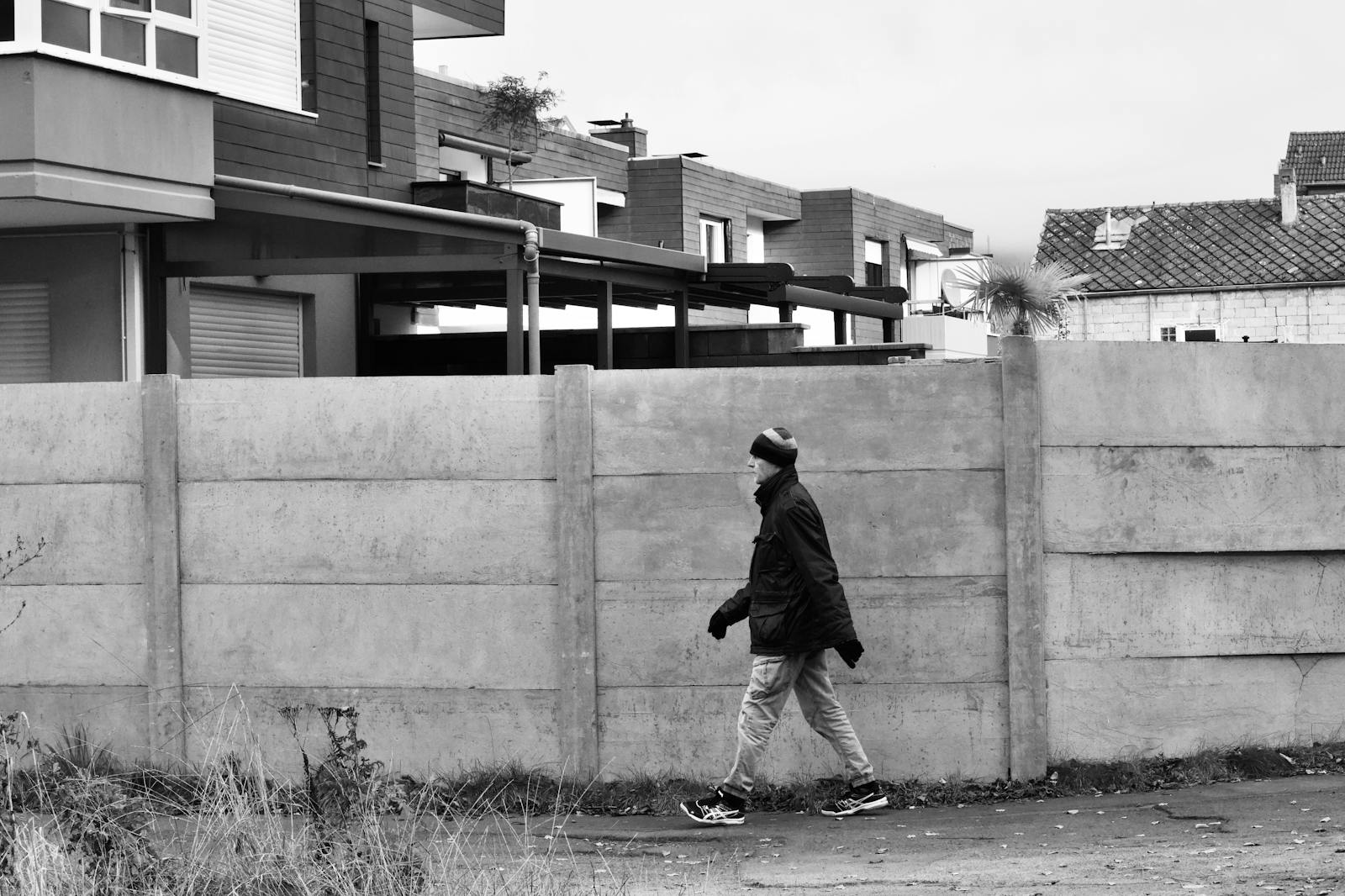
1. They removed the performance layer, and the habit got stickier
When you track a walk, you've introduced a scorecard. And scorecards change the nature of the activity. A 20-minute walk that felt restorative suddenly feels insufficient if the app says you only hit 2,400 steps. The walk didn't change. Your relationship to it did.
This is where research on intrinsic motivation gets interesting. Studies have found that while extrinsic incentives can boost performance in the short term, intrinsic motivation is a stronger predictor of sustained behavior, particularly for tasks that require quality over quantity. Walking is exactly that kind of task. The benefit isn't in how far you go. It's in the fact that you keep going.
People who walk without tracking have, often without realizing it, protected their intrinsic motivation from being crowded out by metrics. They walk because it feels right, because the air clears their head, because the dog needs it, because the coffee shop is six blocks away. These reasons don't expire when a battery dies or a subscription lapses.
The behavioral research backs this up. Studies on motivation have shown that external rewards can sometimes diminish intrinsic drive. Adults aren't immune to this mechanism. Slap a number on a walk and you've subtly shifted it from something you want to do into something you're performing.
2. They accidentally built what researchers call "vigorous intermittent lifestyle physical activity"
There's a term for the kind of movement daily walkers accumulate without thinking about it: VILPA, or vigorous intermittent lifestyle physical activity. It refers to short bursts of higher-intensity effort that happen naturally during everyday routines, things like walking briskly uphill, hauling bags up a staircase, or picking up the pace to cross a street before the light changes.
A University of Sydney study published in the British Journal of Sports Medicine analyzed data from over 22,000 participants and found that women who averaged just 3.4 minutes of VILPA daily were 45 percent less likely to experience a major cardiovascular event. They were 51 percent less likely to have a heart attack and 67 percent less likely to develop heart failure.
Even lower amounts mattered. A minimum of 1.2 to 1.6 minutes per day was associated with a 30 percent lower risk of major cardiovascular events.
The key finding: these participants weren't exercisers. The ones benefiting from VILPA were people who simply had active daily lives. According to research on vigorous intermittent lifestyle physical activity (VILPA), short bursts of movement integrated into daily life may benefit people who don't engage in structured exercise.
People who walk every day without tracking tend to accumulate VILPA without labeling it. They take the stairs because the elevator is slow. They walk fast because they're running late. The health benefit compounds in the background, completely invisible to anyone not wearing a research-grade accelerometer.
3. They've freed movement from both anxiety and identity, and that's what makes it last
There's a particular kind of stress that comes from quantifying a behavior that's supposed to reduce stress. You go for a walk to clear your head, then check the app and feel like you didn't walk far enough, long enough, or fast enough. The relief you were seeking gets intercepted by a new source of evaluation.
This matters because recent clinical thinking has begun to reexamine the relationship between anxiety and demand-driven behavior, questioning whether anxiety is always the cause or sometimes the result of constant performance pressure. When a wellness habit feels like a demand, the body's stress response doesn't distinguish between "your boss needs this by Friday" and "you still need 3,000 more steps." Both register as evaluation. Both create tension.
And tracking doesn't just create performance anxiety. It creates identity vulnerability. There's a popular framework in habit literature that says you should tie a behavior to your identity. "I'm a runner." "I'm someone who walks 10,000 steps." The theory is that identity-based habits stick because they become part of who you are. But identity-based habits have a failure mode nobody talks about: when you stop performing the behavior, you lose the identity. And that loss is painful enough to make people give up entirely rather than scale back. The person who misses a week of their step goal doesn't just feel off-track. They feel like they've lost something about themselves.
People who walk daily without tracking have sidestepped both traps at once. Their walk is not a performance to be evaluated, and it's not a title to defend. There's no streak to break, no badge to forfeit, no metric that can tell them the walk wasn't enough. As one Forbes analysis on habit formation points out, starting small and keeping the stakes low is one of the most reliable strategies for making a behavior last. Untracked walking keeps the stakes at zero. No anxiety attached. No identity to lose.
That absence of pressure might be half the benefit.

4. They've made the reward the experience, not the outcome
Most wellness habits are future-oriented. You do them now to get a result later. Eat vegetables now, feel better in three months. Meditate now, reduce anxiety over time. Walk today, hit your weekly mileage goal by Sunday.
Untracked walkers have inverted this model. The walk itself is the reward. The feeling of air on skin. The rhythm of footsteps. The mental space that opens up when you're moving without agenda. There's no delayed gratification because the gratification isn't delayed.
This aligns with what researchers describe as the core elements of intrinsic motivation: autonomy, purpose, and a sense of meaning baked into the activity itself. When you walk without a tracker dictating your pace or distance, you've preserved all three. You choose when, where, and how far. The purpose is whatever you decide it is that day: to think, to decompress, to notice something you haven't noticed before. The meaning doesn't need to be assigned by an algorithm.
This is also why untracked walking tends to survive life transitions that destroy other habits. You can walk through a breakup, a job loss, a cross-country move. You can walk when you're injured and can't run, when the gym membership lapses, when the motivation for anything else has evaporated. The bar is so low and the reward so immediate that almost nothing can kill it.
I started running ultramarathons during grad school as a way to manage stress, and I still run. But I've noticed that on the days when I can't or don't want to run, it's the walk that holds. It's the walk that asks nothing of me and still gives something back. Running is a practice in sustained discomfort. Walking is a practice in sustained attention. Both matter. But only one survives every season of a life without needing any external structure to prop it up.
The habit that doesn't look like a habit
The wellness industry has a visibility problem. It rewards the habits that can be photographed, tracked, shared, and monetized. It largely ignores the ones that happen quietly, repeatedly, without fanfare. A person who walks every day without logging it will never trend on social media. They'll never earn a badge. They'll never have a before-and-after to post.
But they'll also never quit because their streak broke.
What untracked daily walkers have built, accidentally, is a habit with no single point of failure. No app to delete. No subscription to cancel. No identity to protect. No goal to miss. Just movement, integrated into the day like breathing or eating, so ordinary it barely registers as a choice.
Which brings us back to those UK Biobank participants. When Professor Stamatakis and his team analyzed data from more than 22,000 people who didn't engage in structured exercise, they found that even tiny accumulations of vigorous incidental movement, as little as a minute or two per day, were associated with dramatically lower cardiovascular risk. Researchers caution that VILPA should be understood as part of a broader approach to physical activity rather than a standalone solution. But the implication is hard to ignore: the most powerful health benefits in the dataset didn't come from people who were trying to exercise. They came from people who were just living actively, without a plan, without a tracker, without any awareness that what they were doing counted.
That's the quiet revelation buried in the data. The habit most likely to last is the one that never announces itself as a habit at all. The path into consistent movement doesn't always start with a goal. Sometimes it starts with a walk to the corner store that felt good enough to repeat tomorrow. The people who maintain wellness habits across decades tend to share this quality. Their habits are boring. Undramatic. Invisible to everyone except themselves.
And that's exactly why they last.
What’s Your Plant-Powered Archetype?
Ever wonder what your everyday habits say about your deeper purpose—and how they ripple out to impact the planet?
This 90-second quiz reveals the plant-powered role you’re here to play, and the tiny shift that makes it even more powerful.
12 fun questions. Instant results. Surprisingly accurate.