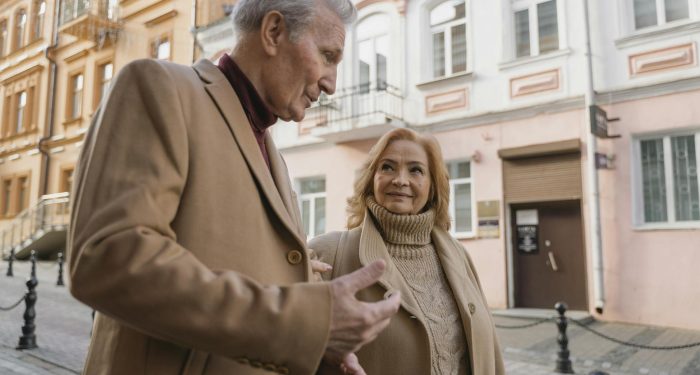
The man who once commanded a classroom of unruly teenagers with a single raised eyebrow now hesitates before moving a chair in his own living room, and watching this transformation has taught me something about identity that no one warns you about.
Last week, I watched my father ask my mother if it was okay to move the living room chair to catch better light for reading. This man, who spent forty years making split-second decisions in a classroom, managing dozens of teenagers daily, now hesitates before rearranging furniture in the house he's owned for three decades.
The shift didn't happen overnight. It crept in slowly after retirement, like watching someone gradually turn down their own volume. First, he stopped making dinner plans without checking. Then he began deferring on what to watch on TV. Now he asks permission for things that never required it before.
And here's what kills me: nobody made him do this. My mother never asked for this deference. If anything, she misses the man who used to confidently declare we were having Thai food tonight, no discussion needed.
When work becomes your entire identity
Growing up with teacher parents meant understanding that work wasn't just what they did – it was who they were. My father didn't just teach history; he was the teacher who could command a room of rowdy sixteen-year-olds with a single raised eyebrow.
For four decades, he walked into that building knowing exactly who he was and what value he brought. Students needed him. Parents respected him. Colleagues sought his advice. The structure of the school year gave rhythm to his life – September's fresh starts, December's holiday concerts, June's bittersweet goodbyes.
Then retirement arrived, and suddenly the teacher was just... dad. Husband. The guy with too much time on his hands.
What nobody talks about is how retirement strips away more than just your daily routine. It takes the framework that held your confidence in place. Think about it – when was the last time someone asked your father for his expertise? When did he last solve a problem that mattered to someone outside the family?
The invisible grief nobody acknowledges
We have rituals for death, divorce, and job loss. We don't have them for watching someone lose themselves while they're still right there.
This particular grief is complicated because on paper, everything looks fine. He's healthy. Financially secure. Has a loving family. He should be enjoying his golden years, right? That's what everyone keeps telling him. "You've earned this rest!" they say, not realizing rest feels like rust when you've defined yourself through action.
Psychologist Jessica Schrader points out that "Retirement is sometimes thought of with panic or perceived as a loss of identity." But even knowing this doesn't make it easier to watch.
The grief comes in small moments. Seeing him scroll endlessly through his phone because he has nothing urgent to attend to. Watching him over-explain his former career to anyone who will listen, desperately trying to reclaim that identity. Noticing how he lights up when someone asks for advice, then dims again when the conversation ends.
Why confidence needs context to survive
Here's what I've learned from watching this unfold: confidence isn't some fixed personality trait. It needs an ecosystem to thrive.
My father's confidence was built on daily evidence of his competence. Every successful lesson plan, every breakthrough with a struggling student, every parent conference where he helped solve a problem – these were deposits in his confidence bank. Retirement cut off the supply.
Now think about your own confidence. Where does it come from? Probably from places where you consistently see your impact, where your skills are recognized, where you know the rules and excel at the game. Strip those away, and even the most self-assured person starts second-guessing themselves.
The kitchen became a perfect metaphor for this shift. My father, who once experimented freely with recipes and hosted dinner parties without breaking a sweat, now asks if it's okay to use the expensive olive oil. Not because anyone ever criticized his cooking, but because he no longer has that external validation telling him his decisions are good ones.
The permission paradox that makes everything worse
The cruel irony is that the more he asks permission, the smaller he becomes in his own mind. Each question reinforces the belief that he needs approval. Each deferral confirms that his judgment alone isn't enough.
My mother tries to push back. "Just decide!" she'll say, frustrated by the constant checking in. But that frustration only reinforces his sense that he's doing retirement wrong, that he's somehow failing at this thing that's supposed to be easy.
It reminds me of something I learned working in hospitality – the guests who constantly apologized for existing were the hardest to serve well. Their self-diminishment created the very awkwardness they were trying to avoid. My father is now that guest in his own life, apologizing for taking up space he's fully entitled to occupy.
Finding new contexts for old strengths
Denise Taylor, author of Rethinking Retirement for Positive Aging, notes that "Retirement is stressful and can lead to mental health complications." But understanding the problem is only the first step.
What my father needs – what anyone facing this needs – isn't permission to exist but a reason to excel. The solution isn't in my mother's reassurances or in our encouragement. It's in finding new contexts where his strengths matter again.
Some retirees find it in volunteering, where their expertise is desperately needed. Others in hobbies that challenge them to grow. Still others in mentoring, where their experience becomes a gift to someone else's journey.
The key is that it has to be real. Not busy work or manufactured importance, but genuine contribution. The human need to matter doesn't retire when we do.
Final thoughts
Ultimately, watching this transformation has taught me something crucial about preparing for my own future transitions. The work isn't just financial planning or choosing the right retirement community. It's building an identity robust enough to survive the loss of professional context.
That means cultivating sources of confidence beyond work. Developing skills that matter outside an office. Building relationships where you're valued for who you are, not just what you do.
But most importantly, it means recognizing this grief when we see it – in our parents, in ourselves, in the people around us who are silently shrinking. Because naming it is the first step to addressing it.
My father is slowly finding his way. He's started tutoring kids in the neighborhood, rediscovering that spark when he helps someone understand something complex. He joined a history book club where his opinions carry weight again. Small steps, but steps forward.
The man who asks permission in his own house is still in there with the teacher who commanded respect. He just needs new rooms where his voice matters. We all do.