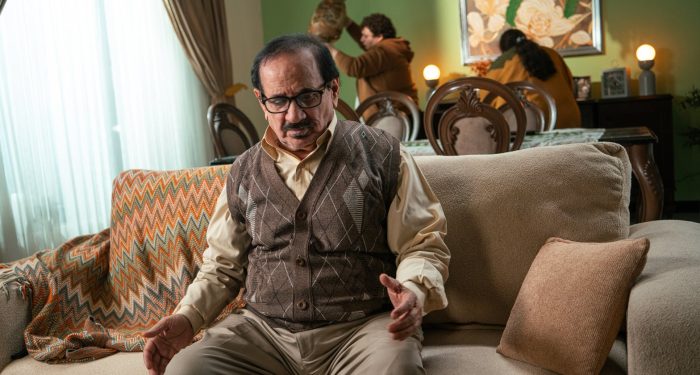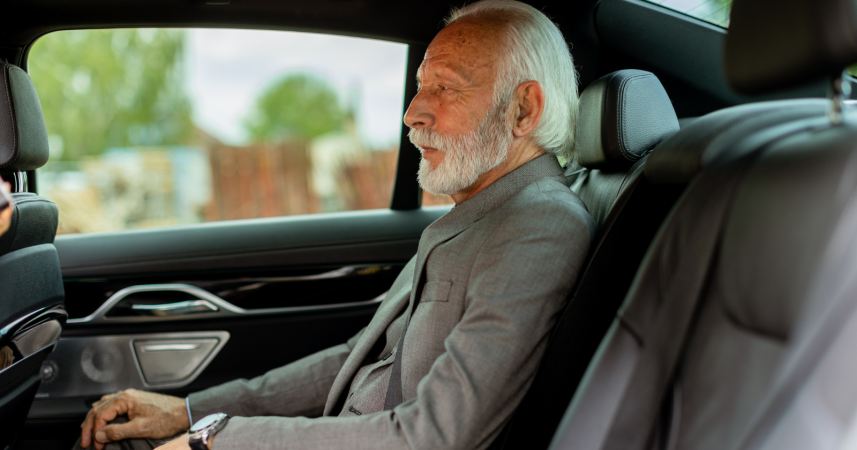
In the space between turning off the highway and turning on the husband, father, and grandfather, he finds the only five minutes left where his worth isn't measured by what he can fix, provide, or solve.
The pickup truck three houses down has been idling in its driveway for twelve minutes. I know because I've been watching from my kitchen window, pretending to wash the same coffee mug. The man inside isn't on his phone. He's not sleeping. He's just sitting there, hands at ten and two on the steering wheel, staring at his garage door like it holds the answer to something nobody asked.
I get it. I spent thirty-five years in the restaurant business before I started writing, and there were nights I'd sit in my car outside my own house for so long the motion sensor light would click off. Those stolen minutes weren't about avoiding what waited inside. They were about finding the only space left where I could just exist without performing.
The last frontier of solitude
We live in houses full of people who love us, work in offices full of people who need us, move through days full of obligations that define us. But somewhere between the office parking lot and the front door, between the last email and the first "how was your day," there's a gap. A blessed, necessary gap.
Think about that. In a world where we share everything from Netflix passwords to emotional labor, that driver's seat becomes a sanctuary. No one else adjusts those mirrors. No one else picked that preset radio station you're embarrassed about. No one else knows you keep emergency chocolate in the glove compartment next to the insurance papers.
The weight of being needed
When I ran my restaurant, I was needed every minute of every service. The sous chef needed me to approve the special. The bartender needed me to deal with the drunk customer. The dishwasher needed me to fix the sanitizer dispenser that broke for the third time that month. Being needed felt like purpose, until it felt like drowning.
Now I watch men my age, men who've spent decades being the answer to everyone else's questions, and I see the same exhaustion behind their competence. They're good at what they do. They show up. They provide. They fix things. They make decisions. They carry the weight so smoothly that nobody notices it's crushing them.
The truck in the driveway isn't laziness or avoidance. It's the five minutes where you don't have to be the expert, the provider, the problem-solver, the rock. You can just be a tired human being sitting in a paid-off truck, listening to the engine tick as it cools.
Permission to be nothing
Here's what nobody tells you about getting older: the roles multiply instead of simplifying. You're not just a father anymore, you're a grandfather. You're not just an employee, you're a mentor. You're not just a husband, you're a caregiver for aging parents. Every year adds another layer of responsibility, another person who needs you to be something specific.
I met a man at the hardware store last month who told me he volunteers at three different organizations since retiring. "Keeps me busy," he said, but his eyes said something else entirely. Busy has become our replacement for meaning, motion our substitute for purpose.
But in that truck, engine running, you have permission to be absolutely nothing. No title. No role. No function. Just a person sitting in a vehicle, existing without explanation or justification.
The mathematics of disappearing time
Let me break down a typical day for a 62-year-old man in Canada. Wake at 6 because your body hasn't forgotten decades of early shifts. Coffee while reading news that makes you angry at people you'll never meet. Doctor's appointment at 9. Grocery store at 10:30. Lunch with your wife where you talk about the grandkids' schedules. Home improvement store at 2. Pick up prescriptions. Make dinner. Watch the news. Bed by 10.
Where in that schedule is the time to just be? Where's the moment when nobody needs an opinion, a decision, a response? Pew Research Center found that older adults spend over half of their waking hours alone, with those living alone averaging about 10.5 hours daily, highlighting the prevalence of solitude among seniors. But solitude and freedom aren't the same thing. You can be alone and still be performing the role of widower, retiree, careful driver, good neighbor.
The truck is different. The truck is yours.
What we're really protecting
A friend recently asked me why I still drive a manual transmission when automatics are so much easier. I couldn't explain that shifting gears is one of the last things I do that nobody else influences. My wife doesn't comment on it. My kids don't need me to do it differently. It's mine, this small act of mechanical meditation.
That's what the man in the truck is protecting. Not isolation, but sovereignty. Not loneliness, but the last frontier of self-determination. In those five minutes, he's not avoiding connection. He's remembering who he is when he's not being someone for somebody else.
I think about all the men I knew in the restaurant business who worked themselves into heart attacks, divorces, or both. They never took those five minutes. They went from the chaos of service straight into the chaos of home, carrying their stress like a virus that infected everything they touched. They thought stopping was weakness. They were wrong. Stopping is survival.
Final words
Tomorrow morning, that same 62-year-old man will wake up and do it all again. He'll be the grandfather who never misses a game. The husband who remembers anniversaries. The neighbor who helps with the heavy lifting. The volunteer who shows up early to set up chairs. He'll be everything to everybody, and he'll do it well, because that's what he's always done.
But for five minutes in his paid-off truck, engine running in his own driveway, he'll remember that being nothing to nobody isn't empty. It's the fullest kind of freedom we have left. And maybe that's enough. Maybe that's everything.