Looking through decades of photographs, a 70-year-old discovers that what haunts her isn't the youth in those faces, but the visible weight of worry everyone carried—and realizes she's lived long enough to know the secret none of them could believe.
The afternoon sun slanted through my living room window, illuminating decades of dust motes dancing above the photo albums I'd pulled from the hall closet. I hadn't planned to spend my Saturday this way, but a leaking pipe had forced me to empty that closet, and there they were: forty years of memories bound in fading leather and peeling plastic. I made tea, settled into my reading chair, and opened the first album.
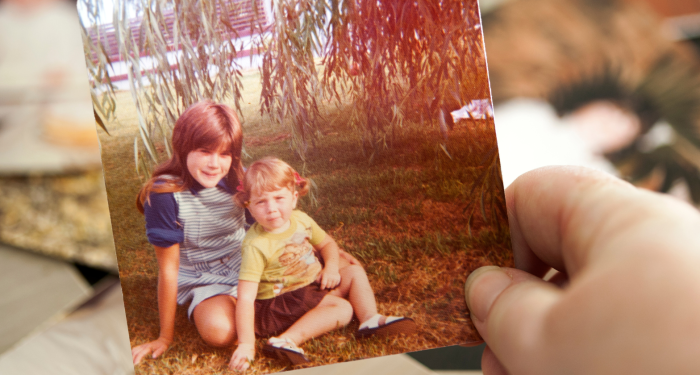
What struck me wasn't how young everyone looked, though we were impossibly smooth-faced in those old Kodachrome prints. It was the tension visible in every photograph, the tightness around our mouths, the way we held our shoulders like we were bracing for impact. In every image, I could see how convinced we were that our particular burdens were unbearable, that whatever crisis we were navigating would surely break us. I wanted to reach through time and whisper to each worried face: it gets lighter. Not easier, necessarily, but lighter. You just have to stay long enough to find out.
There's a photograph from 1981 where I'm holding my two toddlers on our apartment steps, three months after my first husband walked out. My smile looks like it might shatter if someone breathed on it wrong. I was twenty-eight, working days at the school and nights at a department store, convinced that single motherhood would destroy me, that my children would be forever damaged by their father's absence. The food stamps in my purse felt like they weighed a thousand pounds. What I couldn't see then was that this crushing weight was actually teaching me to stand. That my son would grow into a man of uncommon kindness precisely because he watched me rebuild our life brick by brick. That my daughter would become fearless because she saw that falling apart wasn't the end of the story.
I turned the page to find myself in my first year teaching, clutching my lesson plan like a shield against the teenagers staring back at me. The imposter syndrome is written across my face in permanent marker. I was certain someone would discover I didn't belong in that classroom, that I was playing dress-up in my mother's clothes. It would take me a decade to understand that my gift wasn't having all the answers but being present for the questions. Thirty-two years later, when I retired, former students would tell me it wasn't the literature I taught them that mattered most, but the way I showed them how to think, how to doubt productively, how to find their own voices in the margin notes.
The weight of inadequacy feels so permanent when you're young. Every mistake seems irreversible. Every rejection feels like a verdict on your worth. I spent years apologizing to my adult children for the things I couldn't give them, the opportunities we couldn't afford, the stability I couldn't provide. But children don't need perfect parents. They need parents who show up, who admit their mistakes, who demonstrate that resilience isn't about not falling but about getting back up.
There's a photo from my second wedding. I'm radiant, but if you look closely, you can see the hesitation behind my eyes. After fifteen years alone, I'd met a man at a school fundraiser who made me laugh so hard I forgot to be afraid. It took three years before I introduced him to my children, another year before I stopped waiting for him to leave. I'd forgotten how to trust happiness, kept preparing for disappointment like it was a houseguest who always showed up uninvited. The weight of protecting yourself from joy is exhausting in ways you don't realize until you finally set it down.
The photographs from my fifties show a woman finally coming into focus. Learning to set boundaries after a lifetime of aggressive accommodation. Starting yoga at fifty-eight despite feeling ridiculous in those classes full of twenty-somethings. Surviving a cancer scare that taught me the difference between important and urgent. But also navigating my mother's slow fade into Alzheimer's, my sister's battle with illness, my husband's diagnosis with Parkinson's. The weight of caregiving is real, but it's anchored in love rather than fear, and that makes all the difference.
There's a noticeable gap in photos after my husband died when I was sixty-eight. For six months, I barely left the house, existing in that strange suspended animation of early grief where time moves both too fast and too slow. I had to learn to sleep alone again after twenty-five years of marriage, discovered that grief doesn't actually get smaller—you just grow larger around it. The other widows in my support group saved me, these women who understood that sometimes you need to laugh about the absurdity of being singular again when every restaurant hostess looks at your table for one with barely concealed pity.
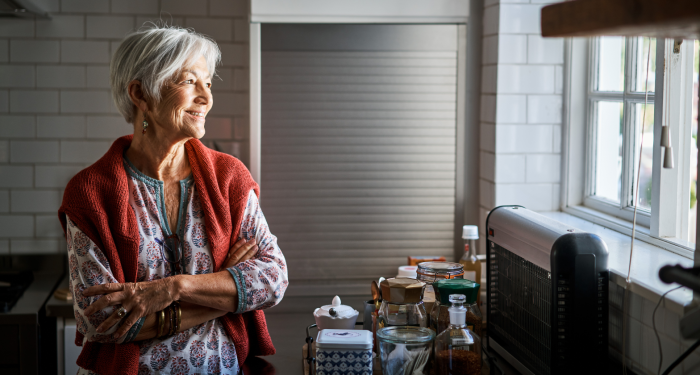
Now at seventy, I wake at five-thirty without an alarm, spend the first hour in blessed silence with my tea and journal. I've learned to accept compliments about my writing without immediately deflecting them. I've taken up piano, proving to myself that new neural pathways have no expiration date. On Monday mornings, I tutor at the literacy center. On Thursday afternoons, I teach job interview skills at the women's shelter. My body has its complaints—replaced knees, arthritic hands—but I've discovered that physical limitations don't have to limit your spirit.
My four grandchildren have taught me about presence in a way I couldn't access as a young mother. When you're not worried about keeping them alive and fed and educated, you can actually see them. Every other Saturday, we go to the library. I let them choose books, sometimes we visit other places too—the museum, the park, sometimes just the grocery store where we buy ingredients for cookies we'll make into a glorious mess. I write them letters they'll receive when they turn twenty-five, trying to pass along what I've learned about lightness.
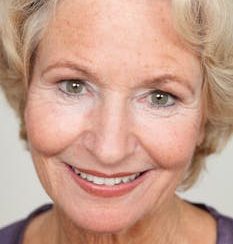
Looking at recent photographs, I see laugh lines that tell the story of choosing joy even when it wasn't the obvious choice. Hands that have held babies and held lovers as they died, that have graded ten thousand papers and planted a thousand bulbs. Eyes that have witnessed the full spectrum of human experience and somehow still see reasons to hope. A body that has been cut open, rebuilt, diminished, and still carries me through my evening walks.
The young woman in those old photographs was carrying so much—shame about divorce, terror about money, the exhaustion of working multiple jobs, the fear that she was ruining her children, the conviction that everyone could see she was faking it. She couldn't know that she'd learn Italian at sixty-six just for the pleasure of rolling those words around in her mouth. That she'd find love again and have beautiful decades. That her children would not only survive but flourish. That she'd become the teacher students would write to decades later.
She couldn't know that the very things that felt crushing—the divorce, the poverty, the single motherhood, the caregiving, the losses—would become the foundation of her strength. That every weight she carried was teaching her about her own capacity. That what feels unbearable at thirty becomes a story of survival at fifty and a source of wisdom at seventy.
Yesterday, my twenty-two-year-old granddaughter called me sobbing about a broken relationship, convinced her world was ending. I remember that exact feeling, that certainty that you'll never recover from this particular heartbreak. But I also remember learning that hearts are surprisingly elastic, that they break and reform stronger, that the boy who seems essential at twenty-two becomes an amusing anecdote at forty. I tell her it will get lighter, knowing she can't fully believe me yet. She has to live her way into that knowledge.
The weight never fully disappears—it transforms. The terror of single motherhood becomes pride in your independence. The grief of loss becomes gratitude for having loved. The shame of needing help becomes the wisdom of community. The exhaustion of caregiving becomes the honor of being trusted with someone's final chapter. The invisibility of aging becomes the freedom of irrelevance to others' opinions.
What I know now that I couldn't know then: life isn't about avoiding weight. Every burden teaches us about our capacity. Every loss shows us what we can survive. Every mistake proves we can recover. The weight that feels unbearable is making you strong enough for what comes next.
Final Thoughts
The afternoon light has faded now as I close the last album. Tomorrow I'll wake at five-thirty, make my tea, sit with my journal, and add one more day to this accumulation of lightness. I'll carry what needs carrying, knowing that everything—everything—gets lighter if you stay long enough to find out. Not because the weight disappears, but because you grow strong enough to bear it with grace. The young woman in those photographs couldn't imagine becoming me, but here I am, proof that staying is enough, that time transforms weight into wisdom, that the very things we think will break us become the foundation of who we're meant to be.