The friendships that matter most aren't built in emergencies—they're sustained through the quiet, unremarkable moments that follow. When everyone else moves on, the keepers are still there.
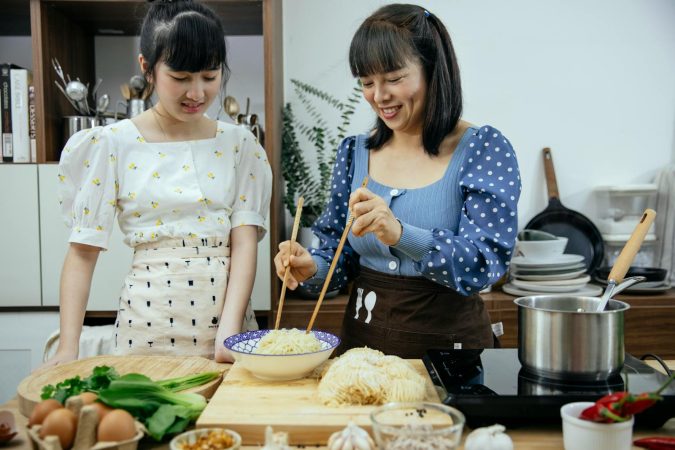
She's already on the couch when I walk in, shoes off, scrolling through a recipe for black sesame mochi she'll never make. Maya doesn't knock anymore. She drives down from SF every few months, and we cook something ambitious and talk about whatever's actually going on beneath the surface of our weeks. This visit, Maya tells me about a friend who disappeared after her mom got sick, then resurfaced six months later with a thinking-of-you text and a heart emoji. Maya tells me the friend was incredible during the worst of it—calling every day and dropping off food before eventually disappearing.
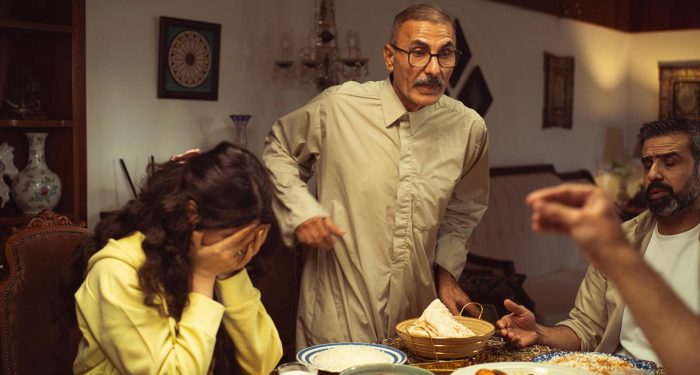
The conventional wisdom says that real friends are the ones who show up when things fall apart. And sure, crisis reveals character. But what most people don't talk about is this: a lot of people are actually quite good at crisis. Crisis is specific, time-bound, and socially legible. It has a script. You send the text. You bring the meal. You say the right thing. The harder, rarer thing is what comes after. The weeks and months when grief stops being an event and becomes the weather. When nobody's watching. When there's nothing to do except be there, again, on a random weeknight, for no particular reason at all.
That distinction matters more than most people realize, and the psychology behind it explains why so many friendships feel confusing in adulthood: present but somehow hollow, active but not quite alive.
The crisis friend versus the Tuesday friend
There's a meaningful difference between a friend who activates during emergencies and a friend who simply stays in the room during ordinary life. Both feel like love. Only one of them is structurally sustainable.
Crisis friendship runs on adrenaline and empathy. It's intense, focused, and often beautiful. But it's also inherently imbalanced. One person is in need, the other is giving. The roles are clear. And clarity, in relationships, can feel deceptively like closeness.
The problem is what happens when the crisis ends. The roles dissolve. The urgency fades. And many people, without that structural scaffolding, simply drift. Not because they're bad people. Because nonreciprocity was always embedded in the dynamic, just hidden by the drama of the moment. The boring Tuesday evening requires something crisis doesn't: mutual exchange without a clear reason to be there.
The friends who stay are the ones who don't need a reason.

Why "ordinary time" is where real bonds form
Researchers studying attachment across species have found something that applies more broadly than you might expect. Studies of cat-human bonds suggest that cats don't form the same dependence-based attachment that dogs do. They don't seek out their owner as a "safe haven" during stress. Instead, their bond with humans appears to be more reciprocal, less hierarchical, and built through repeated low-stakes interaction over time.
I'm not saying your best friend is a cat. But the parallel is striking. The deepest human friendships aren't built on dependence during crisis. They're built on what I'd call ordinary-time reciprocity: the slow accumulation of presence without urgency. The text that says 'saw this and thought of you.' The dinner where nothing important happens. The three-hour phone call about absolutely everything and nothing.
Most people undervalue this kind of time because it doesn't feel like it's doing anything. There's no emotional rescue happening. Nobody's performing care. It's just two people choosing each other when they don't have to. And that choice, repeated hundreds of times, is what builds the kind of trust that actually lasts.
This is something I think about in relation to my own friendships. My closest friend Jen lives in Portland. We see each other rarely. But when we talk, we pick up mid-thought, because the texture of our friendship was built over years of the most mundane shared time imaginable: studying in the same room in grad school, eating bad cafeteria salads, complaining about the same professors. The ordinary accumulated until it became irreplaceable.
The problem with transactional models of friendship
Psychology has traditionally analyzed friendship through social exchange theory: the idea that people maintain relationships based on a running cost-benefit analysis. If you're getting more than you're giving, you stay. If not, you leave.
But new research from The Human Generosity Project argues this model misses what friendship actually is for most people. When researchers surveyed people about what they value in a friend, they didn't rank conscientiousness about repaying debts highly. Instead, they prioritized loyalty, reliability, respectfulness, and being there in times of need. Emotional commitment was the baseline. Reciprocal accounting was a luxury that only mattered once that commitment was already in place.
The researchers propose a different framework called risk-pooling, where friends function less like trading partners and more like mutual insurance systems. Nobody keeps score. You give when you can. You ask when you genuinely need to. The relationship absorbs shocks instead of tabulating them.
The Tuesday friend operates on this logic. They're not keeping a ledger. They're not showing up because they owe you something or because the social script demands it. They just keep appearing, and you keep appearing for them, and neither of you is counting.
What kills the ordinary
If Tuesday friendships are so valuable, why do so many adults lose them?
Part of the answer is structural. Adult life is engineered to deprioritize exactly the kind of unproductive, agenda-less time that ordinary friendship requires. Work expands. Kids need things. Calendars fill with obligations that feel more important than a dinner with no purpose. And because our culture frames friendship as optional rather than essential, it's always the first thing dropped when life gets full.
But there's a subtler killer too. In the Forbes piece on adult friendships, nonreciprocity is identified as one of the most destructive habits in adult friendships. And the way it manifests is quieter than you'd think. It's the friend who texts when they've had a terrible day but goes silent when you're struggling. The friend whose boundaries are sacred when they invoke them but negotiable when you try to set your own. The friend who talks constantly but never asks a follow-up question.
Researchers have pointed to a concept called perceived responsiveness: the degree to which someone makes you feel heard, understood, and cared for in their replies. Studies have identified responsiveness as a key ingredient binding together intimacy, trust, and support in close relationships. Without it, even constant communication feels empty inside.
This is where people get confused. People point to the quantity of interaction and mistake it for quality, insisting they talk all the time as a shield against acknowledging the friendship has become one-way. Your body notices the imbalance before your mind does. Conversations that should feel easy start feeling like work. You walk away depleted, not restored. And because there's no single dramatic betrayal to point to, you end up feeling guilty for even questioning it.
The friends who stay through ordinary time aren't just the ones who show up. They're the ones who actually show up, in the full-presence sense of the word. They ask what happened with that work thing from last week. They remember the name of the person you're worried about. They make you feel visible in the small moments that nobody else bothers to track.

The exhaustion of always being the one who stays
There's a flip side to all of this that's worth naming. Some people are constitutionally incapable of leaving. They're the permanent Tuesday friend. The one who sends the check-in text, who remembers the anniversary of the loss, who drives across town for dinner because they said they would.
And they're tired.
Being the person who always stays carries its own kind of weight, the kind that doesn't look like burnout because it looks like reliability. These are the people everyone calls dependable, consistent, solid. And very few people think to ask who they depend on.
I see this pattern constantly, both in what I used to hear in clinical practice and in my own life. The person who holds the group together is rarely the person the group holds. Not because anyone is deliberately neglecting them, but because the system they've built doesn't require anyone to ask. Their steadiness becomes invisible. Their needs get filed under assumptions that they're fine. And they absorb the cost of being fine for so long that the day they're not, nobody quite knows how to respond.
If you recognize yourself in this, there's a framework that speaks directly to what's going wrong. Research on Maasai communities in Kenya and Tanzania has documented special friendships called osotua partnerships that are built over lifetimes and passed across generations. Partners ask for help only in genuine need, and give when asked and able. Studies modeling how these relationships function suggest that risk-pooling partnerships can produce better outcomes for both partners than debt-tracking ones. But here's what makes them work: both sides exercise restraint and responsibility. Partners are expected to take care of themselves when they can, and to ask only when help is truly needed. But they are expected to ask. The model works only when both people are willing to be the one in need. If you never ask, you've quietly opted out of the system that was supposed to protect you too.
What Tuesday friendship actually asks of you
Being a Tuesday friend is not a personality type. It's a practice.
It means texting someone when nothing's wrong. It means accepting the dinner invitation that has no occasion attached to it. It means remembering the small things, not because you have a great memory, but because you were actually paying attention.
It means tolerating the ordinary. Most people are drawn to the peaks and valleys of a relationship because intensity feels meaningful. A boring Wednesday night cooking pasta and talking about nothing? That doesn't photograph well. It doesn't make for a good story. It just makes for a durable friendship.
And it means being willing to receive, not just give. To let someone see you on a regular, unremarkable day when your hair looks bad and your apartment's a mess and you don't have any interesting problems to discuss. The vulnerability of being seen in your ordinariness is, in some ways, harder than being seen in your crisis. Crisis is sympathetic. Ordinariness just is.
So here's what I'd actually ask you to do. Think about the person in your life who keeps showing up on Tuesdays. The one whose presence is so steady it's become ambient. And then ask yourself when the last time was that you showed up for their ordinary. Not their emergency. Not their celebration. Their nothing-special, nobody's-watching, regular afternoon.
And if you're the one who always stays—the one reading this with a familiar ache behind your ribs—I'd ask you something harder. Ask for something. Not because you've earned it, not because the ledger demands balancing, but because the whole architecture of Tuesday friendship depends on both people being willing to need each other out loud. The osotua model doesn't work with one silent partner absorbing everything. It works when both people trust the bond enough to be the vulnerable one.
Maya left around eleven that night. We didn't solve anything. We didn't have a breakthrough conversation about life or loss. She helped me wash the dishes, complained about BART, and said she'd come back in a few weeks. Nothing happened.
That's exactly the point.
The friends worth keeping aren't performing friendship for the highlight reel. They're just here, on a Tuesday, because this is what they do. They keep showing up after the crisis resolves, after the group chat goes quiet, after the rest of the world has moved on to someone else's emergency.
They stay for the ordinary. And the ordinary, given enough time, becomes the most extraordinary thing two people can share. But only if you let it run in both directions. Only if you stop treating your own steadiness as a gift you give and start treating it as a door you also walk through. The Tuesday isn't just for them. It was always supposed to be for you, too.