

For many people, constant busyness isn’t discipline or drive - it’s a socially acceptable way to avoid silence, stillness, and the unresolved emotions waiting underneath both. What looks like ambition from the outside is often a fear of stopping long enough to face the parts of themselves they’ve learned to outrun.
In 2017, researchers at Columbia Business School published a finding that should give every overworked professional pause. Their studies, published in the Journal of Consumer Research, showed that busyness has replaced leisure as a status symbol in American culture. People perceived busy, overworked individuals as higher status than those with free time, associating packed schedules with scarcity, competence, and demand. In other words, we've built a society that treats the absence of rest as proof of your worth.
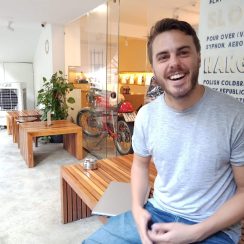
That finding landed differently for me than it might for most readers. During my twenties, I was working a warehouse job in Melbourne shifting TVs, feeling like my psychology studies had been a waste, and filling every waking hour with something. Reading, planning, applying for jobs, working extra shifts. Anything to avoid sitting still with the version of myself I didn't want to face: the guy who felt lost, anxious, and completely unsure of what he was doing with his life. It took me years and a deep dive into Buddhist philosophy to understand what was really going on. I wasn't being ambitious. I was running. And psychology has a lot to say about why so many of us do exactly the same thing.
The research confirms it: we don't stay busy because we're driven. We stay busy because stopping feels dangerous.
What "experiential avoidance" actually looks like
In clinical psychology, there's a concept called experiential avoidance, developed extensively by psychologist Steven Hayes as part of Acceptance and Commitment Therapy. It refers to the attempt to alter or escape uncomfortable internal experiences, things like difficult emotions, painful memories, or unwanted thoughts, even when doing so creates long-term harm.
The key insight is that experiential avoidance doesn't always look like what you'd expect. It's not just substance use or scrolling social media for hours. It can look like productivity. It can look like ambition. It can look like someone who never stops moving and gets praised for it constantly. As Hayes and his colleagues have noted, when a person's behaviour is driven primarily by avoiding internal discomfort rather than by their actual values, the avoidance itself becomes the problem. The busyness isn't serving a purpose. It's serving as a shield.
And here's the part that hits close to home for a lot of high achievers: the more competent you are, the better your avoidance strategy works. You get results. You get validation. Everyone tells you how impressive your work ethic is. Meanwhile, the thing you're avoiding stays exactly where you left it, untouched and growing.
We'd literally rather shock ourselves than sit with our thoughts
In 2014, a research team led by Timothy Wilson at the University of Virginia published a now-famous set of studies in the journal Science. Across 11 experiments, they found that most participants did not enjoy spending even 6 to 15 minutes alone in a room with nothing to do but think. They found the experience so unpleasant that many chose to administer mild electric shocks to themselves rather than sit in silence with their own thoughts.
Read that again. People would rather cause themselves physical pain than be alone with what's happening inside their own heads. That's not a quirky finding. That's a window into why so many of us pack our lives with activity, noise, and obligations. Stillness isn't boring. Stillness is threatening, because stillness is where the things we've been avoiding start to surface.
The defences underneath the doing
Psychoanalyst Kristen Beesley, writing in Psychology Today, has described chronic busyness as a defence mechanism. She identifies suppression, denial, and omnipotence as the psychological forces driving it. The constant movement and over-commitment actually protect the person from becoming aware of their emotions. Busyness, she argues, functions as a way to distract from uncomfortable, unpleasant, and painful feelings that would otherwise demand attention. This is important because it reframes something we typically admire. We look at someone who never stops and think, "What drive. What discipline." But Beesley's clinical observation suggests the opposite might be true: for many chronically busy people, the busyness is not a sign of strength. It's a sign that something underneath hasn't been addressed. And if you've ever noticed yourself reaching for a task the moment an uncomfortable feeling surfaces, if you've ever opened your laptop not because you needed to work but because you needed to not feel something, you already know what this looks like from the inside. The instinct isn't to sit down and process it. The instinct is to find another project, make another list, solve another problem. Any problem except the one that lives inside you. I see this pattern constantly, in myself and in people I know.
What "sitting with yourself" actually requires
In Buddhism, there's a practice called "resting in awareness." It sounds peaceful when you read it on a meditation app. In reality, it's one of the hardest things a person can do. Because resting in awareness means letting whatever is there come forward, without fixing it, numbing it, or distracting yourself from it. It means meeting the version of yourself you've been outrunning.
Modern psychology aligns with this more than most people realize. Acceptance and Commitment Therapy, the framework Hayes developed, doesn't aim to eliminate difficult thoughts and feelings. It aims to change a person's relationship with them. The goal isn't to feel better. The goal is to get better at feeling, all of it, without letting the discomfort dictate your behaviour.
This is what people with genuine inner stability have figured out. They haven't eliminated discomfort. They've stopped organizing their entire lives around avoiding it. They can sit in a quiet room without reaching for their phone. They can have an unstructured afternoon without inventing tasks. They can feel sadness, or doubt, or loneliness, without treating those feelings as emergencies that need to be smothered with activity.
The difference between purpose and avoidance
I want to be clear about something. Being busy isn't inherently a problem. I run a media company. I write every day. I'm learning Vietnamese. I'm raising a daughter. My life is full. But there's a difference between a full life and a life that's full because emptiness feels dangerous.
The distinction comes down to this: are you moving toward something, or away from something? Purpose-driven activity has direction and includes intentional rest. Avoidance-driven busyness feels relentless and is never "enough." You finish one project and immediately start the next one, not because you're excited, but because the gap between them feels unbearable.
The practice isn't about doing less. It's about being honest with yourself about why you're doing what you're doing. Are you building something meaningful? Or are you constructing an elaborate fortress to keep yourself from having to sit with who you are when the noise stops?
What changes when you stop running
When I finally stopped filling every gap in my day with activity, something unexpected happened. The anxiety didn't get worse. It got louder for a while, and then it got clearer. I could actually hear what it was trying to tell me. I was afraid of not being enough. I was afraid that without constant output, I had no value. And that fear had been running my schedule for years without my permission.
So here's my question for you, and I'd ask you to resist the urge to answer it quickly. What are you avoiding? What's the feeling that surfaces in the gap between one task and the next, the one you've trained yourself to smother before it fully arrives? Most people who read an article like this will nod along, maybe highlight a sentence or two, and then go right back to filling their calendars. They'll treat this as information rather than a mirror. That's the thing about chronic busyness as a defence mechanism: it's robust enough to absorb even the insight that it's a defence mechanism, and keep running.
The people I admire most aren't the busiest people I know. They're the ones who can do nothing without it feeling like a crisis. They've sat with the version of themselves the rest of us are still outrunning. The question isn't whether you understand that. The question is whether you'll actually stop long enough to do it, or whether you're already thinking about what to do next.