
The longevity conversation obsesses over what you put in your body and how you move it, but the research keeps pointing somewhere more uncomfortable: whether anyone in your life has permission to see you fall apart.
In 2023, Robert Waldinger summarized nearly 90 years of data from the Harvard Study of Adult Development with a finding that surprised almost no one in his field and almost everyone outside it. The single clearest predictor of health and happiness after 65 wasn't exercise frequency, dietary quality, or financial security. It was the quality of a person's close relationships. Specifically, whether at least one person in their life had access to the version of them that existed beneath the performance of being fine.
That finding sits awkwardly next to the way most longevity advice is packaged. The wellness industry has turned aging into a project management problem. Eat these foods. Move this many minutes. Sleep this many hours. Track these biomarkers. The implicit promise is that if you optimize hard enough, you'll earn more years. But the most compelling research keeps arriving at a conclusion that can't be purchased, supplemented, or tracked on a wristwatch: what holds up a good life after 65 has less to do with your cholesterol panel and more to do with whether someone would notice if you were quietly drowning.
The distinction between being monitored and being known is where the research gets interesting, and where most people's longevity plans fall apart.
The Research That Reframed Everything
The Harvard Study of Adult Development, which has tracked participants for nearly 90 years, remains one of the longest-running studies on what makes a good life. Waldinger has emphasized that the clearest finding across decades of data is that close relationships are a stronger predictor of health and happiness than other factors like cholesterol levels. Not the number of friends. Not marital status on paper. The quality, meaning how safe people felt being honest with at least one other person about what they were actually going through.
That word "quality" does a lot of heavy lifting. Most people hear it and think: do you get along? Do you fight a lot? But the data points somewhere more specific. The relationships that predicted well-being after 65 were ones where people felt they could be vulnerable. Where they didn't have to perform competence or calm. Where the version of themselves that existed at 2 a.m., confused, scared, uncertain, had somewhere to land.
The Harvard study isn't alone in this finding. Research from Brigham Young University, led by Julianne Holt-Lunstad, has demonstrated that weak social connections carry a mortality risk comparable to smoking 15 cigarettes a day, and that the quality of social ties, not merely their existence, drives the protective effect. A separate longitudinal study published in PLOS Medicine analyzing data from over 300,000 participants found that people with strong social relationships had a 50 percent increased likelihood of survival compared to those with weaker connections, independent of age, sex, health status, and cause of death. And work from the Rush Memory and Aging Project has shown that older adults who report having even one confidant, someone they can share personal experiences and feelings with, show slower rates of cognitive decline. This reinforces that emotional intimacy isn't just good for mood. It appears to protect the brain itself.
Sit with that for a moment. Across multiple studies, spanning different populations and methodologies, the variable that mattered most wasn't whether someone had a spouse, or children nearby, or a busy social calendar. The variable was whether anyone in their life had access to their authentic self. The one that exists beneath the performance of being fine.
Why "Being Strong" Becomes the Problem
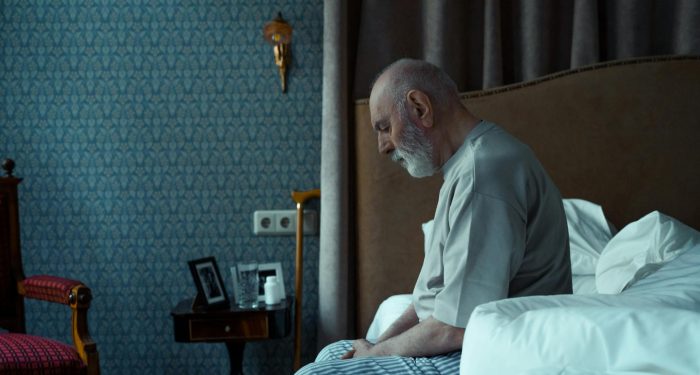
I've spent years reading about this, and the pattern that keeps emerging is almost cruel in its simplicity. The people who struggle most after 65 are often the ones everyone else sees as doing great. They're the capable ones. The dependable ones. The ones who managed their health, saved their money, stayed busy. And they did all of that while slowly, imperceptibly sealing off the part of themselves that needed to be witnessed.
Research suggests that chronic emotional suppression is associated with elevated stress hormones, disrupted sleep, and weakened immune function, all of which accelerate aging. The body, it turns out, keeps a running tab of every feeling you swallowed so someone else wouldn't worry about you.
There's a particular cruelty to this in the generation now entering their late 60s and 70s. Many of them grew up in households where needing people was treated as weakness. Where "handling it yourself" wasn't advice but identity. Writers on this site have explored how people in their 70s often describe shedding social performances as a kind of liberation. But that liberation requires having first built the relationships capable of receiving the real you. Many haven't.
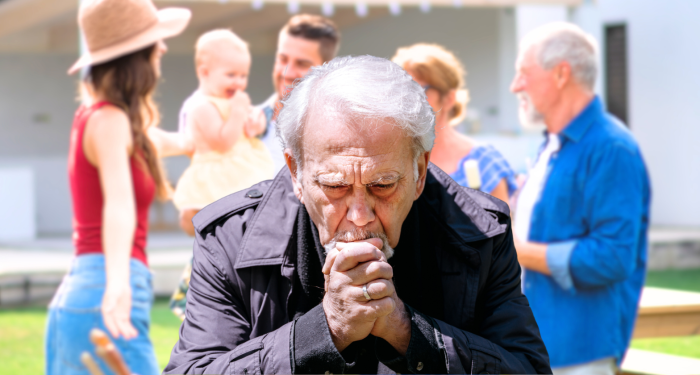
Studies on loneliness among older adults have been well documented. But the more precise problem is what I'd call "accompanied loneliness." Having people around you, even people who love you, while remaining fundamentally unknown to all of them. You can eat dinner with your adult children every Sunday and still feel like a stranger in your own life if the dinner conversation never goes deeper than schedules and weather.
One Person. That's the Threshold.
The encouraging finding in the research is that the threshold is remarkably low. You don't need a village. You don't need five intimate friendships. You need one person. One person who sees through the "I'm fine" and stays anyway. One person who has watched you be confused or afraid and didn't flinch.
As experts have recently emphasized, achieving well-being in later life requires attending to emotional health, not just the physical. The advice to eat better and exercise more, while valid, is incomplete without addressing whether older adults have meaningful emotional outlets. Someone who asks how they're really doing and waits for an honest answer.
This tracks with what mental health researchers have observed about aging. Emotional health affects physical health in ways the medical system is still catching up to. Good emotional health doesn't just make you feel better. Studies suggest it influences inflammatory markers, cardiovascular function, and how your body processes stress hormones.
The mechanism seems fairly straightforward. When you have someone who knows you without the performance, your nervous system registers safety. Chronic threat states, the low-grade fight-or-flight that accompanies perpetual self-monitoring, quiet down. Your body can allocate resources toward repair and maintenance instead of constant vigilance. Over months and years, that reallocation matters enormously. Over decades, it may be the difference between thriving and merely surviving past 65.
The Difference Between Being Loved and Being Known
Most people over 65 will tell you they are loved. They have family. They have friends. They have people who would show up in an emergency. And when studies on aging and well-being explore whether older adults have someone they can turn to during moments of fear or vulnerability, when researchers probe deeper, asking whether participants have relationships where they can share their deepest worries and concerns, the room goes quiet.
Being loved and being known are different things. Love can exist at a comfortable distance. You can love someone for decades without ever learning what they're ashamed of. Without knowing what they regret. Without understanding the private bargains they've made with themselves to keep going. Knowledge, real, mutual, uncomfortable knowledge of another person, requires a kind of intimacy that many long relationships never achieve.
I've come to think this is why so many people describe feeling more alone after retirement than before it. Work provided a structure for being around people, but it also provided a ready-made role. You were the competent one. The reliable one. The one who knew things. Retirement strips the role away, and what's left is a person who may not have practiced being seen without a title for forty years.

The research on health after 65 keeps circling back to this point: the protective factor is having someone who asks how you're really doing and waits for the actual answer. Not someone who asks out of politeness. Not someone who changes the subject when the answer turns heavy. Someone who can tolerate your heaviness without trying to fix it.
Why This Gets Harder, Not Easier, with Age
Here's what nobody tells you about aging: the window for building this kind of relationship narrows. Studies suggest that social networks tend to shrink naturally after 65. Friends move. Friends die. Energy declines. The activation cost of maintaining relationships increases at the exact moment their importance peaks.
And the health advice aimed at older adults tends to focus on the quantifiable. Exercise routines, dietary changes, sleep hygiene. Emotional connection gets treated as a nice-to-have rather than a biological necessity. The framing matters. When social connection appears as item seven on a wellness checklist, sandwiched between "stay hydrated" and "wear sunscreen," it signals something optional. A bonus feature rather than the operating system.
The loneliness compounds in a specific way. The longer you go without being truly known, the harder it becomes to let someone in. You build habits of concealment. You get efficient at redirecting conversations. You develop what feels like independence but is actually just well-practiced isolation. And your body, registering the sustained absence of safety, adjusts its baseline stress response upward.
A colleague once told me that the friendships you cultivate in your 40s may matter more for your long-term health than any dietary intervention. At first that sounded like an exaggeration. The more I read, the less it does. The relationships you invest in during midlife become the infrastructure that either holds you or fails you after 65. Building from scratch at 70 is possible, but the people who thrive didn't wait that long.
What "Known" Actually Looks Like
The word "vulnerability" has been commercialized to the point of uselessness. But what the research describes is more mundane than motivational posters suggest. Being known doesn't require dramatic confessions or therapeutic breakthroughs. It looks like telling someone you're scared about a medical result before you get it, not just after. It looks like admitting you don't know how to fill your days. It looks like saying "I don't think I'm okay" without immediately following it with "but I'll figure it out."
The "but I'll figure it out" is the part that kills people. Slowly. Silently. While everyone around them marvels at how well they're holding up.
I keep thinking about a pattern I've noticed in the longevity research: the people who live longest and report the highest well-being aren't the most disciplined. They're the most witnessed. They have someone, a partner, a sibling, an old friend, sometimes a neighbor, who has seen them at their worst and didn't leave. Whose presence communicates something no amount of optimized nutrition can: you don't have to hold this alone.
The research on loneliness and its behavioral consequences makes clear that isolation doesn't always look like being alone. It often looks like distraction. Filling hours with consumption, entertainment, activity. Anything to avoid the silence where the absence of genuine connection becomes audible. The loneliest people aren't always the ones with empty calendars. Sometimes they're the busiest people you know.
The wellness industry has spent decades convincing us that longevity is a personal achievement. Something earned through discipline and self-control. And that framing has produced a generation of people who arrive at 65 with pristine bloodwork and no one to call when they're afraid. People who tracked every biomarker while the thing that would have actually protected them, letting one person see them without the armor, went unattended year after year.
The Uncomfortable Implication
The uncomfortable implication of this research is that you can't optimize your way to well-being after 65. You can't buy it, supplement it, or hack it. The thing that predicts whether your later years will feel rich or hollow is relational, and relational things resist efficiency. They require time, risk, and the kind of discomfort that no amount of self-improvement can prepare you for.
They require, specifically, letting someone see the version of you that exists when you're not being strong for anyone. The version that doesn't have answers. That doesn't have a plan. That might be terrified.
I went deeper on this in a video recently about how our obsession with individual achievement has made us lonelier than ever—turns out the "you can do anything" mythology doesn't just leave us exhausted, it leaves us unknown.
And if that version of you hasn't been seen by a single person on this planet, the research suggests your body already knows.
So What Do You Actually Do?
The invitation here isn't to suddenly bare your soul to a stranger or manufacture intimacy where none exists. The invitation is smaller and harder than that. And it starts with a single, concrete step.
Think of one person, just one, who you trust enough to be slightly more honest with than you currently are. Not a therapist, necessarily, though that counts. A friend. A sibling. A partner. Someone who has earned a degree of trust, even if you've never fully used it. Call them. Not to deliver a monologue about your inner life, but to break the pattern in one small way. When they ask how you're doing, pause before you say "fine." See what happens in the pause. See if you can tolerate it.
If you don't have that person, the work is different but no less important. Start with proximity, not performance. Join something — a walking group, a class, a volunteer shift, a grief support circle — where showing up consistently matters more than showing up polished. Intimacy isn't built through grand gestures. It's built through repeated contact where the mask slips a little more each time, and nobody punishes you for it.
Here are the practices I keep returning to, drawn from what the research and my own reading suggest actually work:
Ask a real question, then wait. The next time you're with someone you care about, ask them something that can't be answered in a sentence. "What's been weighing on you lately?" Then don't fill the silence. Model the kind of conversation you want to have by creating space for it first.
Go second. If asking for vulnerability feels impossible, offer it. Share something small and true. An anxiety about your health, a regret, an uncertainty about the future. See how they respond. You don't have to empty the vault. You just have to crack the door. Most people are waiting for permission to stop pretending, and someone has to go first.
Prioritize depth over breadth. If your social calendar is full but your emotional life is empty, the answer isn't more dinners. It's one longer phone call. One walk with one friend where you steer the conversation past the safe topics. Treat that investment with the same seriousness you'd give a doctor's appointment, because the research says it is one.
I think about a moment I once read described in a study summary. An 80-year-old man, when asked what he wished he'd done differently, didn't mention diet or exercise or money. He said he wished he'd told his best friend he was scared, back when his wife got sick, instead of pretending he had it under control. That was twenty years ago. His friend died never knowing.
That pause, the one between "how are you?" and the honest answer, may be the most important health intervention available to anyone. Not the gym membership. Not the Mediterranean diet. Not the retirement portfolio. Just the willingness to be seen by one person who can handle what they find.