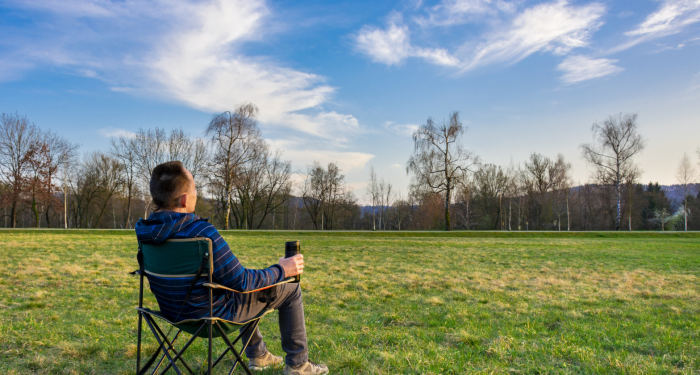
They built walls out of kindness itself — offering help to everyone while accepting it from no one, creating a life that looks admirable from the outside but echoes with a loneliness so profound that even they sometimes forget it's there.
If you've ever been called "too nice" or wondered why your kindness doesn't translate into close friendships, you might be onto something deeper than social awkwardness.
There's a particular kind of person who radiates genuine warmth, helps others without hesitation, and yet maintains a careful distance from everyone. They're not antisocial. They're not broken. They've simply built the most logical response to early lessons about human reliability.
When I left my finance job at 37, several colleagues reached out with genuine concern. "You'll miss the community," they said. But here's what they didn't understand: I'd already been alone in that crowd for years. Being surrounded by people and being connected to them are two very different experiences.
The fortress of kindness
Think about the last time someone described a person as "nice." What comes to mind? Pleasant? Helpful? Easy to be around?
Now think about your closest friends. Would "nice" be the first word you'd use?
"'They're so nice' becomes a kind of vague, uninspiring label that doesn't lead anywhere deeper.
This isn't about fake niceness or people-pleasing. It's about a specific kind of genuine kindness that keeps you perpetually at arm's length. You give freely but never ask for help. You listen intently but share sparingly. You show up for others but somehow remain unknowable.
I spent years perfecting this dance. Volunteering at farmers' markets, organizing community events, being the person everyone could count on. But when someone asked me how I was really doing? That's when the conversation got redirected back to them.
Why connection feels like danger
For some of us, the equation became clear early on: the closer you let someone get, the more it hurts when they leave. And they always leave. Or disappoint. Or reveal that your trust was misplaced.
So you adapt. You become the person who gives without needing. Who loves without expecting. Who exists without burdening.
Lachlan Brown, psychology expert, describes this phenomenon: "Psychologists refer to this as compassion fatigue. It happens when constant giving depletes a person's ability to connect deeply because they're too busy nurturing everyone else."
But what if it's not depletion? What if it's strategy?
When you've learned that vulnerability leads to abandonment, kindness without intimacy becomes your superpower. You get to be good, helpful, valuable, all while maintaining complete control over how much of yourself you actually reveal.
The rational loneliness
Here's what most people don't understand about this kind of isolation: it makes perfect sense.
If you learned early that family systems fail, that promises get broken, that the only consistent variable in your life is yourself, then building a life that doesn't require others isn't pathological. It's practical.
I remember hitting 20 miles on a particularly challenging trail run, completely alone on the mountain. The solitude wasn't punishment. It was freedom. No one to disappoint. No one to manage. No expectations to navigate except my own breath and the next step forward.
The loneliness is real, absolutely. But so is the safety. Both truths exist simultaneously, and pretending otherwise dishonors the intelligence of the adaptation.
The depth paradox
Melody Glass, a psychologist, offers this insight: "They crave meaningful conversation, not surface-level chatter—so social circles shrink, but authenticity stays."
This creates a peculiar situation. You want depth but have learned that depth requires reciprocal vulnerability. You value authenticity but have discovered that full authenticity often drives people away. So you exist in this middle space: too real for shallow connections, too guarded for deep ones.
The friends I do have now, that small, carefully curated circle, understand this dance. They don't push when I deflect. They don't take it personally when I need three weeks to respond to a text about feelings. They recognize that my version of intimacy looks different, moves slower, requires more space.
The cost of self-sufficiency
Being labeled "gifted" in elementary school taught me early that I should be able to figure everything out myself. Asking for help meant admitting imperfection. Needing others meant acknowledging insufficiency.
Add to this the repeated evidence that others couldn't be relied upon anyway, and you get a perfect storm of radical self-reliance.
But here's what nobody tells you about being your own everything: it's exhausting. And the exhaustion itself becomes another secret to keep, another vulnerability to hide.
Recent research published in Nature found that individuals with high personal agency and social connection reported the lowest levels of loneliness. Notice that word "and." Personal agency alone wasn't enough. But for those of us who've learned that connection equals danger, that "and" feels impossible.
The invisible struggle
From the outside, this life looks functional, even admirable. You're independent. Self-sufficient. Kind but not needy. People respect you, maybe even envy your apparent confidence.
They don't see the moments when the loneliness feels crushing. When you realize you've structured your entire existence around never needing anyone, and now you don't know how to need even when you want to.
They don't see the grief of watching others navigate messy, imperfect relationships while you maintain your pristine distance. Or the strange jealousy of witnessing someone else's breakdown, their willingness to fall apart in front of others, knowing you'd never allow yourself that luxury.
Building bridges from fortresses
So where does this leave us, those of us who've built these rational fortresses?
Maybe the answer isn't to tear down the walls. Maybe it's to install windows. Small openings where light can get in without compromising the entire structure.
I've started with tiny experiments. Asking a fellow trail runner to join me once a month. Admitting to a friend that I'm struggling with something specific, not just "fine." Letting someone help me at the farmers' market instead of insisting I can handle everything alone.
These feel monumental even though they look small from the outside. Each one is a tiny rebellion against a lifetime of evidence that self-reliance is the only reliable strategy.
Finding peace in the paradox
The title of this article is a mouthful, I know. But it captures something essential: you can be genuinely kind and deeply alone. You can be completely rational in your self-protection and genuinely suffering from its consequences. You can understand exactly why you built these walls and still wish you hadn't needed to.
The kindness isn't fake. The loneliness isn't chosen. The fortress isn't a mistake.
If you recognize yourself in these words, know this: your adaptation made sense. It kept you safe when you needed safety more than connection. The fact that it now feels limiting doesn't negate its past value.
Change, if you want it, doesn't require demolition. It can be as simple as recognizing that the same intelligence that built the fortress can also design the bridges. One plank at a time. One carefully chosen risk after another.
The loneliness might always be there, humming in the background. But maybe, with practice and the right people, it doesn't have to be the only song playing.