The day I caught myself reorganizing my purse in a hospital waiting room exactly like my mother used to—hands busy to keep fear at bay—I finally understood that what three generations of women in my family called strength had always been loneliness wearing its Sunday best.
There's a particular kind of math that daughters of strong women learn early: the equation where exhaustion plus silence equals strength. I spent decades solving for the wrong variable before realizing the formula itself was flawed.
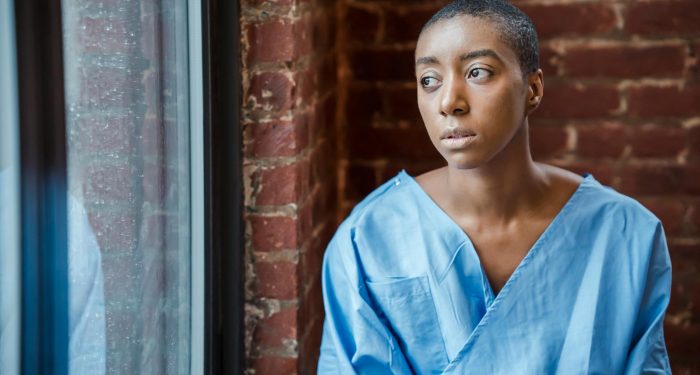
The recognition came during an ordinary moment that suddenly wasn't. I was watching my adult daughter reorganize her purse for the third time while we waited for my biopsy results, her hands busy with the kind of purposeless motion I recognized from my own mother. Same nervous energy, same refusal to sit with worry, same solitary fortification against fear. And in that fluorescent-lit moment, I finally understood that what I'd called strength in my mother had another name entirely.
The inheritance we don't name
My mother could stretch a dollar until it begged for mercy. She could make a feast from leftovers, sew a prom dress that looked store-bought, and raise four daughters while working as a seamstress. People called her remarkable, admirable, strong. What they didn't call her was lonely, though that's what she was every night at eleven o'clock, crying into dish soap while she thought we were all asleep.
She came from Pennsylvania stock, people who believed idle hands were the devil's workshop and asking for help was a character flaw. Her mother had survived the Depression on almost nothing, and passed down that ability like a cherished recipe. By the time it reached me, this inheritance had been refined through generations of women who confused coping with thriving, surviving with living.
When my first husband walked out, leaving me with two young children, I did what I'd been taught. I went back to school to finish my teaching degree while working as a substitute teacher. I learned to fix leaky faucets from library books, to cut my children's hair with kitchen scissors, to show up to parent-teacher conferences alone without feeling the empty chair beside me. Or at least, to pretend I didn't feel it.
"I don't know how you do it," people would say, and I'd smile and shrug because that's what strong women did. They didn't mention eating peanut butter from the jar for dinner after feeding the children a proper meal. They didn't talk about crying in the car after daycare drop-off. They certainly didn't name the loneliness that sat on their chest each night like a cat that wouldn't move.
When the pattern becomes visible
Virginia Woolf once wrote, "The eyes of others our prisons; their thoughts our cages." But what happens when the eyes are our own, when we imprison ourselves with inherited definitions of strength?
The pattern revealed itself slowly, like a photograph developing in reverse. First came the realization during couples counseling with my second husband. The therapist asked why I insisted on handling every school form personally, why I wouldn't let him pick up the kids from practice, why grocery shopping had to be my solo mission.
"I'm just used to doing things myself," I said.
"Is that strength or is that fear?" she asked.
The question hung in the air like smoke from a fire I hadn't realized was burning.
Then came the phone call from my son's wife. He was working two jobs, attending night school, trying to repair their house on weekends. "He won't let me help with anything," she said through tears. That night, I found him in the garage, hands bleeding from trying to fix a washing machine with YouTube videos and stubbornness.
"You taught me to be self-sufficient," he said when I suggested calling a repairman.
"I taught you wrong," I told him, and those three words cost me more than my divorce had.
The weight of what we carry forward
How do you measure the weight of an unmarked package? By the slope of your mother's shoulders at the kitchen sink? By the way your daughter organizes her purse to avoid her feelings? By your granddaughter refusing help with night feedings while drowning in postpartum depression?
The distinction between strength and loneliness is written in invisible ink across every generation of women in my family. My grandmother survived poverty and taught my mother you could live on almost nothing. My mother survived and taught me you could raise children alone. I survived divorce and taught my children you could do everything yourself.
We forgot to teach that you don't always have to.
I think about this often since writing about finding purpose in later life. Back then, I focused on discovering new passions and possibilities. Now I understand that sometimes purpose means untangling the threads we've been weaving for generations.
Learning to receive
At seventy, my knees don't cooperate like they used to. When grocery shopping became difficult, I had to practice saying yes to offers of help. Three words. One syllable. Impossible geometry for someone who'd spent a lifetime equating independence with worth.
The widow's support group taught me something crucial: sometimes the kindest thing you can do is help without making someone ask, because asking is often the hardest part. So now when I see my granddaughter struggling with new motherhood, I don't ask permission. I show up with casseroles. I fold the laundry that's been sitting in baskets. I take the baby for walks so she can shower or cry or do both.
My mother died before I understood what to call her sacrifice. Alzheimer's loosened her grip on that fierce independence, and in her confusion, she seemed almost relieved. She let nurses feed her, let me brush her hair, let strangers help her stand. Perhaps in the fog of forgetting, she finally remembered how to receive.
Rewriting the legacy
Last week, my daughter called about her teenager's acceptance to a summer program three states away. She was calculating the logistics like a general planning a campaign: the drive, the move-in, the cost, the time off work.
"I've got it handled," she said, my mother's words echoing through generations.
"I know you do," I said. "But wouldn't it be nice to have company for the drive?"
The silence that followed held decades of conditioning, centuries of women holding everything together alone. Then, quietly: "Yeah, it would."
This is my small revolution: I still hold things together, but no longer alone. I grow the same tomatoes my mother did, save seeds the way she taught me, make her soup recipe every Monday. But I also invite neighbors to harvest what I can't use, ask my grandson to help with the heavy lifting, let friends pull weeds while we talk.
The distinction seems subtle until you live it. Until you feel the difference between carrying a burden and sharing a load. Between standing strong and standing supported. Between the loneliness that looks like strength and the strength that comes from admitting you're lonely.
Final thoughts
I write birthday letters now to each grandchild, to be opened when they turn twenty-five. In every one, I include some version of this truth: Strength isn't doing everything alone. Strength is knowing when to reach out your hand and when to take the hand that's offered.
My eight-year-old granddaughter visits often. I teach her to bake cookies but also to ask for help reaching the high shelf. I show her how to plant seeds but also how to share the harvest. The unmarked package will still pass to her, but maybe she'll know what she's carrying. Maybe she'll open it sooner, understand the distinction in time to do something with it besides carry it forward.
Maybe the unmarked package ends with us.
What’s Your Plant-Powered Archetype?
Ever wonder what your everyday habits say about your deeper purpose—and how they ripple out to impact the planet?
This 90-second quiz reveals the plant-powered role you’re here to play, and the tiny shift that makes it even more powerful.
12 fun questions. Instant results. Surprisingly accurate.