A Columbia Journalism Investigations and Inside Climate News probe finds that two-thirds of proposed U.S. lithium projects sit in vulnerable counties, and one in 10 is within 10 miles of a tribal reservation — raising hard questions about whose land powers the green transition.
More than half of U.S. lithium projects are backed by Canadian companies that operate under stricter Indigenous consultation standards at home than they're required to follow on this side of the border. That single fact, buried in a sweeping investigation by Columbia Journalism Investigations and Inside Climate News, exposes what's really happening as America races to expand from a single operating lithium mine to nearly 20 by 2030: the green transition is being built on the same environmental injustice the fossil-fuel era was built on.
The same companies. Different rules. Predictable victims.
The framing typically offered for the lithium boom is national security plus climate progress. Domestic supply for electric vehicle batteries means less dependence on foreign sources and faster decarbonization. That story isn't wrong. It's just incomplete in a way that matters: the communities being asked to absorb the environmental cost are the same ones that have absorbed it for two centuries.
The pattern repeats
The CJI and ICN reporters built an original database of roughly 540 proposed lithium mines worldwide, and the geographic pattern in the U.S. tells the story. Nearly two-thirds of proposed American lithium projects sit in counties the CDC's Social Vulnerability Index flags as disproportionately poor or non-white. Roughly one in 10 proposed mines is within 10 miles of a tribal reservation, even though reservations make up just 2 percent of U.S. land. And that figure doesn't account for ancestral territory tribes no longer control.
This isn't a coincidence of geology. It's a consequence of which communities have the political power to say no, and which don't.
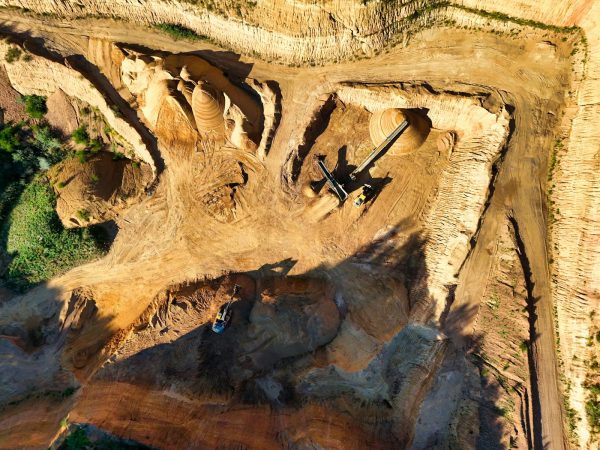
Companies have staked claims for more than 100 lithium projects across the country. At least six new mines are projected to begin extraction by 2030, with another 13 close behind, mostly in the dry Southwest. U.S. lithium's share of the global market is projected to climb from less than 1 percent today to as much as 8 percent within five years. The boom is real, and it is moving fast.
How other countries handle the same companies
The Canadian-firm gap matters because it shows the dispossession isn't inevitable — it's a policy choice. A companion piece from Inside Climate News contrasts the U.S. approach with frameworks in New Zealand, Norway, and Canada. New Zealand's government commission has produced roughly 100 settlements with Māori tribes since 1975. Norway, the first country to ratify ILO 169, transferred co-management of about 17,760 square miles to a Sámi-and-government landholding estate in 2005. Canada has decades of settlements that returned land or established shared governance.
What's possible looks different when consent is required. Integra Resources, a Canadian firm, signed a partnership agreement with the Shoshone-Paiute tribe over an Idaho project that gives the tribe decision-making input from early permitting onward. Brian Mason, chairman of the Shoshone-Paiute Tribe, said the agreement recognizes tribal authority over developments in their territory. It happened because the company chose it — not because U.S. law required it.
The accelerating gap
Federal regulators are operating under a mining law written in 1872 that does not require consultation with tribes before projects advance on ancestral lands. Tribal consultation, where it happens, is often discretionary and arrives late. Regina Lone Hill, historic preservation officer for the Oglala Lakota, has raised concerns about lithium discoveries in the Black Hills, noting that mineral deposits often overlap with areas of cultural and spiritual significance, and describing the historical pattern of excluding tribal voices as oppressive.
That gap is widening, not closing. Average environmental assessments under accelerated Bureau of Land Management procedures dropped from four years to 15 months. The Trump administration has gone further, taking the unprecedented step of buying equity stakes in lithium mines to guarantee federal loans, alongside an emergency permitting order from the Interior Department. The federal government isn't a neutral referee. It's an investor with reasons to keep projects moving.
What a real transition would require
Kate Finn, founder of the Tallgrass Institute, said the trade-offs of lithium extraction are not being fully assessed, raising concerns about whether the green transition can meet its environmental and social promises.
The cleaner energy system most readers want is going to require minerals pulled out of the ground somewhere. The question isn't whether to mine lithium. It's whether consumers who care about climate are willing to demand the same things at home that Canadian and Norwegian voters demand in their own countries: free, prior, and informed consent before projects move forward; binding tribal co-management of mineral decisions on ancestral lands; permitting timelines that don't shrink the moment Indigenous communities are most affected; and a hard end to the 1872 mining law as the operating framework for a 21st-century industry.
None of that slows the transition. It just changes who pays for it. A green economy that keeps asking the same communities to sacrifice — while the same Canadian companies treat their own Indigenous neighbors better — isn't a transition. It's a rebrand.