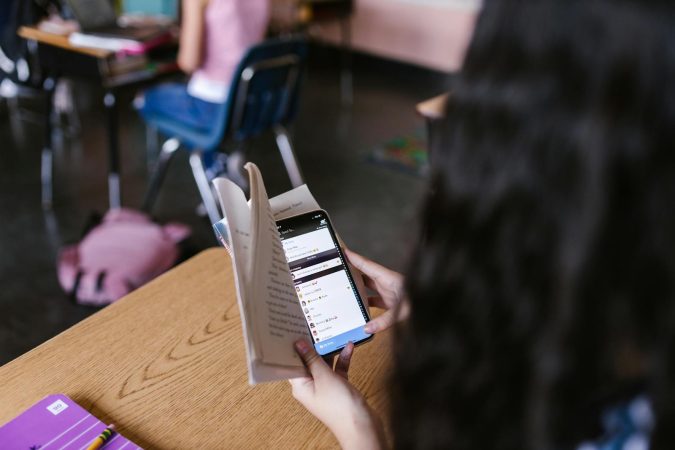
Placing your phone face-down isn't just politeness—it's a learned survival tactic from childhood, when scanning a parent's mood the moment you walked in the room meant everything.
The phone-down ritual is one of the most quietly revealing gestures in modern social life. Watch any restaurant on a Saturday night and a particular type of person becomes visible: they slide into the booth, scan the room once, place their phone screen-side down before the menu arrives, and only then exhale. Not occasionally. Every time. On every surface. The behavior reads as politeness, but politeness doesn't usually come with that level of automation, and the people doing it often can't tell you when they started.
The standard explanation is etiquette. Phones are rude, screens are distracting, face-down signals respect. That framing isn't wrong, exactly. It's just incomplete.
Because plenty of people are perfectly capable of leaving a phone face-up without feeling anything at all. They glance, they ignore, they move on. The face-down compulsives are a different category. For them, a screen visible in peripheral vision is a small, low-grade emergency, and the gesture isn't about the people they're with. It's about regulating what gets through to them.
The childhood version of the same skill
To understand the adult, look at what the child was doing. In homes where a parent's mood was unpredictable, children developed an early and precise ability to read the room before fully entering it. The slam of a car door. The weight of footsteps. The first three syllables of a hello. By age six, some kids had built a working barometric system for the emotional weather of the house, and they used it to decide whether to ask about dinner or disappear upstairs.
This is not a metaphor. It's a documented developmental pattern. Building on attachment theory—the foundational framework for how early caregiving shapes adult behavior—children with inconsistent caregivers develop heightened monitoring as a survival adaptation. A large longitudinal study published in the Journal of Personality and Social Psychology and led by University of Missouri psychologist Keely Dugan found that early dynamics with mothers predicted attachment styles across every primary relationship in adulthood, including friendships and romantic partnerships.
What the study described in clinical terms, most people who lived it describe in sensory ones. They knew, before anyone said anything, whether tonight was a safe night.
Hypervigilance, but make it functional
The clinical word for this is hypervigilance, and it tends to get pathologized in ways that obscure how useful it actually was. A child who could predict a parent's outburst three minutes before it happened wasn't broken. They were efficient. They had built, on a developing nervous system, a real-time threat-detection model that worked.
Prolonged exposure to unpredictable emotional environments in childhood produces durable changes in how adults regulate incoming stimuli. The system that scanned for a parent's mood doesn't shut off when the child grows up and moves out. It just finds new things to scan.
The phone, in that sense, is a near-perfect target. It's a device explicitly designed to deliver unpredictable emotional content at unpredictable intervals. A text from a sibling. A work email at 9 p.m. A calendar reminder. A breaking news alert. For most people, this is mildly annoying. For someone whose nervous system was tuned in childhood to register every incoming signal as potentially mood-altering, it's the same job they've always had, just with notifications instead of footsteps.
The parentification piece
There's a more specific version of this pattern: parentification. When a child becomes the emotional regulator for a parent rather than the other way around, they develop an almost forensic attention to micro-expressions. A tightened jaw. A shift in tone. The pause before a sentence.
These children grow into adults who continue to scan for emotional signals long after the original threat has gone, because the scanning itself became identity-level. They don't experience it as vigilance. They experience it as how they are. Adults raised by emotionally unavailable parents often develop a default setting of environmental monitoring that they rarely identify as a coping mechanism because it predates their capacity to identify anything.

What the gesture is actually doing
So the phone goes face-down. And the question worth asking is what, specifically, that accomplishes for the person doing it.
It removes a variable. The screen, even dark, is a portal for unscheduled emotional input. Flipping it cuts off the visual channel, reduces the chance of a notification commanding attention mid-conversation, and lets the person be more fully present with the human in front of them. That's the polite reading.
The more honest reading is that it lets them control which signals are allowed to reach their nervous system, and when. This is the same skill they were practicing at seven years old, deciding whether to come downstairs. The technology changed. The job didn't.
People with higher attachment anxiety often use digital platforms differently than securely attached peers, treating them as tools for managing emotional input rather than simply communicating. The phone isn't neutral hardware. It's an emotional regulator, and people regulate it accordingly.
Why the politeness frame is so sticky
The reason many people explain this behavior by saying they're simply being polite works as an explanation is that it's partially true and socially flattering. Nobody wants to say, even to themselves, that a small gesture at dinner is connected to thirty-year-old patterns of reading a parent's footsteps. Politeness is a cleaner story.
It also serves a function. Attachment anxiety often shows up as a chronic effort to balance the desire for closeness with the fear of being overwhelmed by it. Putting the phone down face-first is a tiny version of that calculation. It signals investment in the person across the table while quietly maintaining a perimeter.
The gesture is, in other words, doing two things at once. Both are real. Neither is the whole story.
The cost of always being the monitor
People who built their early identity around emotional monitoring tend to carry costs into adulthood that they don't always connect back to the source. Difficulty fully relaxing in social settings. A persistent low-grade fatigue after dinners that other people found energizing. The sense that they're working during conversations other people are simply having.
This pattern shows up in adjacent behaviors too, like the inability to enjoy a meal until everyone else at the table is served, which we've explored before as another gesture rooted in early emotional caretaking. Or the over-explained no, where adults raised on politeness above all else can't refuse a request without an apology paragraph attached.
The phone-down adult often has all of these. They are the ones managing the emotional temperature of the table without anyone asking them to, which is exactly the role they were assigned at home before they could read.
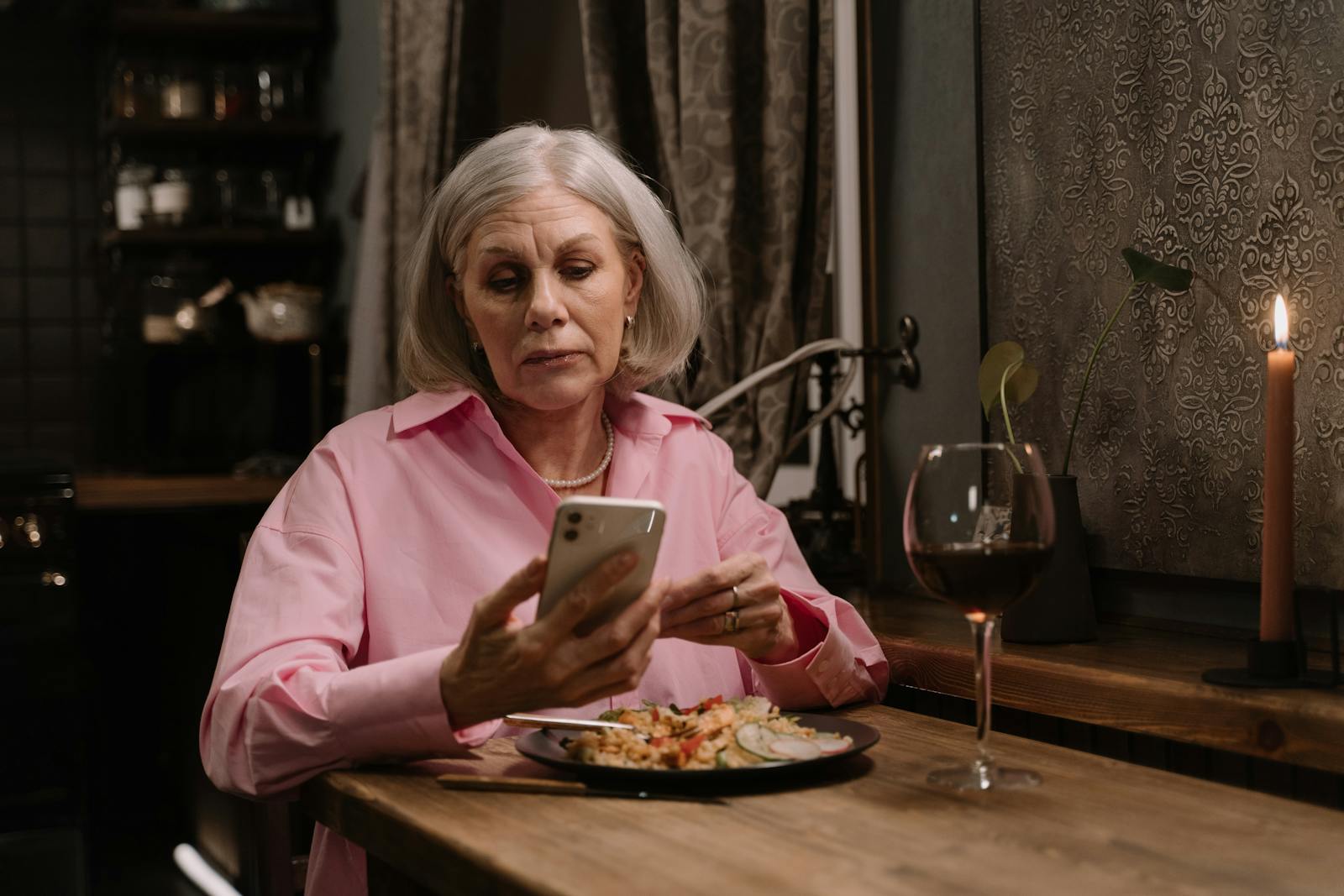
The counterargument worth taking seriously
It's also fair to say not every phone-down adult had a difficult childhood. Some people developed the habit in their twenties because they noticed their attention got hijacked, read a book about it, and decided to change. Some are responding to social norms that have shifted in the last five years to make visible phones at dinner feel slightly gauche. Some are just trying to be present and have no deeper story.
The pattern described here isn't universal. It's a specific subset, and the marker isn't the gesture itself but the rigidity of it. Casual phone-downers can leave the phone face-up at a friend's house and not think about it. Compulsive ones can't. They will reach across a table to flip a phone that isn't theirs. They will feel, however briefly, that the room is misaligned until the screens are dark. That's the tell.
What changes when you see it
The most useful thing about naming a pattern like this isn't fixing it. It's that the gesture stops feeling like a personality trait and starts feeling like information. The face-down phone becomes a small piece of evidence about a longer story, one that the person in question may have never narrated to themselves.
Some people, once they see it, leave the phone face-up on purpose, just to notice what happens in their body. Others keep doing what they've always done, but with a little more affection for the seven-year-old version of themselves who developed the system in the first place. Both responses are reasonable.
The good news is that attachment patterns are not destiny. They shift in response to safe relationships, therapy, deliberate practice, and time. Family patterns can be revisited and reworked well into adulthood, even when the original dynamics were difficult.
The smaller point and the larger one
The smaller point is that a phone placed face-down is rarely just a phone placed face-down. The larger point is that adults are walking around running childhood software in adult contexts all the time, usually without realizing it, and the gestures that look like manners or quirks or preferences are often the visible edges of much older operating systems.
The seven-year-old who learned to read a parent's mood from across a room didn't disappear. They grew up, got a job, got a phone, and found new ways to do the same work. The face-down phone is one of those ways. It's not a moral failing. It's not even, by itself, a problem. It's just a person, still on the job, still trying to make sure that whatever signal arrives next doesn't catch them off guard.
Which, when you think about it, is a fairly reasonable thing for a nervous system to want.