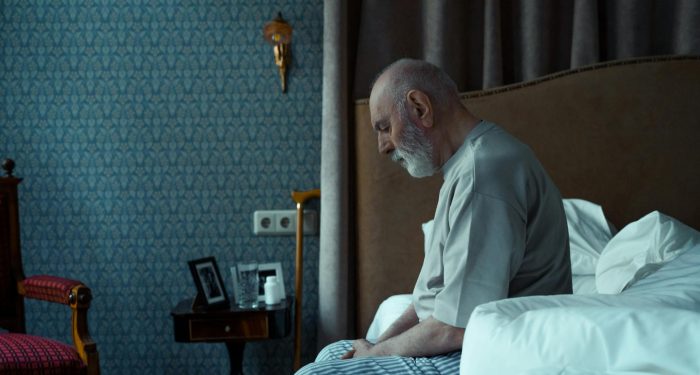


The morning coffee hits different when you realize it's not the missing coworkers or empty calendar making you feel lost—it's the dawning recognition that for forty years, your job title has been answering the question "Who am I?" for you.
Ever watch someone's face change when they tell you they've retired? There's this flicker, a moment where the smile doesn't quite reach their eyes, where the word "retired" hangs in the air like a question they're still trying to answer.
I noticed it first with someone who'd worked at the same firm for thirty-eight years. Six months into retirement, he was asking if they needed any "consulting help." He didn't need the money. He needed something else entirely.
The identity crisis nobody warns you about
Here's what struck me about retirement psychology when I was studying psychology: we prepare people financially for retirement, but nobody prepares them for the existential earthquake that follows.
Think about it. For four decades, you wake up knowing exactly who you are. You're the project manager, the teacher, the accountant. You have a title, a desk, a purpose that society recognizes and validates. Then one Friday afternoon, you hand in your key card, and suddenly you're... what exactly?
Liu Ping Chen from the Department of Psychiatry at the University of Ulsan puts it bluntly: "Retirement can diminish or eliminate these sources of recognition, leading to a decrease in perceived self-worth."
It's not the missing coffee breaks with colleagues that hurts. It's the missing sense of self.
When work becomes your autobiography
Remember when you were a kid and adults would ask what you wanted to be when you grew up? Nobody asked who you wanted to be. The question was always about work, about profession, about contribution to the economic machine.
Fast forward forty years, and that childhood programming has done its job perfectly. Work hasn't just been paying your bills; it's been writing your life story.
You know what's wild? Research published in Current Psychology found that older workers with strong organizational commitment anticipate significant identity changes upon retirement, suggesting that work plays a crucial role in shaping their self-concept.
In other words, the more you loved your job, the harder retirement hits. It's like losing a limb you didn't know was holding you up.
The dangerous comfort of borrowed purpose
I've been thinking a lot about this since watching someone navigate early retirement. She was a high-powered executive who took an early package at fifty-eight. Within three months, she'd reorganized her entire house twice, started four different hobbies she abandoned, and was driving her husband slightly insane with her restlessness.
What she was really doing was searching for something that work had been quietly providing all along: a reason to get up that didn't require her to invent it herself.
Mark Travers, a psychologist, captures this perfectly: "Retirement may feel less like a choice and more like a fall from grace; like losing a title that gave them purpose."
The comfort of borrowed purpose is that you never have to confront the terrifying question of what you actually want your life to mean. Work answers that for you, Monday through Friday, nine to five.
Why retirement loneliness feels different
There's regular loneliness, and then there's retirement loneliness. Regular loneliness is missing people. Retirement loneliness is missing yourself.
When I worked that warehouse job in my mid-20s, shifting TVs all day, I felt lost and purposeless. But at least I knew I was searching for something. Retirees often don't even realize what they've lost until months or years into retirement.
Research from the Netherlands Interdisciplinary Demographic Institute indicates that retirees often miss aspects of their work role, such as social contacts and status, highlighting the deep connection between work and personal identity.
But here's what that research doesn't capture: the vertigo of freedom. When every day is yours to design, when there's no boss expecting you, no deadlines looming, no meetings scheduled, you're left with the most confronting companion of all: yourself.
The myth of the golden years
"Retirement is a Western invention from days gone by that's based on broken assumptions that we want – and can afford – to do nothing," writes Neil Pasricha.
Think about that for a second. We've built an entire life stage around the idea that doing nothing is the reward for doing something for forty years. But humans aren't wired for nothing. We're wired for meaning, for contribution, for growth.
In my book, "Hidden Secrets of Buddhism: How To Live With Maximum Impact and Minimum Ego," I explore how Eastern philosophy views purpose differently than Western culture. It's not about achieving a state where you can finally stop; it's about continuous becoming, continuous contribution, continuous growth.
Reclaiming your narrative
So what do you do when work stops writing your story?
You pick up the pen yourself.
This isn't some motivational poster wisdom. This is about recognizing that retirement isn't losing your identity; it's discovering that your identity was never your job in the first place.
The people who've navigated retirement successfully all have one thing in common: they stopped trying to replace work and started trying to discover themselves. They took up causes, not hobbies. They built communities, not schedules. They asked not "How do I fill my time?" but "What do I want to contribute?"
The quiet morning revelation
That quiet weekday morning, when the rest of the world is at work and you're sitting with your coffee wondering what to do with yourself, isn't empty. It's pregnant with possibility.
It's the first time in decades you get to ask yourself who you are without your job title finishing the sentence. It's terrifying. It's also liberating.
The loneliness of retirement isn't really about missing your coworkers or your routine. It's about meeting yourself, possibly for the first time, without the comfortable mask of professional identity.
And maybe that's not a crisis. Maybe that's the whole point.
Final thoughts
The psychology of retirement reveals an uncomfortable truth: we've outsourced our identity to our careers for so long that we've forgotten we exist outside of them. But recognizing this pattern is the first step to breaking it.
Whether you're years from retirement or watching someone you love navigate it, remember this: the question isn't how to replace what work gave you. It's how to discover what you can give yourself.
The empty mornings aren't a void to be filled. They're a canvas waiting for you to finally pick up the brush.