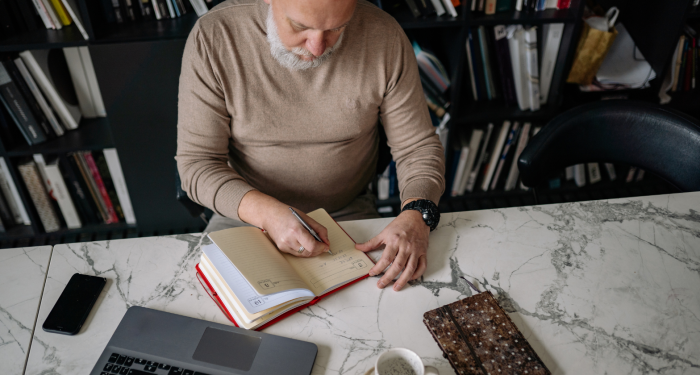
At 66, I've discovered the exquisite ache of being fiercely loved by children who've built lives so complete they rarely need my advice, leaving me to navigate the unexpected loneliness of successful parenting.
After thirty-five years in the restaurant business, you'd think I'd understand the difference between being needed and being wanted. In a kitchen, you're essential until you're not. One day you're the only one who knows how to fix the temperamental convection oven, the next day someone half your age has watched a YouTube video and solved it with a rubber band and confidence.
My children have mastered this same trick with their lives. They've built beautiful, functional existences that run smoothly without my input. My stepdaughter sends photos of her son destroying the garden, pulling up carrots before they're ready. "He's just like you," she writes, though we share no genetics and she spent years calling me "Mum's husband." My stepson texts about cycling routes, inviting me to join his Saturday rides. These are invitations to participate, not requests for guidance, and I've had to learn the difference.
The hard truth about raising competent humans is that if you do it right, you work yourself out of a job. You spend decades being the person who knows which fever needs a doctor and which needs rest, who can fix the chain on their bike or explain why their friend is being cruel. Then one day you wake up and they're handling their own fevers, their own bike chains, their own cruel friends. They love you fiercely but consult you rarely, and nobody prepares you for how specific that grief feels.
What the restaurant years taught me about need
I started washing dishes in my uncle's diner when I was sixteen, worked every conceivable position over thirty-five years, and eventually sold my own place at fifty-eight. The restaurant taught me to read people like short menus—quickly and accurately. Some tables want you to recite every ingredient and its provenance. Others want you to vanish after taking their order. But somehow I never learned to read my own family with the same precision.
During my first marriage, I worked Friday and Saturday nights for fifteen years straight, telling myself I was providing. My ex-wife tried to explain that she didn't need a provider; she needed a partner. By the time I understood the difference, our son was seven and spending weekends with a father who was still learning how to be present instead of productive.
The divorce forced me into therapy, where I discovered an uncomfortable truth: being indispensable at work was my strategy for avoiding vulnerability at home. The restaurant never rejected me. The restaurant always needed me. But a marriage requires you to show up without your competence as currency, and I'd been trying to purchase love with usefulness my entire adult life.
Learning to be chosen rather than necessary
My second wife and I married when I was forty-seven, both of us carrying the scar tissue of failed first attempts. She'd sent back a bottle of wine at my restaurant—politely but firmly—and I'd been impressed rather than offended. Three years of dating taught us something crucial: we were whole people choosing each other, not broken halves looking for completion.
She doesn't need my thirty-five years of experience. She has her own. But she wants my presence, my terrible puns, my elaborate Sunday dinners. The distinction between being needed and being wanted is subtle but profound. One is about utility; the other is about choice.
Now I watch my son with his daughter, patient in ways I never was, present in ways I didn't know how to be. He's learned from my mistakes without my having to catalog them. He's become the father I might have been if I'd understood then what I understand now—that showing up matters more than showing off, that being there is more important than being necessary.
The freedom in gentle irrelevance
My friend from the Toronto restaurant scene says we're all trying to remain relevant. His daughter lives across the country and calls monthly. His son married someone who finds him overwhelming. "We spent so many years being essential," he tells me over beers, "we don't know how to be optional."
But there's liberation in this gentle irrelevance. I cycle the lakefront trail on Saturday mornings without guilt. I volunteer at the food bank, teaching knife skills to people who actually need them. I make elaborate vegan Sunday dinners for whoever shows up—cashew cream sauces, mushroom Wellington that converts skeptics, desserts that bring people back for seconds.
My granddaughter doesn't care that I once ran a successful restaurant or that I know the perfect temperature for caramelizing onions. She cares that I remember she doesn't like crusts and that I let her lick the bowl when we make brownies. My grandson calls basil "the pizza leaf" because I taught him to identify herbs by smell. They don't need my wisdom; they need me to read stories with all the voices, to walk slowly enough to investigate every puddle, to be the grandfather who makes pizza dough from scratch on Sunday afternoons.
Last month, I consulted for a young couple opening their first restaurant. They hung on every word about managing suppliers, surviving the first brutal year, building customer loyalty. They needed my thirty-five years of burns, failures, and small victories. They wrote everything down, asked follow-up questions, made me feel like an oracle instead of an old man with too many stories.
Then I came home to find my wife thinning the tomato plants without asking which ones to keep. My son had already decided about the promotion. My stepdaughter had chosen a preschool without seeking input. The world spun smoothly on its axis without my expertise.
Final words
The strange grief of being deeply loved and rarely turned to is real, specific, and nobody warns you about it. But there's something else nobody mentions: the peculiar peace of being chosen without being necessary, the quiet joy of being included without being essential.
Last week, my granddaughter asked why I make so much food on Sundays. Before I could launch into a story about growing up in restaurants, about food as love made tangible, she answered herself: "It's because you love us, right?" She didn't need the explanation. She just needed confirmation of what she already knew.
Maybe this is what sixty-two looks like: being a library that nobody urgently needs to visit but that remains open, well-organized, occasionally browsed. The books are still good. The wisdom still applies. But people are reading their own stories now, writing their own chapters.
I spent thirty-five years believing that being needed was the same as being valued. Now I make elaborate vegan brunch for my wife—not because she needs me to, but because love at this age is about choosing to show up with something warm in your hands, even when nobody's hungry. It was never about being needed at all. It was always about being witnessed, being known, being welcomed at the table even when you're no longer the one who cooked the meal.