Plant Based News reports that pressure cooking and a 30-minute rest after chopping can preserve up to 95% of kale's key nutrients — while boiling washes much of it down the drain.
That kale salad you virtue-signaled with at lunch? Depending on how it was prepped, you might be getting a fraction of the nutrients you think you're paying for. A new explainer from Plant Based Science London, covered by Plant Based News, argues that common cooking habits can strip away most of the vitamins and protective compounds people are eating kale to get — in some cases, boiling leafy greens for 10 minutes can destroy up to 85% of their vitamin C.
The conventional advice has been simple: eat more leafy greens. The video pushes further, suggesting the prep method can significantly affect nutrient retention.
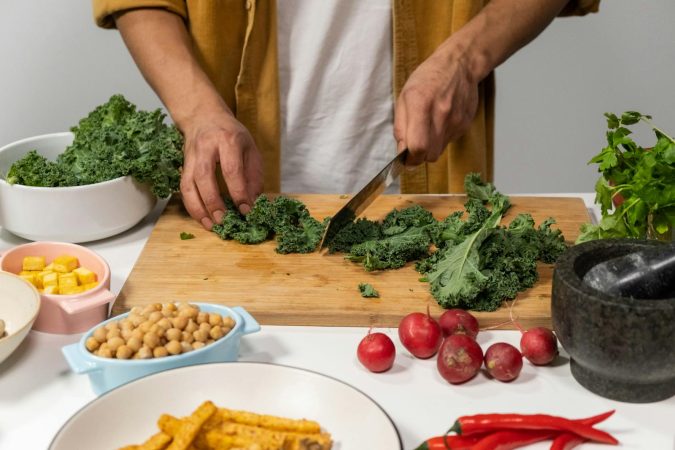
Two techniques do most of the work. The first happens before any heat is applied. Chopping kale and letting it sit for roughly 30 minutes before cooking allows sulforaphane (a sulfur compound linked to reduced inflammation, cardiovascular benefits, and cancer-cell suppression) to form. The rest period helps maximize sulforaphane production, with formation increasing several times compared with cooking kale immediately after chopping.
The second technique is about minimizing exposure. The recommendation: bring a pressure cooker up to pressure and release it the moment it signals. The kale touches high heat for roughly one to two minutes, with very little water contact. Under that method, pressure cooking can retain a high percentage of vitamin C, folate, and lutein and other carotenoids.
For households without a pressure cooker, the microwave performs better than most people assume. Microwaving chopped kale in a small amount of water for a few minutes can preserve substantial amounts of vitamin C, folate, and carotenoids. The BBC has separately examined microwave cooking and nutrient retention, noting that short cooking times with minimal water tend to outperform boiling for water-soluble vitamins.
The common enemy across both methods is the same: heat plus water plus time. Long boils leach water-soluble nutrients into the cooking liquid, which most people then pour down the drain. Vitamin C and folate are particularly vulnerable. Carotenoids hold up better but still degrade with extended cooking.
The Plant Based Science London YouTube channel, which translates academic nutrition research into short videos, frames it bluntly: how you cook kale can matter just as much as choosing kale at all.
So here's what to do tonight: chop your kale first, then prep everything else for 30 minutes while the sulforaphane develops. When it's time to cook, reach for the pressure cooker or microwave instead of a pot of boiling water, and use as little liquid as possible. Two small habit shifts that cost nothing and require no new groceries — but could be the difference between a vitamin-rich side dish and a plate of expensive green fiber.