

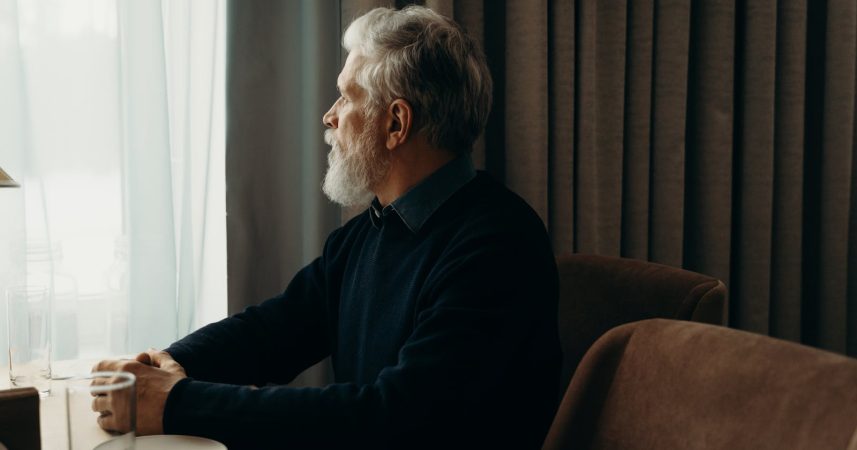
The coffee maker that knew your name, the security guard who asked about your weekend, the colleague who saved you a seat—they weren't friends exactly, but their sudden absence on a random Wednesday afternoon reveals the devastating truth about how much of what felt like belonging was just proximity dressed up as connection.
Picture this: a Wednesday afternoon, 2:47 PM. The house is quiet except for the hum of the refrigerator. You've already read the news twice, walked around the block, and reorganized the kitchen drawer that didn't need organizing. The phone hasn't rung all day.
This is when it hits you. Not the dramatic loneliness of holidays or weekends when everyone else seems busy. But the ordinary, Tuesday-through-Thursday kind that nobody warned you about. The kind that makes you realize how much of your daily conversation used to happen simply because you shared an office, a lunch break, a complaint about the coffee machine.
A retired friend called me last week, right around 3 PM. "Just wanted to hear someone's voice," he said. He'd been retired for two years, and I could hear something in his tone I'd never noticed during his working days. It wasn't sadness exactly. It was the sound of someone who'd just discovered that silence has weight.
The architecture of belonging we never noticed
For forty years, you had a place to be. Not just physically, but socially. You had Mike from accounting who always asked about your weekend. Sarah from HR who remembered your wife's name. The security guard who knew how you took your coffee.
These weren't deep friendships. You probably never saw these people outside work. But they formed something I've come to think of as "ambient community" - the background noise of human connection that we don't notice until it's gone.
When I was working a warehouse job in my twenties, feeling lost and reading about Buddhism on my breaks, I remember thinking how meaningless those surface-level interactions felt. "How was your weekend?" "Fine, yours?" The same script, day after day.
But here's what I didn't understand then: those micro-connections were actually holding something together. They were proof that you existed in other people's daily narrative. That your presence was expected, noticed, even necessary.
Why weekday afternoons hit different
Weekends have their own rhythm. There's an unspoken social contract that Saturdays are for errands, activities, maybe seeing friends. Sundays have their own lazy permission structure. But Wednesday at 2 PM? That's when the world is at work, when everyone else is in meetings, when the very air seems to say "you should be somewhere doing something."
A neighbor of mine, recently retired after 35 years in banking, told me she finds herself making unnecessary trips to the grocery store. "I buy one banana," she laughed, but there was something hollow in it. "Just to have someone ask if I found everything okay."
It's not pathetic. It's human.
We're social creatures who evolved in tribes, and for most of human history, being alone during peak daylight hours meant something had gone wrong. Your nervous system knows this, even if your rational mind says you've "earned" your retirement.
The cruel math of professional relationships
Here's the part that stings: realizing how many of your daily interactions were transactional. The colleagues who seemed to care about your opinions were often just being professional. The lunch invitations that stopped the day you cleaned out your desk. The inside jokes that apparently weren't worth a text message.
In my book, Hidden Secrets of Buddhism: How To Live With Maximum Impact and Minimum Ego, I write about how attachment to expectations creates suffering. But there's something particularly brutal about discovering that many workplace relationships were held together by proximity and protocol, not genuine connection.
You spend eight hours a day, five days a week, for decades with these people. You know their coffee orders, their kids' names, their Friday afternoon moods. And then you retire, and within six months, you might as well have never existed.
The identity crisis nobody mentions
When someone asks "What do you do?" after retirement, there's this awkward pause. "I'm retired" feels like saying "I used to be someone." Your professional identity wasn't just about status or achievement. It was about having a role in the daily drama of getting things done.
Without deadlines, meetings, and even mundane Monday morning check-ins, who are you? What stories do you have to tell? "I reorganized the garage" doesn't quite have the same narrative weight as "You won't believe what happened in today's board meeting."
Buddhism teaches that identity is an illusion anyway, that we're all constantly changing. But try explaining that to someone who just spent 40 years being "Dave from Sales" and suddenly finds himself being nobody from nowhere.
Building new rhythms of connection
The answer isn't to pretend professional relationships were deeper than they were, or to desperately try to maintain connections that were always destined to fade. It's about understanding what those relationships actually provided and finding new ways to meet those needs.
Some retirees I've talked to have found their answer in structured volunteering, not for the feel-good factor, but for the Tuesday morning accountability. Others have joined workout classes, not for the exercise, but for the predictable cast of characters who notice when you're not there.
One former executive told me he started going to the same coffee shop every morning at 8:30 AM. Same table, same order. After three months, the regulars started nodding. After six months, they were having actual conversations. "It's not the same as work," he said, "but it's something."
The paradox of freedom
Retirement promises freedom, but freedom from what? From structure, from obligation, from having to show up. But those things we couldn't wait to escape were also the scaffolding of social connection. They gave us reasons to shower, dress, and engage with the world.
I learned through studying Buddhism that suffering often comes from attachment to expectations. We expect retirement to be a reward, a peaceful sunset after years of labor. We don't expect it to be lonely on a random Wednesday afternoon. We don't expect to miss the colleague who annoyed us or the commute we complained about.
The challenge isn't just filling time. It's creating new containers for connection that don't depend on economic necessity. It's building relationships where showing up is a choice, not an obligation, which somehow makes them both more precious and more fragile.
Finding meaning in the quiet
Maybe the silence of retirement is honest in a way that's uncomfortable but necessary. It forces you to confront who you are when nobody's watching, when nobody needs you to be anywhere, when your presence is entirely optional.
This isn't a problem to be solved so much as a transition to be navigated. Like any major life change, it requires grieving what was while building what could be. It means accepting that some connections were always temporary while being brave enough to forge new ones.
The weekday afternoon loneliness of retirement isn't a sign that your life was fake or that your relationships were meaningless. It's a recognition that human connection takes many forms, and losing one form means you need to consciously cultivate others.
Your worth was never actually tied to your job title or your usefulness to an organization. But it might take some quiet Wednesday afternoons to really believe that. And that's okay. The silence might be heavy, but it's also where you might finally hear yourself think, without the constant background noise of other people's agendas.
The phone might not ring as often. But when it does, it's someone who actually wants to talk to you, not someone who needs something from you. And maybe that's worth the quiet afternoons in between.