The Colorado River is on track to violate a 1922 compact for the first time, while Corpus Christi, Texas could run dry by next year. Both crises were foreseeable — and both reveal who actually uses the water.
The American West is heading into summer with two water emergencies running on parallel tracks, and the conventional reassurance that no major U.S. city has ever actually run dry is starting to sound less like a fact and more like a wager. The Colorado River, which feeds millions of people across seven states, is on track to break a century-old legal compact for the first time. And in Corpus Christi, Texas, municipal water sources could run dry by next year if weather patterns don't shift.
Most coverage of Western drought treats these as natural disasters with a climate footnote. The reporting from Grist tells a more uncomfortable story: these crises were predictable, the warnings were ignored, and the cities now staring down shortages spent the last decade courting the industries draining their reservoirs.
What's actually happening on the Colorado
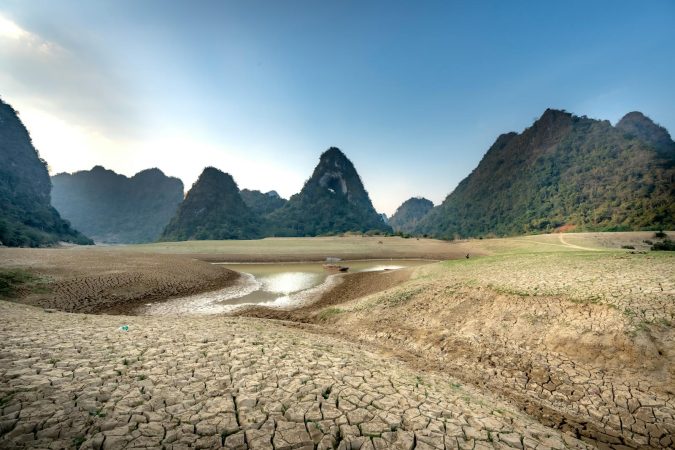
February brought low snowpack to mountain ranges across the West. March came in hotter still. By early spring, river flow in stretches of the Colorado had slowed to a trickle, and Lake Mead, already battered by years of drought, was sitting near the record low it set in July 2022.
Brad Udall, a senior water and climate research scientist at Colorado State University's Colorado Water Center, told Grist this spring that the basin had just experienced one of its hottest Februaries on record, with temperatures running roughly 5 degrees Fahrenheit above the 20th-century average. That heat is rapidly burning off the snowpack the river depends on, and it is consistent with the long-term aridification he and colleagues have documented in peer-reviewed work for more than a decade.
The river isn't only a drinking-water source. Its dams at Lake Powell and Lake Mead generate electricity for millions of people across the Southwest. Falling reservoir levels mean less water and less power, at the same time.
Layered on top of the hydrology is a political fight that has been brewing since 1922. That year, the Colorado River Compact divided the river's flow between an upper basin and a lower basin among seven states. The agreement assumed wetter conditions than the river has actually delivered, and states have repeatedly missed deadlines to renegotiate it. If upper-basin states fail to send enough water downstream this year, it would mark the first violation of the compact in its history and almost certainly trigger lawsuits between states.
Who actually uses the water
The framing of Western water shortages tends to focus on lawns, swimming pools, and golf courses in Phoenix and Las Vegas. The numbers don't support that story. A 2024 study published in the journal Communications Earth & Environment, led by Brian Richter of the conservation group Sustainable Waters and co-authored by researchers at NASA's Jet Propulsion Laboratory and other institutions, found that irrigation of cattle-feed crops, primarily alfalfa and grass hay, consumes roughly 32 percent of all Colorado River water taken by humans, evaporation, and natural vegetation. The same research group's earlier 2020 paper in Nature Sustainability had already found that across the Colorado River Basin, more than half of all consumed water goes to crops grown to feed beef and dairy cattle.
Alfalfa alone uses more water than every city, commercial user, and industrial user across the entire basin combined, according to that 2024 study. That detail matters because it changes what "conservation" means. Asking residents to take shorter showers is politically easy and largely symbolic. Restructuring agricultural water rights, many of which were issued more than a century ago and treat water as effectively free, is politically radioactive and where the actual water lives.
This is the impact-over-identity question playing out at the scale of a river basin. The household water-saver feels good doing the right thing. The system keeps draining the reservoir.
Corpus Christi's slow-motion Day Zero
Texas's eighth-largest city offers an even sharper case study. Corpus Christi is on track to reach a Level 1 water emergency by fall, with the city's own modelling now narrowing the projected date to September 2026, after which municipal sources could run dry if rain doesn't materially shift the picture.
Two of the city's primary reservoirs, Choke Canyon and Lake Corpus Christi, have reached critically low levels. Earlier this year their combined storage dipped to roughly 10 percent of capacity according to Texas Water Development Board data, and they have hovered close to that floor since. Residents are already under Stage 3 restrictions that prohibit outdoor watering and car washing, and water bills have crept up.
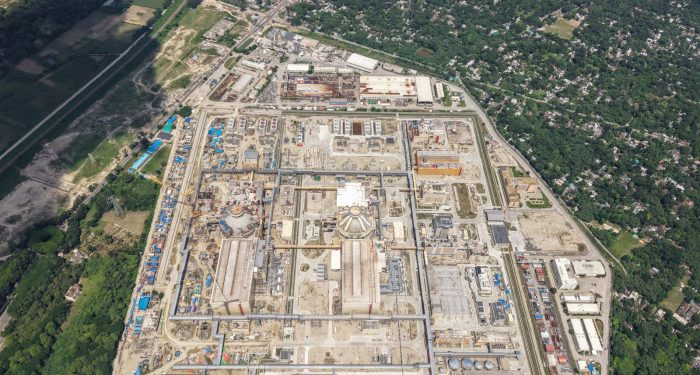
Industrial users tell a different story. Corpus Christi is a petrochemical hub, and the Gulf Coast Growth Ventures plastics complex, a joint venture of ExxonMobil and Saudi Basic Industries Corporation that began operations in 2022, is among the largest industrial water customers in the region. At full operating capacity the facility is set up to consume up to 25 million gallons of water per day. By comparison, the U.S. Environmental Protection Agency estimates the average American household uses about 300 gallons daily, meaning that single plant's daily draw is roughly equivalent to the monthly consumption of more than 2,500 households. The Corpus Christi water system supplies roughly 500,000 people across seven counties, and according to figures the city's water utility provided to Grist, industrial customers in the region consume more water than the residential population the system serves.
City Manager Peter Zanoni told Grist in March that the city was trying to balance conservation requirements with the economic role of its industrial base, and was reluctant to impose restrictions that would force petrochemical operators to curtail production.
The infrastructure that wasn't built
Corpus Christi has talked about building a desalination plant for years. Costs ballooned past a billion dollars, residents raised ecological concerns, and regulators voted the project down. There is no backup supply plan. Governor Greg Abbott's office denied the city additional funding for a separate desalination effort.
Shane Walker, director of the Water and the Environment Research (WATER) Center at Texas Tech University, framed the lesson bluntly to Grist: "Some lessons to learn from this situation that are important for a lot of cities, especially in the Southwest, is that water infrastructure projects are getting more expensive with time. If you think you can wait around and get a cheaper deal on a water infrastructure project, it's probably the opposite."
His broader warning was about planning horizons. "You have to think of a 20-year time horizon as urgent," Walker said. "If you're relying on groundwater, groundwater is a finite resource. Lakes are vulnerable to drought. What's your alternative supply?"
For most American cities, the honest answer is: we don't have one.
What these crises share
The Colorado River and Corpus Christi look like different problems. One is interstate, one is municipal. One is about agriculture, one is about petrochemicals. But they share a structure: a slow-building shortage, decades of warnings from people inside the system, industrial users protected from the conservation measures applied to households, and political leaders unwilling to choose between economic growth and water security until the choice is forced on them.
Udall's frustration is the through-line, and it is grounded in the fact that he and co-author Jonathan Overpeck warned, in a 2017 paper in Water Resources Research, that continued warming could conservatively drive Colorado River flow declines of 20 percent by mid-century and 35 percent or more by the end of the century. The basin is now tracking toward those numbers.
This is what climate change actually looks like at the policy level. Not a single dramatic event, but a series of foreseeable problems that institutions decline to solve until the cost of inaction exceeds the cost of action. The same pattern is visible in Tehran's water collapse and in cities across the Global South that have already gone through Day Zero scares.
What might come next
There's a chance of short-term relief. Recent rains have helped stabilize parts of the West, and an unusually intense El Niño season could bring heavier summer monsoons. Some Texas reservoirs have seen modest recovery, easing immediate pressure on supply.
But weather is not a plan. The structural questions remain: who has the right to draw down a shared river, what happens when industrial customers consume more than entire residential populations, and how cities should weigh tax revenue from petrochemical plants against the water those plants require to operate.
Udall has called the current renegotiation of the Colorado River operating rules, with the post-2026 guidelines due to be finalised this year, the most consequential test of Western water policy in a century, one that will force seven states, two countries, 30 tribal nations, and tens of millions of water users to confront allocations written for a river that no longer exists.
The summer ahead will not resolve any of this. It will, at most, make it impossible to keep pretending the problem isn't there.