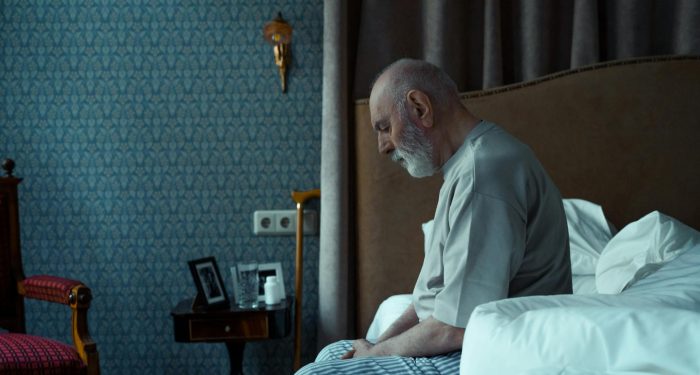


The Saturdays already given are gone. The Saturdays remaining are the ones, finally, that can still be chosen
Most discussions of late-life regret center on specific decisions. The career not pursued. The relationship not entered. The risk not taken. The cultural framing implies that regret has objects—particular things one wishes one had done differently—and that the work of avoiding regret involves making better individual decisions at the major junctures of one's life.
The actual regret most people carry into their late years is not, on close examination, this kind. The major decisions, in most cases, are not where the regret lives. The career was, in most cases, fine. The relationship was, in most cases, fine. The big choices, when revisited from the vantage point of seventy-five, often turn out to have been roughly the right ones, given the conditions in which they were made.
What people in their late seventies and eighties more commonly describe, when they are honest about it, is something subtler and harder to point at. It is the cumulative weight of thousands of small deferrals, distributed across decades, that, taken individually, never seemed to matter, and that, taken together, produced a particular flatness in the texture of the life. The flatness does not show up in any single memory. It shows up, instead, as a generalized sense that the life was, in some hard-to-articulate way, technically lived but not really chosen.
This is the regret that arrives late, that has no single object, and that almost no one is given language for in advance.
What a small deferral actually is
It is worth being precise about what kind of small deferral this regret is composed of, because the deferrals in question are not, in any individual instance, the kind of thing that would seem worth examining.
A small deferral is the moment in which a person, faced with a choice between what they actually want to do and what someone else in their life would prefer they do, chooses the second. The choice is not, in most cases, agonizing. It is, in fact, almost automatic. The person registers, briefly, their own preference. They register the other person's preference. They calculate, in some quiet internal arithmetic, that the cost of asserting their own preference is higher than the cost of accommodating the other person's. They accommodate.
The accommodation is, in any single instance, fine. The Saturday afternoon was going to be filled with something. Whether it was filled with the thing the person wanted or the thing the partner wanted is, in any single Saturday, a small matter. The week proceeds. The relationship proceeds. The accommodation is logged, by the person making it, as a small generous act in a long shared life.
What the person making the accommodation does not, in most cases, calculate is the cumulative effect of making this calculation thousands of times across decades. Each individual Saturday is small. The compounding of small Saturdays, across forty years of married life, is not small. The compounding produces a particular structural fact about the person's life, which is that an enormous proportion of the time they had on earth was spent, in some real way, executing other people's preferences rather than their own.
The structural fact does not register at the level of any individual Saturday. It is invisible inside the daily life. It becomes visible, in many cases, only late, when the person has, at last, the cognitive bandwidth to look at the long arc of how their time was actually spent.
Why this kind of deferral is so hard to notice
The reason small deferrals accumulate without notice is that they are, in any individual instance, indistinguishable from generosity. The person making the deferral is, by every external measure, being kind. They are being a good partner, a good parent, a good friend. They are putting other people's preferences ahead of their own, which is, in most cultural frameworks, the textbook definition of being a decent person.
It is therefore very difficult, in real time, to distinguish between deferrals that are healthy and deferrals that are quietly costing the deferrer something they will not be able to recover. The two look identical at the level of any single decision. The Saturday spent on the partner's preference looks, from inside, like a generous Saturday. The fact that it is the four-hundredth such Saturday in a row, in some particular dimension of life, is not visible from inside the Saturday. The pattern is, structurally, invisible to the person inside it. It can only be seen, in most cases, from outside the time it was happening in.
This is why the recognition arrives late. The cumulative pattern requires the long backward look. The long backward look is not, in most cases, available to people in the middle of their lives, who are too embedded in the daily texture to see the shape of what is being produced. By the time the look is available—usually in late life, when the practical demands have eased—the pattern has already produced its full effect. The recognition is, accordingly, retrospective. There is nothing to be done about the deferrals already made. They have already become the substance of the life.
What can be done, in late life, is the recognition itself. The recognition does not undo the pattern. It does, however, allow the person to name accurately what they are looking at, which is, in some real way, the start of being able to live with it.
Why the regret feels like flatness rather than pain
One of the strange features of this kind of late-life regret is that it does not, in most cases, present as pain in the conventional sense. It presents as flatness.
The person, looking back, does not have a list of specific moments to feel anguished about. The Saturdays, individually, were not bad. The relationships were not bad. Nothing, when examined at the level of any specific event, jumps out as a wound that needs to be addressed. The life, looked at as a sequence of episodes, looks fine. It looks, in many cases, better than fine. It looks like a life of warmth and connection and reasonable comfort.
What does not feel right, when the person looks at it, is something more diffuse. The life feels, in some way they cannot quite locate, like it was not really theirs. It feels like it was lived, in some real sense, by a person who was always slightly accommodating something other than their own internal compass. The accommodating was so consistent and so unobtrusive that the compass itself, by the end, is no longer entirely calibrated. The person looks for what they actually want and finds, instead, mostly the residue of what they had spent decades adjusting to.
This residue produces the flatness. The flatness is the texture of a life in which the person's own preferences had become, over the years, less and less audible to themselves. The audibility of one's own preferences requires regular practice. The practice involves, every so often, asserting them against the preferences of others. A person who has rarely done this, across a long life, has rarely exercised the muscle. The muscle, accordingly, has atrophied. By late life, the person can no longer easily tell what they want, because the apparatus for telling has not been used enough to remain functional.
The regret, then, is not really for the deferrals themselves. It is for the loss of access to one's own preferences. The deferrals were, in some real way, the price of that loss. The person paid the price across thousands of Saturdays without noticing they were paying it. They notice it, finally, in late life, when they reach for what they want and find that the what is no longer clearly there.
What can be learned from this, while there is still time
The standard cultural advice for younger people, derived from misreadings of late-life regret, tends to focus on the major decisions. Choose the right career. Choose the right partner. Make the big leaps when the opportunities present themselves.
This advice is not wrong, exactly. The major decisions do matter. But they are not, on the basis of what older people actually grieve, where the most important work happens. The most important work, judging by what produces the flatness this article is describing, happens at the level of the small Saturdays.
It is at the level of the small Saturdays that a person either keeps the apparatus for knowing their own preferences functional or allows it to atrophy. The keeping requires, every so often, asserting one's own preference even when the cost of doing so seems, in the moment, higher than the benefit. The assertion does not need to happen every time. The deferral, in many cases, is genuinely the right call. The risk is not that any individual deferral will produce harm. The risk is that an unbroken sequence of deferrals, across decades, will, in aggregate, produce the flatness.
The corrective is not the abandonment of generosity. It is, more modestly, the practice of occasionally noticing one's own preference and acting on it. Not always. Not even most of the time. Just often enough that the apparatus stays calibrated. Just often enough that the person, in late life, can still locate what they actually want.
This sounds like small advice. It is, in fact, not small. The cumulative effect of even occasionally choosing one's own preference, across forty years of adult life, is large. It produces a person who, in late life, still has access to themselves. The access is what the flatness is the absence of.
What can be done, if the recognition arrives late
For people in whom the recognition arrives late, when most of the Saturdays have already been spent, the question of what to do is harder.
What seems to help, in the testimony of older people who have navigated this recognition, is a small late-life practice of asking, more frequently than they have in decades, what they actually want. The asking is, at first, often unproductive. The apparatus has not been used in a long time. The answers, when they come, are uncertain and partial. The person practices anyway. They ask, on small matters, what they want for lunch. What they want to do this afternoon. What they want to read. The questions seem trivial. They are, structurally, the rehabilitation of a faculty that has not been exercised in years.
Over months and years, the apparatus often returns, partially, to function. The person, at seventy-eight, begins, sometimes for the first time in their adult life, to make small choices on the basis of their own preference rather than out of accommodation. The choices are modest. The Saturdays remaining are not many. The choosing of even a few of them, however, on one's own terms, has a particular weight. It is, in some real way, the recovery of a small piece of authorship that the long accommodation had eroded.
This recovery does not undo the flatness of the years already lived. It does, however, prevent the flatness from extending further into the years that remain. The remaining time, accordingly, becomes available to be lived more fully. The fullness is partial. The fullness is also real. It is the difference, in late life, between a person who is still slightly accommodating something and a person who has, finally, in their seventies or eighties, started to ask what they actually want.
The asking is the start. The asking, for many older people, turns out to be one of the more important pieces of internal work available in the time they have left. It is not glamorous. It is not, in any cultural register, treated as significant. It is, however, the small late-life practice that distinguishes, in the end, the people who finish their lives in flatness from the people who finish them with at least some recovered access to themselves.
The Saturdays already given are gone. The Saturdays remaining are the ones, finally, that can still be chosen.