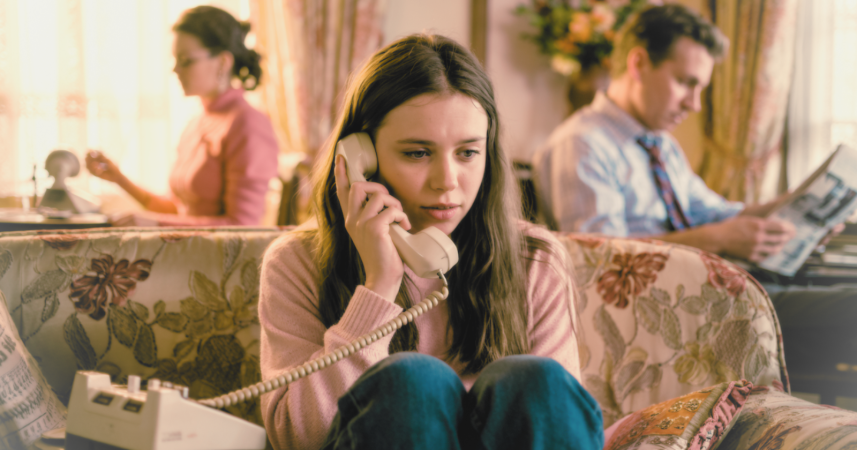
I wonder sometimes if in our rush to fix what was broken about our upbringing, we might be losing something valuable too.
Last week, I stood in my kitchen watching my neighbor's teenage daughter have a full-blown panic attack because her phone died and she couldn't reach her mother for twenty minutes. As I handed her my charger and watched the relief flood her face, I couldn't help but think about the summer of 1974 when I was fifteen and got stranded miles from home after missing the last bus. No cell phone. No credit card. Just me, a quarter in my pocket, and the growing darkness.
I walked three miles to a gas station, used their phone book to find a distant family friend's number, and when no one answered, I kept walking. A trucker eventually gave me a ride to within two miles of home, and I walked the rest.
When I finally pushed open our front door at midnight, my mother looked up from her sewing and said, "You're late. There's leftover casserole in the fridge." That was it. No drama. No debriefing.
The architecture of independence
There's something fundamentally different about the toughness that formed in those of us who came of age when parents weren't hovering, schools didn't have counselors for every crisis, and the phrase "check in with yourself" would have gotten you strange looks.
We learned early that the world wasn't particularly interested in our feelings or our struggles.
This wasn't neglect, exactly. It was a different philosophy of child-rearing, one that assumed kids would figure things out because what other choice did they have? My own mother worked as a seamstress, and my father's idea of emotional support was a nod of acknowledgment that yes, life was hard, now go do your homework. We didn't have language for anxiety or depression. We had "nervous" and "feeling blue," and the prescription was usually to get outside or find something useful to do with your hands.
The peculiar freedom of those years meant we learned to navigate the world through trial and error, with error being a particularly effective teacher. When I think back to being seventeen and driving across three states alone to look at colleges, staying in cheap motels I'd found in a AAA guidebook, no GPS, no emergency credit card, just a paper map and the assumption that I'd figure it out, I realize how impossible that sounds now. But it didn't feel brave at the time. It felt normal.
The currency of silence
What strikes me most about that era's particular brand of resilience is how much of it was built on not talking about things. Your father lost his job? You didn't discuss it; you just noticed the groceries got simpler and you stopped asking for new shoes. Your parents' marriage was falling apart? You pretended not to hear the arguments and got very good at taking your younger siblings to the park.
In a previous post about finding purpose after retirement, I mentioned how teaching high school for 32 years taught me to read the unspoken. But I learned that skill much earlier, in kitchens where adult conversations happened in code and children learned to disappear when voices got tight. We became experts at emotional archaeology, piecing together the real story from fragments and silences.
This shaped a generation that could endure almost anything because we'd been trained from childhood that endurance was the only option. You didn't process trauma; you just kept moving forward until eventually it became part of your past.
Was this healthy? Probably not. Did it create a particular kind of strength? Absolutely.
When survival becomes identity
I've been thinking lately about how this upbringing created adults who literally don't know how to not cope. We're the generation that shows up to work when sick, that schedules surgery around other people's convenience, that apologizes for having heart attacks because it inconveniences others. We turned survival into an art form, and then we couldn't figure out how to stop performing it.
The challenge comes when the crisis ends but the crisis-mode continues. I watch friends my age who still can't ask for help carrying groceries, who insist they're fine when they're clearly not, who would rather suffer in silence than risk being seen as weak. We learned so well to need nothing from anyone that we forgot needing is human.
The cost and the gift
Would I raise children the way we were raised? Absolutely not. When I see young parents today responding to their children's emotional needs, validating their feelings, teaching them to name and process their experiences, I think: good. This is progress. This is healing. The kids today have tools we never dreamed of, support systems we couldn't imagine, and permission to be human in ways we weren't allowed.
But I also wonder sometimes if in our rush to fix what was broken about our upbringing, we might be losing something valuable too. There's a confidence that comes from knowing you can handle whatever life throws at you because you've been handling things since you were seven. There's a particular steadiness in people who learned early that panic is a luxury you can't afford.
Final thoughts
That toughness built by having no one to call isn't something to romanticize or wish for. It came at a cost many of us are still tallying. But for those of us who carry it, it's as much a part of us as our eye color or our tendency to save aluminum foil. It's the voice in our heads that says "figure it out" when younger generations might say "reach out." Both responses have their place. But there's something to be said for knowing, bone-deep, that if everything else fails, you can rely on yourself. Because you always have.
What’s Your Plant-Powered Archetype?
Ever wonder what your everyday habits say about your deeper purpose—and how they ripple out to impact the planet?
This 90-second quiz reveals the plant-powered role you’re here to play, and the tiny shift that makes it even more powerful.
12 fun questions. Instant results. Surprisingly accurate.