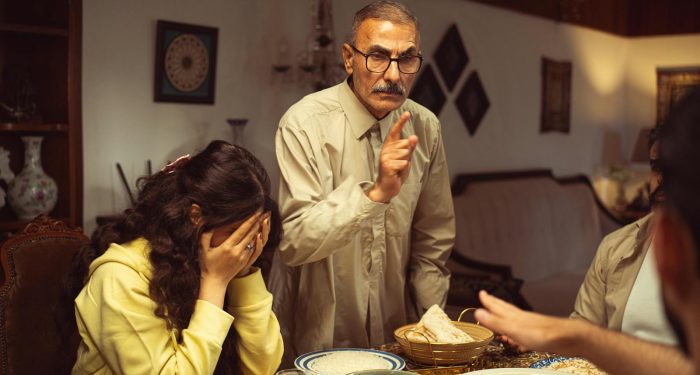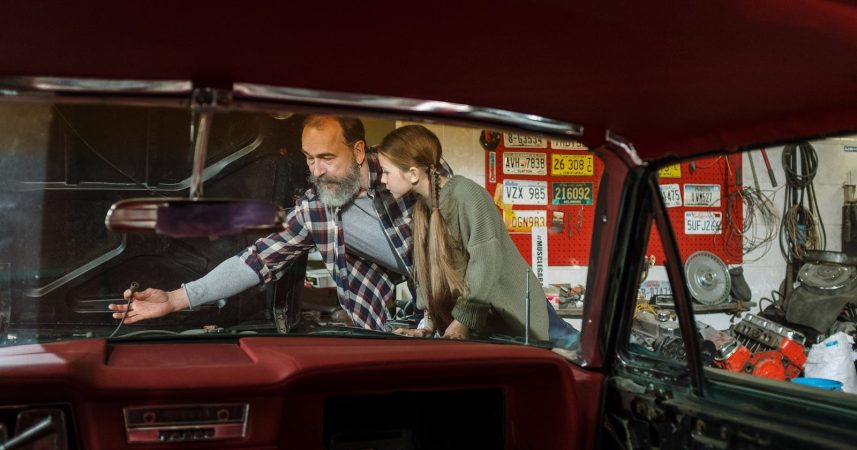
For decades, I believed my father's inability to truly see me was my fault — until I realized his emotional distance wasn't rejection, but the only language he'd ever learned to speak.
Those words hit you right in the chest, don't they?
The TV is on in the background — some news program he's half-watching — and I can hear him shifting in his chair. We've covered the weather, the state of the market, whether his neighbor finally got that dead tree removed. There's a pause. Not the kind where someone is gathering courage to say something real. The kind where someone is calculating the minimum remaining seconds before an exit feels polite. Then it comes: "Well, alright then." Three words, same cadence every time, like a door latch clicking into place. I say goodbye. He says goodbye. And I sit there holding a phone that's already gone silent, wondering why I expected anything different.
For years, I thought his emotional distance was about me. Maybe if I achieved more, called at better times, or found the magic combination of topics, he'd finally lean in instead of pulling away. But here's what took me decades to understand: some parents simply don't know how to hold space for their children's inner worlds because no one ever held space for theirs.
If this resonates with you, you're not alone. And more importantly, you're not broken for wanting more.
The inheritance we never asked for
Growing up in my middle-class suburb, achievement was the family currency. Good grades, prestigious college, stable career. These weren't just goals; they were proof of worth. My parents, both high achievers themselves, showed love through concern about financial security. A good quarterly review at work meant more to them than knowing whether I was happy.
Think about your own childhood for a moment. How did your family express care? Through worried questions about practical matters? Through fixing things instead of feeling things? Through doing rather than being?
Many of us inherited this emotional blueprint without realizing it. Our parents learned from their parents that vulnerability was dangerous, that feelings were luxuries they couldn't afford. They built walls to survive their own childhoods, and now those walls stand between us.
When almost-love becomes our normal
You know what's wild? We can become so accustomed to emotional crumbs that we mistake them for a feast. That quick "well, alright then" starts to feel like connection because at least it's consistent. At least it's something.
I spent years collecting these almost-moments like breadcrumbs, hoping they'd eventually form a whole loaf. The time he almost asked about my anxiety but pivoted to discussing mortgage rates. The moment he nearly said he was proud but settled for "that's good" instead. Each interaction left me simultaneously grateful and starving.
This creates a peculiar kind of grief. You're mourning something you never had while feeling guilty because technically, your parent is there. They call. They show up to graduations. They remember birthdays. But their presence feels like absence, and trying to explain that to anyone who has truly absent parents feels like complaining about a problem you shouldn't have.
Here's what I've learned: your hunger for genuine connection is valid, regardless of what others have or haven't experienced. You're allowed to grieve the relationship you needed, even while maintaining the relationship you have.
The stories we tell ourselves
For the longest time, I told myself a story that went something like this: "If I just find the right way to communicate, if I just become successful enough, interesting enough, easy enough to love, then maybe he'll finally see me."
When I left finance to pursue writing, I watched my father's face cycle through confusion, disappointment, and something that looked almost like fear. He couldn't understand walking away from financial security for something as nebulous as fulfillment. In his mind, I was throwing away everything he'd worked to provide.
But here's the plot twist I didn't see coming. When he had his heart attack at 68, something shifted. Not dramatically, not completely, but enough. Lying in that hospital bed, tubes and wires everywhere, he grabbed my hand and said, "I'm glad you're doing what makes you happy."
It wasn't a movie moment. He didn't suddenly become the emotionally available father I'd always wanted. But in that brief sentence, I heard what he'd been trying to say all along in his limited emotional vocabulary: "I love you, and I don't know how to show it the way you need."
Breaking the pattern without breaking the relationship
So how do we move forward when we're stuck between longing and loyalty? When we want more but don't want to lose what little we have?
First, we stop taking it personally. This sounds impossible when it feels intensely personal, but consider this: your parent's emotional limitations likely existed long before you were born. You didn't cause them, and you can't cure them.
Start setting emotional expectations that match reality, not hope. If your father has never asked about your inner life in 40 years, expecting him to start now is setting yourself up for disappointment. Instead, what if you expected exactly what he's capable of giving and found other sources for what he can't provide?
I've learned to translate his language. When he asks about my 401k, he's really asking if I'm okay. When he mentions an article about the publishing industry, he's trying to connect with my world in the only way he knows how. It's not the connection I craved as a child, but recognizing it as connection at all has softened something in me.
Finding your own emotional fluency
The beautiful irony? Those of us raised by emotionally distant parents often become deeply feeling adults. We develop rich inner lives, strong friendships, and the ability to hold space for others' emotions precisely because we know what it's like to have nowhere to put our own.
But we also have to be careful not to overcorrect. I've caught myself emotionally flooding people, desperate to create the intimacy I never had at home. Or swinging the other direction, building walls so high that no one can disappoint me the way my father did.
The work is finding that middle ground. Being open without being desperate. Having boundaries without having barriers. Learning that not everyone who struggles with emotional expression is rejecting you.
Creating your chosen family
One of the most healing things I've done is build relationships with people who can meet me where my father can't. Friends who ask "How are you really?" and wait for the actual answer. Mentors who celebrate not just my achievements but my growth. A therapist who held space for all the feelings I'd been carrying alone.
This isn't about replacing your parent. It's about acknowledging that no one person can meet all our emotional needs, and that's okay. Your father's inability to connect deeply doesn't mean you're unworthy of deep connection. It just means you'll need to find it elsewhere.
Conclusion
If you're reading this with tears in your eyes, knowing exactly what it feels like to be almost-loved, I want you to know something: You are not too much for wanting more. You are not ungrateful for feeling unsatisfied with crumbs. You are not broken for still hoping, after all these years, that this time might be different.
The phrase "well, alright then" might always carry a sting. Understanding where it comes from doesn't actually make it sting less. I know his reasons. I know his history. I know he likely never had a father who asked him how he was doing either. But knowing the origin of a wound doesn't close it, and I think we do ourselves a disservice when we rush to forgive a pattern just because we can explain it.
He'll call again next Sunday. I'll answer. We'll talk about the weather and the market and whatever's happening with the neighbor's yard. And when the pause comes — that familiar, measured silence before the exit — I'll wait through it the way I always do, half-expecting something different, half-knowing better. "Well, alright then." The line will go quiet. And I'll probably sit there for a moment, phone still warm in my hand, not sure if what I feel is acceptance or just the exhaustion of hoping.
If You Were a Healing Herb, Which Would You Be?
Each herb holds a unique kind of magic — soothing, awakening, grounding, or clarifying.
This 9-question quiz reveals the healing plant that mirrors your energy right now and what it says about your natural rhythm.
✨ Instant results. Deeply insightful.

Avery White
Avery White is a writer and researcher who came to food and sustainability journalism through an unusual path. She spent a decade working as a financial analyst on Wall Street, where she learned to read systems, spot patterns, and think in terms of incentives and consequences. When she left finance, it was to apply those same analytical skills to something that mattered to her more deeply: the food system and its environmental impact.
At VegOut, Avery writes about the economics and politics of food, plant-based industry trends, and the intersection of personal health and systemic change. She brings a data-informed perspective to topics that are often discussed in purely emotional terms, while remaining deeply committed to the idea that how we eat is one of the most powerful levers individuals have for environmental impact.
Avery is based in Brooklyn, New York. Outside of writing, she reads voraciously across economics, environmental science, and behavioral psychology. She runs most mornings and considers a well-organized spreadsheet a thing of genuine beauty.
More Articles by Avery