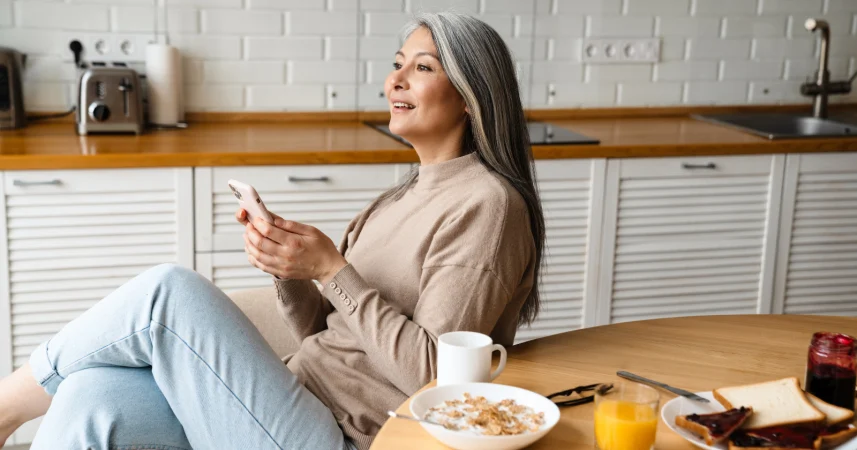
Most people spend their entire lives running from the one relationship that could save them from loneliness in old age—the one with themselves—desperately filling every quiet moment with noise rather than discovering they might actually be worth their own attention.
A recent large-scale study found that roughly one in four adults over 65 reports feeling lonely on a regular basis. That number surprises most people — not because it's high, but because they assumed it was higher. The truth is, a significant portion of older adults navigate solitude without distress, and the reason has less to do with their social calendars than most of us would guess.
What separates them isn't the number of friends they have or how many clubs they've joined. It's something quieter and harder to measure. The people who handle loneliness best in their later years don't do it by cramming their schedules full of activities or desperately seeking new relationships. They do it by finally becoming someone they actually enjoy being alone with. And that distinction — between filling time and filling yourself — is one most people never fully grasp.
The difference between being alone and being lonely
Devon Frye, a psychologist, puts it perfectly: "Loneliness is synonymous with perceived social isolation, not with objective social isolation." Think about that for a moment. You can be surrounded by people at a party and feel utterly alone, or you can spend an entire weekend by yourself and feel completely fulfilled.
I learned this distinction during my 15 years as a single mother after my first husband left. While other divorced parents in my situation scrambled to fill every weekend with playdates and activities, I discovered something profound during those quiet Sunday mornings with just my children and me, reading together in pajamas until noon. We weren't lonely; we were learning to be enough for ourselves.
The confusion between solitude and loneliness causes so much unnecessary suffering. Lybi Ma, a psychologist, warns that "Loneliness is more than an unpleasant feeling; it poses a serious health threat." But here's what most people miss: the threat isn't from being alone. It's from never developing a relationship with yourself that makes solitude bearable, even enjoyable.
Why most people never develop this relationship
During my 32 years teaching high school English, I watched students panic when asked to write in silence for just twenty minutes. Adults were no better, filling every conversation gap with nervous chatter, checking their phones obsessively during any quiet moment. We've become terrified of our own thoughts.
Vanessa Lancaster, a psychologist, notes that "Deep feelings of loneliness are commonly reported in histories of childhood emotional neglect." But I'd argue it goes deeper than that. Even those of us from loving homes often never learned that we were interesting enough, worthy enough, to be our own companion.
I spent decades as a chronic people-pleaser, avoiding my own company by filling every moment with service to others. Teaching, parenting, being a wife, these roles let me escape the harder work of figuring out who I was when I wasn't performing for someone else. Therapy in my 50s helped me understand that my fear of being alone stemmed from never believing I deserved my own attention.
Mark Twain wrote, "The worst loneliness is not to be comfortable with yourself." Most of us spend our entire lives running from this discomfort, using relationships, careers, and endless activities as shields against having to sit with ourselves.
Learning to be your own companion
The real education in self-companionship came after losing my second husband to Parkinson's when I was 68. Those first six months, I barely left the house. Friends worried I was depressed, but something else was happening. I was finally learning who I was without being someone's wife, mother, or teacher.
Have you ever noticed how differently you behave when no one's watching? I started waking at 5:30 AM naturally, spending that first hour in complete silence with tea and my journal. No radio, no television, just me and my thoughts. At first, the quiet felt oppressive. But gradually, like eyes adjusting to darkness, I began to see myself clearly.
Research has found that self-compassion and compassion toward others are associated with better mental well-being and lower loneliness across the adult lifespan. This isn't just academic theory. It's about learning to treat yourself with the same kindness you'd show a good friend. When I started watercolors, my paintings were terrible. But instead of the harsh criticism I once would have unleashed on myself, I found myself saying, "Well, that tree looks more like a broccoli, but isn't it a lovely shade of green?"
The practice of self-acceptance
Sian Ferguson, a writer, makes an important distinction: "Self-acceptance is not the same as self-esteem or self-confidence. While your self-esteem might rise and fall based on the way you perceive your worth, self-acceptance remains consistent no matter how you view yourself."
This resonated deeply when I faced my knee replacements. Physical therapy is lonely work, hours of repetitive exercises with only yourself for company. But instead of seeing it as torture, I became my own cheerleader. Not with false positivity, but with genuine acceptance of where I was in that moment, limitations and all.
My evening walks became appointments with myself, not escapes from an empty house. I discovered 50 bird species by sound during morning garden sessions, finding that my own observations were often more interesting than most conversations I'd had. Ray Parker, a psychologist, notes that "Self-acceptance is a practice that includes reframing negative thoughts and practicing personal values." For me, this meant stopping the constant comparison to who I used to be and embracing who I was becoming.
The transformation that changes everything
Writing became my pathway to self-discovery when I started writing personal essays at 66 after a friend suggested I share my stories. Decades of experiences I'd never processed suddenly demanded attention. In solitude, I could finally hear my own voice clearly, not the teacher voice, the mother voice, or the wife voice, but mine. She was funny, wise, occasionally bitter, surprisingly hopeful, and definitely someone I wanted to spend time with.
Studies indicate that self-compassion can buffer the negative effects of loneliness on depressive symptoms among older adults. This isn't about positive thinking or pretending everything's fine. It's about developing genuine affection for yourself, flaws and all.
Jane Fallon, an author, expressed it beautifully: "I like being on my own. I'm very happy in my own company." This isn't antisocial or selfish. It's the foundation for healthier relationships with others. When you enjoy your own company, you stop using other people to fill a void. You connect from wholeness rather than neediness.
The widow's support group I joined became my closest circle of friends, but not because we filled each other's loneliness. We'd all discovered that grief forces you to meet yourself, perhaps for the first time. Some women rushed into new relationships or packed their calendars. Others, like me, discovered that solitude isn't emptiness; it's space for your own thoughts to finally breathe.
Why this matters more as we age
Alexander Danvers, a social psychologist, found that "As people get older, being in a relationship makes them less lonely, suggesting their bond gets deeper." But here's what this research doesn't capture: if you've never developed a relationship with yourself, losing that partner leaves you with a stranger.
My mother's Alzheimer's taught me about presence, how being fully with yourself is practice for being fully with others. Even as her memories faded, she remained herself in moments of pure being, humming old songs, arranging flowers. She'd lost everything we think defines us, yet she was still there, still worthy of love, especially her own.
Research has demonstrated that self-compassion is linked to better sleep and lower loneliness among adults, suggesting that cultivating self-compassion can enhance well-being in older adults. But this isn't something you can suddenly develop at 70. It's a practice, like tending a garden. You have to pull the weeds of self-criticism before anything beautiful can grow.
Final thoughts
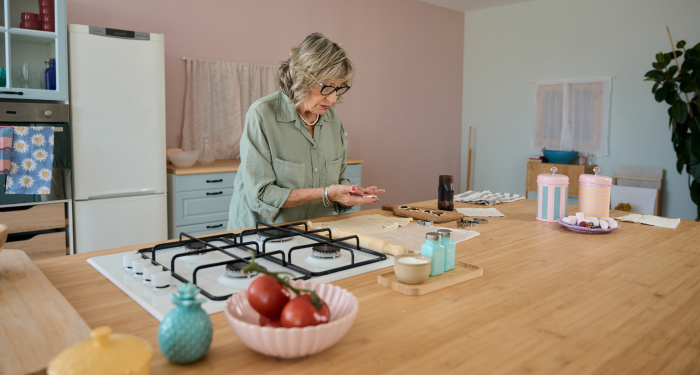
At 70, I maintain wonderful friendships, cherish my family, and stay active in my community. But I no longer need these connections to avoid myself. Whether I'm baking Sunday bread with just flour and the meditative rhythm of kneading, or hosting my weekly supper club, I'm in good company.
The tragedy isn't that so many people end up alone in later years. It's that they never learned to be good company for themselves. They spent decades outsourcing their worth to others, never developing the most important relationship they'll ever have. True contentment in solitude doesn't mean becoming a hermit. It means that when you're alone, you're still with someone you respect, enjoy, and genuinely want to spend time with. And that, truly, makes all the difference.