She measured love in tablespoons and spent decades pretending that gathering everyone around the table for ten minutes of sullen silence was better than letting the family scatter like the ingredients she couldn't afford.
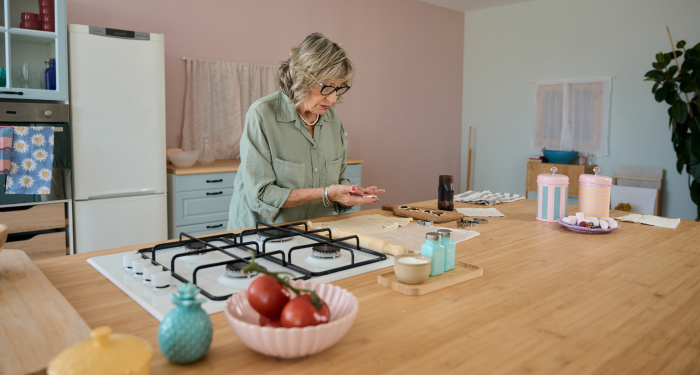
I watch you standing at that stove, steam rising from the pot you've stirred with the same wooden spoon for thirty years. The kitchen smells like onions and time, like the thousand variations of comfort you've learned to ladle into bowls. Your hands move without thinking now, muscle memory of ten thousand dinners guiding the knife through carrots, the practiced flick of salt from your palm.
You never kept count, but I did. Ten thousand dinners, give or take, since you first stood on that stepstool in your mother's kitchen, learning that love could be measured in tablespoons and that families were built one meal at a time.
The archaeology of a kitchen life
Those early dinners were acts of translation. You'd race home from teaching Shakespeare to teenagers, your mind still parsing iambic pentameter while your hands reached for the discount ground beef. Five dollars had to stretch into a meal for three, and you became fluent in the language of substitution. When the recipe called for cream, you used milk with a pat of butter. When it needed wine, you used broth and imagination.
I remember watching you during the lean years, calculating protein per dollar in the grocery store while your children orbited you like small planets, adding things to the cart you'd quietly remove later. You never let them see you put back the good cereal, the brand-name cookies. You just redirected their attention, made the store brand sound like an adventure.
Your mother had taught you this sleight of hand, this way of making scarcity invisible. She'd fed her children on a mailman's salary, and you inherited her recipes along with her cast iron skillet. Both came pre-seasoned with decades of making do.
Cooking through the breaking
When your first husband left, you still cooked his portion for three weeks. The children watched you serve his empty chair, neither commenting on the ritual nor the way your hands shook slightly as you spooned out potatoes that would go back into the pot. Grace finally asked if Daddy was coming to dinner, and you said no while giving her an extra helping, as if food could fill the spaces people leave behind.
Those single-mother years had their own brutal rhythm. You'd grade papers until midnight, then wake at five to pack lunches, the repetition becoming meditation. Spaghetti on Monday, tacos on Thursday, something from a box when exhaustion won. But always, always, you insisted everyone sit down together, even if it was just for ten minutes, even if Daniel ate in sullen silence and your youngest needed three reminders to use her fork.
What did those dinners cost you? Not in dollars but in the currency of exhausted women everywhere. The nights you stood at the stove crying into the steam. The mornings you'd forgotten to defrost anything and served cereal for dinner, calling it "backwards day" like it was intentional. The times you wanted to quit, to order pizza forever, to let everyone fend for themselves.
But you didn't. You kept showing up at that stove.
The grammar of shared meals
Teaching English by day and cooking by night, you found parallels everywhere. A well-constructed meal was like a properly structured essay: introduction (appetizer), body paragraphs (main course), conclusion (dessert). The dinner table became another classroom where you taught without lecturing, where lessons about sharing and patience and gratitude were absorbed along with nutrients.
Your students never knew that their papers were often graded at your kitchen table, coffee rings and sauce stains occasionally decorating the margins. You brought the same attention to both tasks, the same belief that details mattered, that care showed in small gestures.
When your second husband entered your life, meeting him at that school fundraiser auction, you cooked for him carefully at first. Testing his palate like you'd test a new class, seeing what he'd accept, what made him linger. He earned his place at your table slowly, fixing the wobbly chair leg without being asked, helping badly but earnestly with dishes.
That second marriage brought different dinners. Calmer ones. You could afford better cuts of meat, vegetables that weren't wilted, bread from the bakery instead of the day-old store. He would chop vegetables into uneven chunks you'd secretly even out, and you let him because his presence in your kitchen felt like a gift you hadn't expected to receive again.
Feeding forward
The grandchildren changed everything again. Suddenly you were navigating food allergies and dietary restrictions that hadn't existed in your vocabulary before. Gluten-free, dairy-free, nut-free. You adapted the way you'd always adapted, learning new flours and substitutes, discovering that love could be spelled out in accommodations.
Even when your husband's Parkinson's meant pureeing everything, you still plated it beautifully. Even when he was gone and you were cooking for one at seventy, you still set the table properly, still used the good dishes. Your mother had taught you that solitary meals deserved dignity too.
These days at the women's shelter where you volunteer, you teach more than recipes. You show those women what you learned in decades of kitchens: that feeding people is hope made tangible, that a pot of soup says "tomorrow will come and it will be worth preparing for."
What the food was always saying
Your daughter calls every Sunday now while you're cooking, and you can hear it in her voice. The same exhaustion, the same determination. She's finally learning your recipes, writing them down in a notebook, asking about measurements you've never measured. A pinch of this, until it smells right, until it looks like yours did.
She tells you her teenage son inhales food and disappears, that her daughter has become vegetarian, that Sunday dinners feel like herding cats. You listen and offer suggestions about hidden vegetables and patient persistence. What you don't say is that you can hear her becoming you, taking her place in the long line of women who stand at stoves and make something from not enough.
In one of my previous posts, I wrote about the legacies we leave without meaning to. This is yours: every woman you've taught to stretch a grocery budget, every grandchild who knows how to properly set a table, every neighbor who's knocked on your door around dinnertime "just to say hi" and left with a full stomach.
The food was never just food, was it? Each meal was a small rebellion against entropy, against the forces that scatter families. Every dinner said: despite everything, we will gather. Despite exhaustion, absence, grievance, and time, we will sit at this table and practice being human together.
Final thoughts
Those ten thousand dinners were ten thousand small miracles. Not because the food was perfect, but because you kept making it. Through thankless years and thanked ones, through abundance and scarcity, through joint pain and heartbreak and the ordinary exhaustion of daily life.
Your kitchen is quieter now, your portions smaller. But every evening at six, you're still there, stirring something on the stove. The smell drifts through your neighborhood like a prayer you've been praying for decades: Come. Sit. Eat. You belong here.
That's what love looks like, isn't it? Not grand gestures but daily bread. Not perfection but persistence. Not the food itself but the hands that make it, again and again, until all those agains become always.
What’s Your Plant-Powered Archetype?
Ever wonder what your everyday habits say about your deeper purpose—and how they ripple out to impact the planet?
This 90-second quiz reveals the plant-powered role you’re here to play, and the tiny shift that makes it even more powerful.
12 fun questions. Instant results. Surprisingly accurate.