Two opposite approaches to eating—rigid tracking and intuitive freedom—often stem from the same painful source: childhoods where food meant control, scarcity, or emotional turmoil.
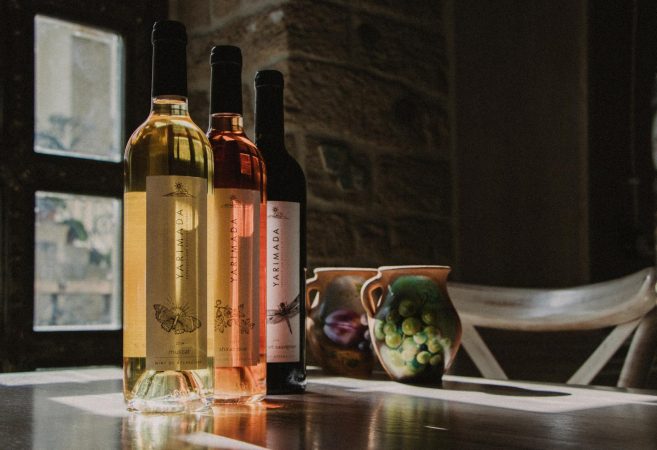
My friend Dani measures her overnight oats to the gram every morning: 40 grams rolled oats, 120 grams oat milk, 15 grams almond butter, weighed on a matte-black kitchen scale she keeps next to the coffee grinder. Her roommate Bea eats whatever she wants, whenever her body says so, no measuring cups in sight. They couldn't look more different at breakfast. But when the three of us shared a bottle of wine on Dani's fire escape last month, both of them told me the same story: a childhood kitchen where every bite carried a charge. Dani's mother used food as a reward system, doling out sweets for good grades and pulling them away as punishment. Bea's parents fought about money at the dinner table every night, and she learned to eat fast and quiet, making herself small before someone started yelling. Two opposite strategies for feeding themselves as adults. One root.
That stopped me.
The conventional wisdom frames intuitive eating and macro tracking as opposing philosophies, almost rival camps. One trusts the body. The other trusts the spreadsheet. Wellness culture loves a binary, and this one feels clean enough to build entire brands around. But what gets lost in that framing is how rarely either approach begins as a calm, rational choice. For many people, the relationship with food was shaped long before they ever downloaded a tracking app or read a book about hunger cues.
The origin, more often than not, is a home where food was tangled up with love, control, anxiety, celebration, shame, or silence.
What the research actually says about childhood and eating
Research suggests that childhood experiences, both positive and negative, shape eating behavior well into young adulthood. Studies have found that positive childhood experiences can have a protective effect against disordered eating, and that warm, stable relationships in early years can soften the impact of adversity on later eating patterns.
What this means is that the kitchen table is a staging ground. Not just for meals, but for how a person will think about hunger, fullness, pleasure, and control for decades afterward.
The patterns the table leaves behind
The dynamics don't have to be dramatic to leave a mark. A household where food is tightly controlled. Clean-plate rules, rigid portions, dessert earned through compliance. That deposits one kind of residue. A household where meals are chaotic or absent, where kids fend for themselves from the pantry, deposits another. In both cases, something gets lodged in the body: not just nutritional outcomes, but emotional associations. When control is the dominant note at the table, some children grow up craving structure (hello, macro tracking), and others grow up wanting to demolish every rule around eating (hello, intuitive eating as rebellion). Both are responses to the same wound.
And these patterns aren't culturally uniform. Research exploring attachment theory across Asian families has pointed out that what reads as controlling in one context may carry deep warmth in another. A grandmother insisting you eat more isn't operating in the same register as a parent withholding dessert as punishment, even if both produce adults who struggle with portions. The emotional charge around food shifts depending on cultural norms around hospitality, scarcity, and respect. The kitchen table has an accent.
The body keeps its own score
Research has started to challenge the idea that eating behavior is primarily driven by taste preference or willpower. Studies suggest that the body's internal signals, not the taste buds, play the dominant role in driving what and how much we eat. Hidden metabolic feedback loops, gut-brain communication, and early conditioning all influence how a person responds to a plate of food, often below conscious awareness.
This is where the macro tracker and the intuitive eater converge again. Both are responding to internal signals that were calibrated in childhood. The tracker may be using numbers to impose order on a system that felt chaotic growing up. The intuitive eater may be trying to reconnect with signals that were overridden by family dynamics. Both are, in their own way, trying to hear a body that was taught to be quiet.
I think about this when I cook. My mother Carmen always had something going on the stove, and her kitchen in Miami was a place where food meant you were welcome, you were safe, you belonged. When I'm homesick or tangled in my own head, I make farofa the way my grandmother Rosa taught me, toasting the cassava flour with herbs until the smell fills the apartment. That comfort isn't accidental. It was built into me, meal by meal, over years of being fed by women who understood food as care.
Which is exactly why the science of gut signals and metabolic feedback loops matters here. Not as an abstraction, but because it confirms something I already feel in my body every time I stand at the stove. The smell of toasting cassava flour doesn't just make me nostalgic. It recalibrates something. It tells my nervous system that the world is okay for a few minutes. That response was trained into me at a very specific kitchen table, by very specific hands. And the people who didn't get that. The ones who got silence, or chaos, or a dinner table that felt like a courtroom. Their bodies learned a different set of signals entirely.
Not everyone got that. And the people who didn't are still building their relationship with food from a deficit, whether they're counting grams of protein or practicing body trust.
Two strategies, same search
The growing field of mindful and intuitive eating research frames these practices as validated interventions, not just lifestyle trends. They work for many people. But framing them only as solutions misses the fact that they are also symptoms, expressions of a deeper search for safety around food.
Macro tracking, when it's healthy, gives a person a sense of agency. It says: I understand what I'm eating, and I'm making informed choices. When it's compulsive, it becomes a way to manage anxiety that has nothing to do with macronutrients. Intuitive eating, when it's healthy, restores a connection to physical sensation. It says: I can trust my body to tell me what it needs. When it's reactive, it can become a way to avoid looking at why certain foods trigger a spiral. But I'll be honest: I think the person who can put the scale down has done harder work than the person who picks it up every morning. Tracking gives you the feeling of control without ever requiring you to test whether you'd be okay without it. At some point, the numbers stop being information and start being insulation. The intuitive eater, at least in theory, has agreed to sit with discomfort. That's a braver negotiation with the self, even when it's messy.
The origin story matters because it determines whether the strategy is a tool or a coping mechanism. And most of us are working with a mix of both.
Why "just eat normally" isn't helpful
People love giving this advice. Eat when you're hungry, stop when you're full, relax about food. As if the problem were simply a matter of willpower.
Mental health professionals increasingly recognize that what looks like an eating problem is often a relationship problem, one that started before the person could articulate it. Understanding whether food and eating are used as coping mechanisms or to fulfill unmet childhood emotional needs can be an important part of addressing disordered eating patterns.
The people who seem most at ease in their bodies didn't necessarily arrive there through a single dietary framework. They arrived there by understanding the story underneath their habits, then choosing what to keep and what to put down.
The counterargument worth taking seriously here is that not everyone with a food spreadsheet or a hunger-cue practice is working through childhood trauma. Some people genuinely enjoy the structure of tracking. Some people find deep pleasure in eating without rules. The framework isn't destiny, and overselling the idea that all eating behaviors trace back to parental influence can flatten real individual variation.
Fair enough. But the patterns are too consistent to ignore. When you sit with enough people and hear enough stories about food, the kitchen table keeps coming up.
The real work isn't choosing a system
The NPR science desk recently reported on research showing that some children are more susceptible to the effects of ultra-processed food than others, and that siblings raised in the same household can respond to the same foods in dramatically different ways. Kerri Boutelle, a researcher featured in the report, described watching kids eat ice cream cones and noticing huge differences between siblings: one would eat half and walk away, another would consume every last bite and look for more.
That variation exists even within families tells us something important. The emotional environment around food isn't the only variable. Biology matters. Temperament matters. But the emotional environment is the one we can actually change, and it's the one most people never examine.
I grew into plant-based eating not through a sudden conversion but through slowly understanding the systems behind what I was putting on my plate. That process felt a lot like the broader work of untangling food from emotion: you start paying attention, you ask where things come from, and gradually you realize you've been eating on autopilot, running on patterns you absorbed before you had any say in the matter.
Learning to cook without recipes was part of that for me. Trusting my hands, trusting my taste, trusting the process. It's a small act of repair, choosing to be present in the kitchen instead of performing someone else's version of how I should eat.
Whether you weigh your oats or eat them straight from the pot, the question that actually matters isn't which system you use. It's whether you know why you chose it.
Here's what that looks like, practically: Dani still weighs her oats every morning. But last month she told me she skipped the scale one Saturday. Just scooped the oats into the bowl and poured the milk by feel. Nothing bad happened. No spiral, no guilt, just breakfast. She said it was the first time the scale felt like a choice instead of a leash. I wanted to believe her. I almost did. But the way she described it. The pride, the relief, the careful framing of one unweighed Saturday as evidence of growth. It sounded less like freedom and more like a person rehearsing the story she needs to tell herself to keep going. I don't know if Dani let go of the scale that morning or just held it differently. I don't know if she could do it again tomorrow without narrating it as progress. The kitchen table we grew up at doesn't have to be the one we eat at forever. But I'm not always sure we can tell the difference between leaving it behind and just rearranging the chairs.